
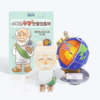
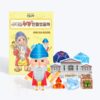
Description
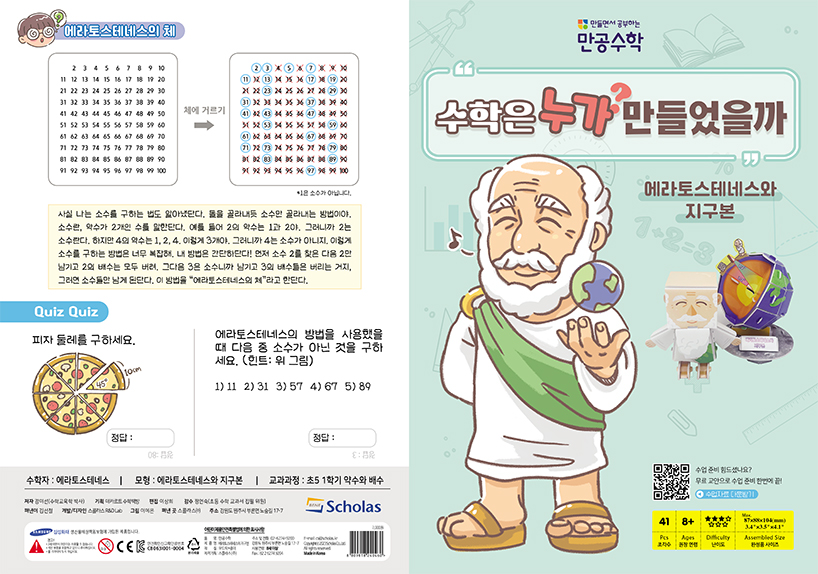
Eratosthenes and the Globe
| 41 | 8+ | ★★★☆ ☆☆☆ | Max. 87x88x104(mm) | 300×210(mm) x 2Sheets |
| PCS | Ages | Difficulty | Assembled Size | Board Size |
Summery of key features
- No. SESM23-006
- Assembled Size: Max. 87x88x104(mm)
3D Puzzle
Learning Through Play
Best Hands-on Education
We believe in
Hands-On Education
Hands-on learning is the best approach to learning rather than just being taught the theory via books.
Information
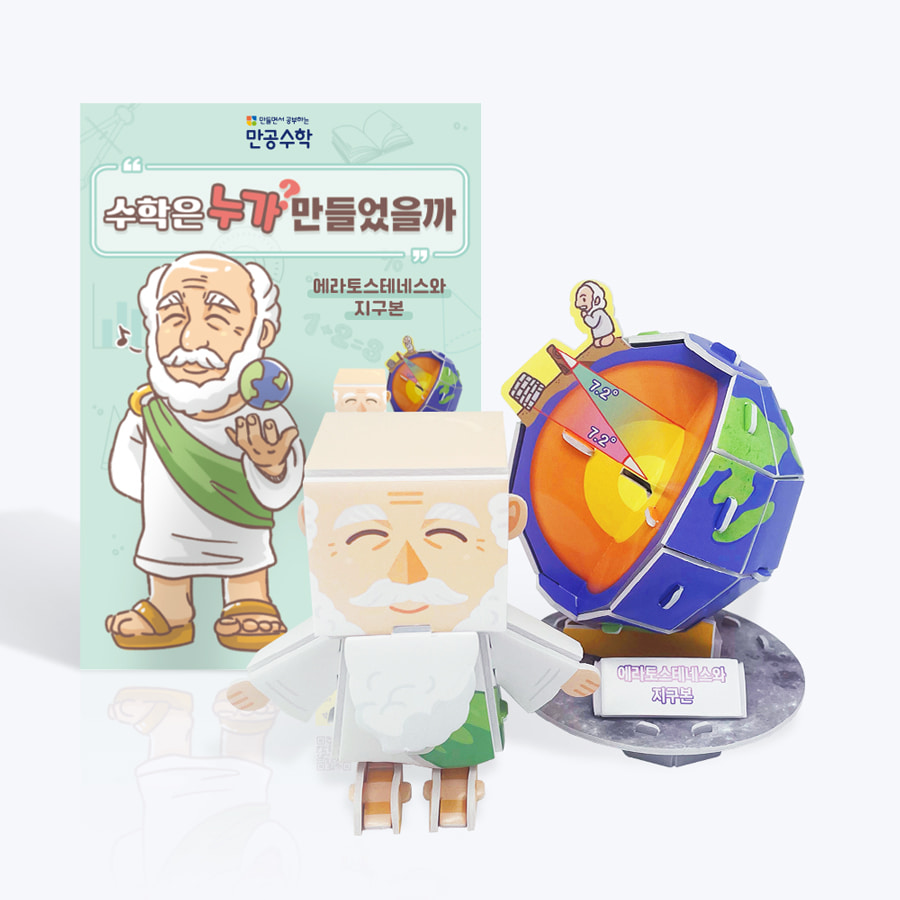
Eratosthenes and the Globe
Travel back to ancient Greece and learn how Eratosthenes measured the Earth—over 2,000 years ago, without leaving his country!
This educational kit introduces students to Eratosthenes, the brilliant mathematician and geographer who calculated Earth’s circumference using shadows and geometry.
Learners will explore concepts such as angles, sunlight, distance, and proportional reasoning while recreating his famous experiment.
The included quiz reinforces key ideas like how the Sun’s position changes with latitude, how to use basic geometry to calculate large distances, and how Eratosthenes’ thinking helped shape modern geography.
Students engage in hands-on learning by experimenting with globes, light sources, and measurement tools to simulate his process.
Illustrations and guided questions help make abstract mathematical ideas visible and understandable.
This activity connects math, science, and history—encouraging learners to see how observation and logic can reveal truths about the natural world.
Perfect for STEM and humanities integration, the kit promotes curiosity, critical thinking, and appreciation for ancient scientific achievement.
It’s a fascinating journey into early scientific method and global thinking—starting with a shadow and a well.
Eratosthenes
Eratosthenes of Cyrene (c. 276–194 BCE) was a Greek polymath whose contributions spanned mathematics, astronomy, geography, and poetry. He is best known for calculating Earth’s circumference with remarkable accuracy, a testament to his ingenuity and the advanced understanding of the natural world in ancient Greece.
Background and Early Life
Born in Cyrene, a Greek colony in present-day Libya, Eratosthenes was educated in Athens, where he studied under prominent scholars. His diverse interests and talents led him to Alexandria, Egypt, where he became the chief librarian of the Great Library—a center of learning and scholarship in the ancient world.
Measuring Earth’s Circumference
Eratosthenes’ most celebrated achievement is his measurement of Earth’s circumference. He knew that at noon during the summer solstice in Syene (modern-day Aswan, Egypt), the Sun was directly overhead, casting no shadow. In Alexandria, located approximately north of Syene, he measured the Sun’s angle at the same time and found it to be about 7 degrees, or 1/50th of a circle. By estimating the distance between the two cities—believed to be around 5,000 stadia—he multiplied this distance by 50, arriving at a total circumference of 250,000 stadia. The exact length of a stadion is debated, but his calculation was impressively close to modern measurements.
Contributions to Geography and Mathematics
Beyond his measurement of Earth’s circumference, Eratosthenes made significant contributions to geography. He invented a system of latitude and longitude, allowing for a more precise mapping of the known world. His work laid the foundation for the field of geography, earning him the title “Father of Geography.”
In mathematics, he devised the “Sieve of Eratosthenes,” an efficient algorithm for identifying prime numbers. This method remains a fundamental tool in number theory and showcases his analytical prowess.
Legacy
Eratosthenes’ interdisciplinary approach and his application of mathematical principles to understand the physical world exemplify the spirit of scientific inquiry. His work influenced later scholars and continues to be a subject of study and admiration. His ability to blend observation with mathematical reasoning allowed him to achieve feats that were unparalleled in his time.
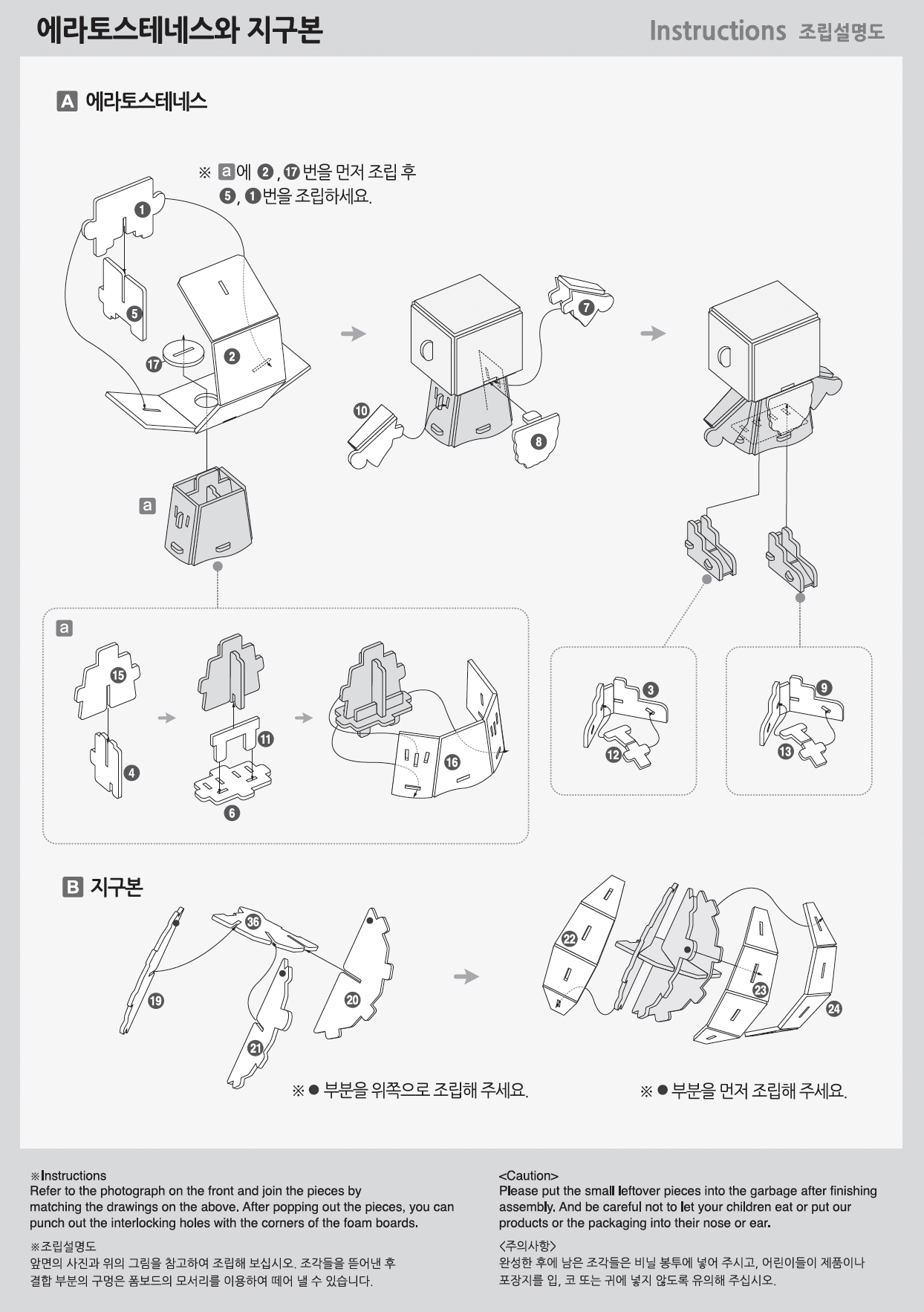
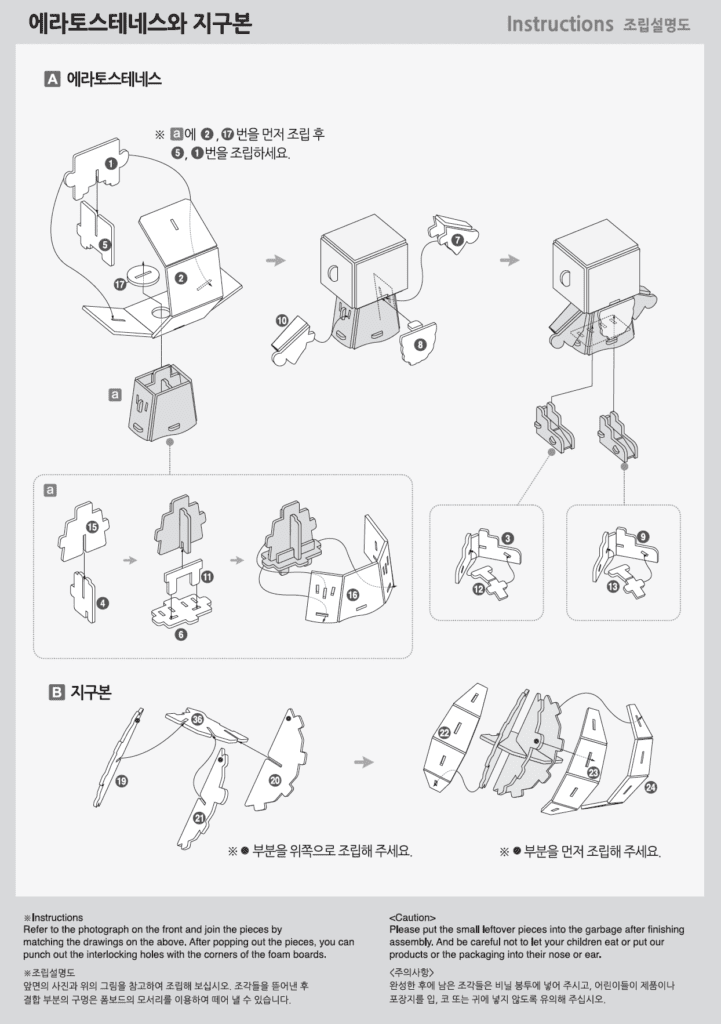
How To Make
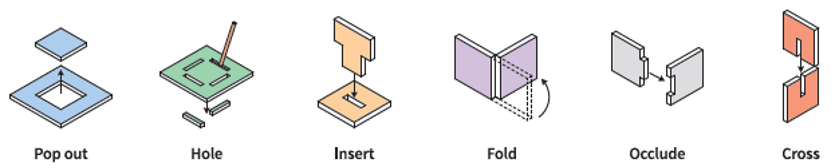
Instructions
Why do you need 3D Puzzle
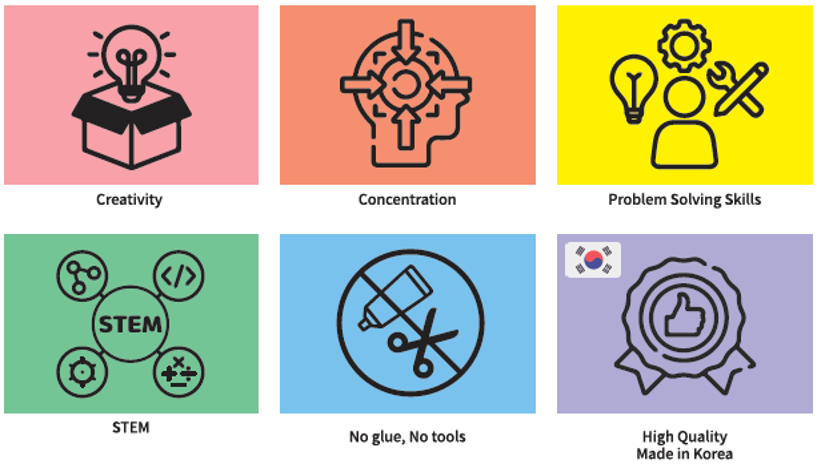
3D Puzzles enhances problem-solving skills, scientific thinking, and creativity, making them highly beneficial for STEM (Science, Technology, Engineering, and Mathematics).
What Our Customers Say
Explore why enthusiasts rave about building 3D puzzles. Here are some stories from our satisfied customers!
Student Worksheet & Answer Sheet Download
Certification

Reviews
There are no reviews yet.