

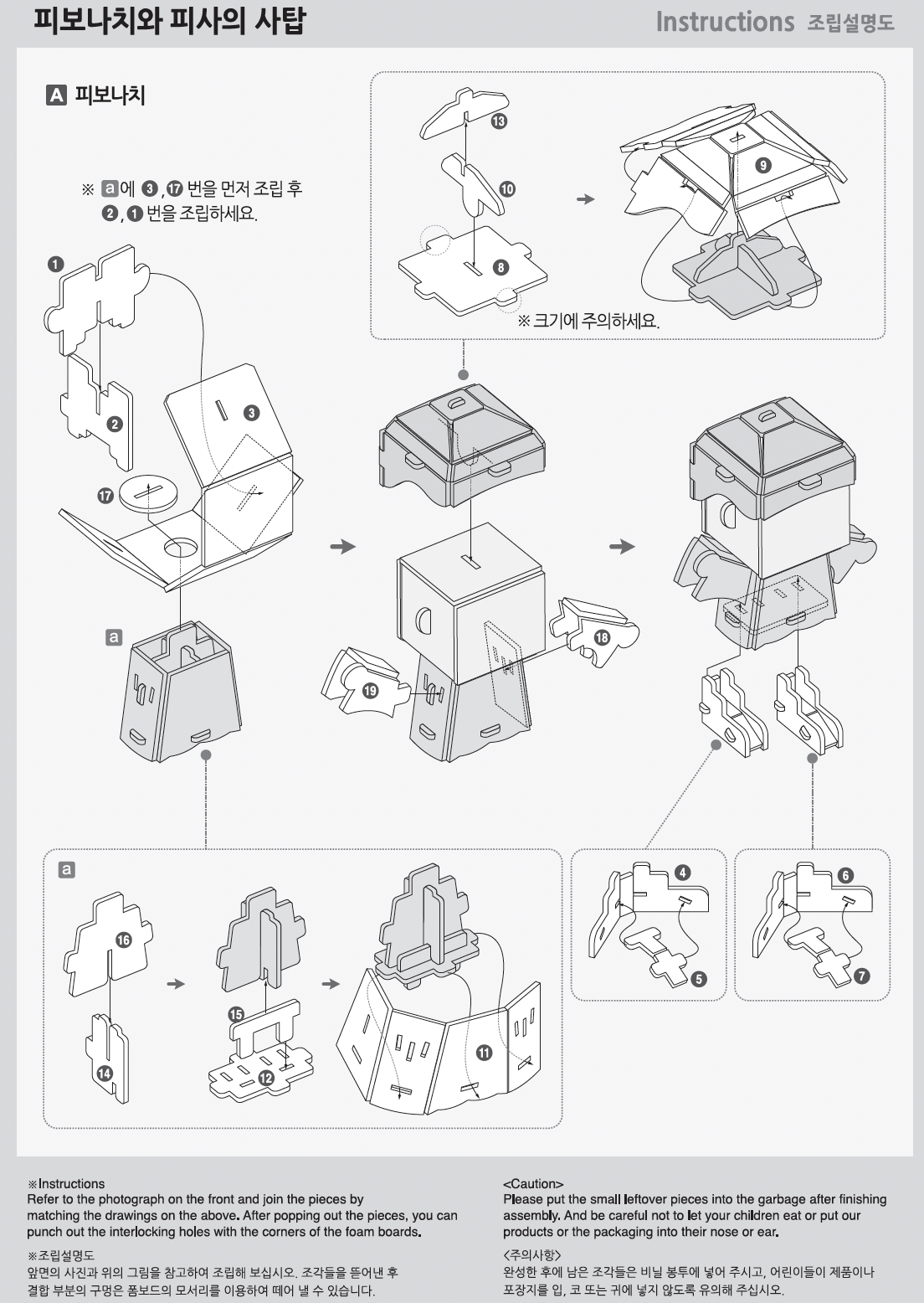

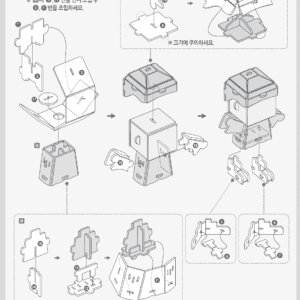

Description
Fibonacci and the Leaning Tower of Pisa
| 43 | 8+ | ★★★☆ ☆☆☆ | Max. 80x90x128(mm) | 300×210(mm) x 2Sheets |
| PCS | Ages | Difficulty | Assembled Size | Board Size |
Summery of key features
- No. SESM23-006
- Assembled Size: Max. 87x88x104(mm)
3D Puzzle
Learning Through Play
Best Hands-on Education
We believe in
Hands-On Education
Hands-on learning is the best approach to learning rather than just being taught the theory via books.
Information
Fibonacci and the Leaning Tower of Pisa1
Discover how numbers and nature are connected through the genius of Fibonacci and the wonder of the Leaning Tower of Pisa.
This educational kit introduces students to the famous Fibonacci sequence and explores how it appears in architecture, nature, and art.
By learning about Fibonacci’s life in Pisa and his revolutionary book Liber Abaci, learners understand how his ideas shaped modern mathematics.
Students investigate how the Fibonacci sequence grows, how it relates to the Golden Ratio, and how it appears in spirals, petals, and even buildings.
The included quiz reinforces these concepts through fun, visual questions on patterns, number relationships, and the Leaning Tower’s structural design.
Illustrations guide learners in recognizing Fibonacci patterns in real-world examples and exploring the mathematical beauty behind spiral staircases and curved forms.
This hands-on experience encourages students to see math as both logical and artistic—connecting numbers with history, culture, and design.
Perfect for math and humanities integration, the kit promotes pattern recognition, critical thinking, and an appreciation for mathematical elegance.
It’s a unique learning journey that blends numbers, history, and architecture into one inspiring educational experience.
Fibonacci and the Leaning Tower of Pisa2
Fibonacci, born around 1170 in Pisa, Italy, was a remarkable mathematician from the Middle Ages. His real name was Leonardo of Pisa, but he’s best known by his nickname, Fibonacci. As a young boy, he traveled with his father, a merchant, to North Africa, where he learned about the Hindu–Arabic numeral system (the numbers 0 through 9)
This numeral system was different from the Roman numerals used in Europe at the time.
Fibonacci realized that using Hindu–Arabic numerals made calculations easier. In 1202, he wrote a book called “Liber Abaci” (The Book of Calculation), introducing these numerals to Europe.
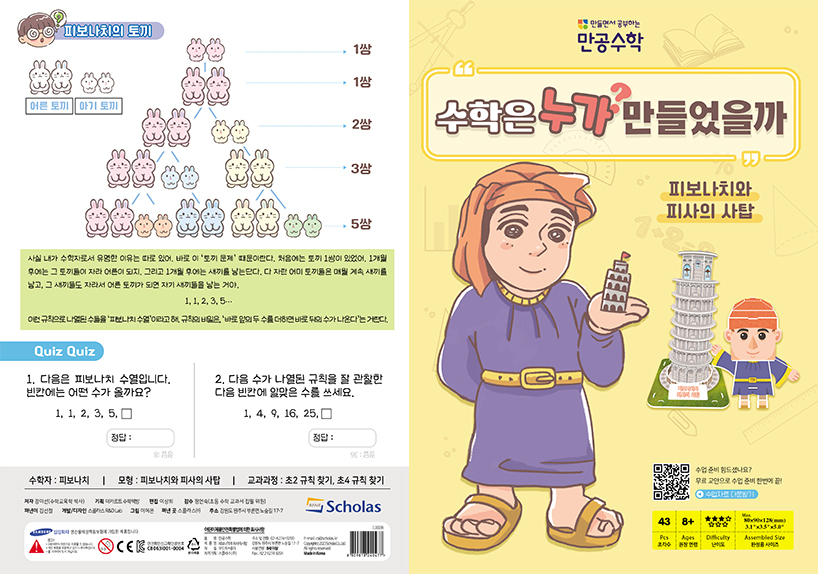
This book also featured a famous math problem about rabbit populations, leading to the creation of the Fibonacci sequence.
The Fibonacci sequence starts with 0 and 1, and each following number is the sum of the two before it: 0, 1, 1, 2, 3, 5, 8, and so on. This sequence appears in various natural patterns, such as the arrangement of leaves on a stem, the branching of trees, and the pattern of petals in flowers
The Leaning Tower of Pisa: A Marvel of Architecture
The Leaning Tower of Pisa is a freestanding bell tower in Pisa, Italy. Construction began in 1173, and it was intended to stand 185 feet (56 meters) tall
However, due to soft ground and a shallow foundation, the tower began to lean during construction. Builders tried to correct the tilt by making one side of the upper floors taller than the other, giving the tower a curved appearance.
Over the centuries, the tilt increased, reaching about 5.5 degrees by 1990
. To prevent collapse, engineers undertook stabilization efforts between 1993 and 2001, reducing the lean to about 3.97 degrees
Today, the Leaning Tower of Pisa stands as a testament to medieval engineering and remains a popular tourist attraction.
Connecting Fibonacci and the Leaning Tower of Pisa
While both Fibonacci and the Leaning Tower of Pisa are iconic symbols of medieval Pisa, there is no direct historical connection between the two. Fibonacci’s contributions were primarily in mathematics, introducing the Hindu–Arabic numeral system and the famous sequence that bears his name. The Leaning Tower, on the other hand, is an architectural marvel known for its unintended tilt due to unstable soil and foundation issues.
It’s worth noting that both represent the rich cultural and intellectual heritage of Pisa during the Middle Ages. Fibonacci’s work laid the foundation for modern mathematics, while the Leaning Tower showcases the architectural ambitions and challenges of the era.
For a visual exploration of the Leaning Tower of Pisa, you might find this video informative:
How To Make
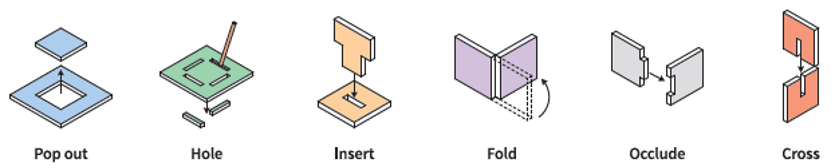
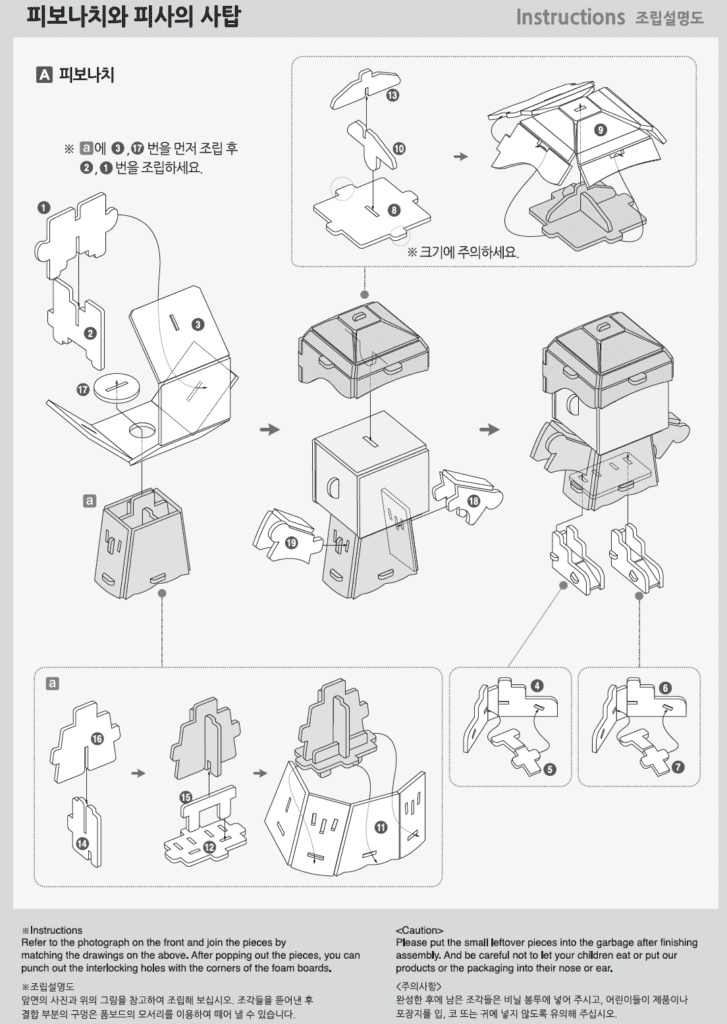
Instructions
Why do you need 3D Puzzle
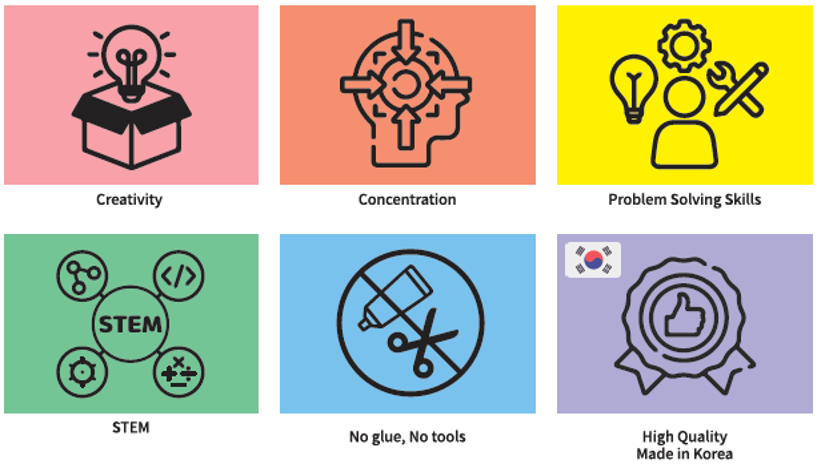
3D Puzzles enhances problem-solving skills, scientific thinking, and creativity, making them highly beneficial for STEM (Science, Technology, Engineering, and Mathematics).
What Our Customers Say
Explore why enthusiasts rave about building 3D puzzles. Here are some stories from our satisfied customers!
Student Worksheet & Answer Sheet Download
Certification

Reviews
There are no reviews yet.