
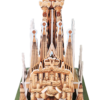
Description
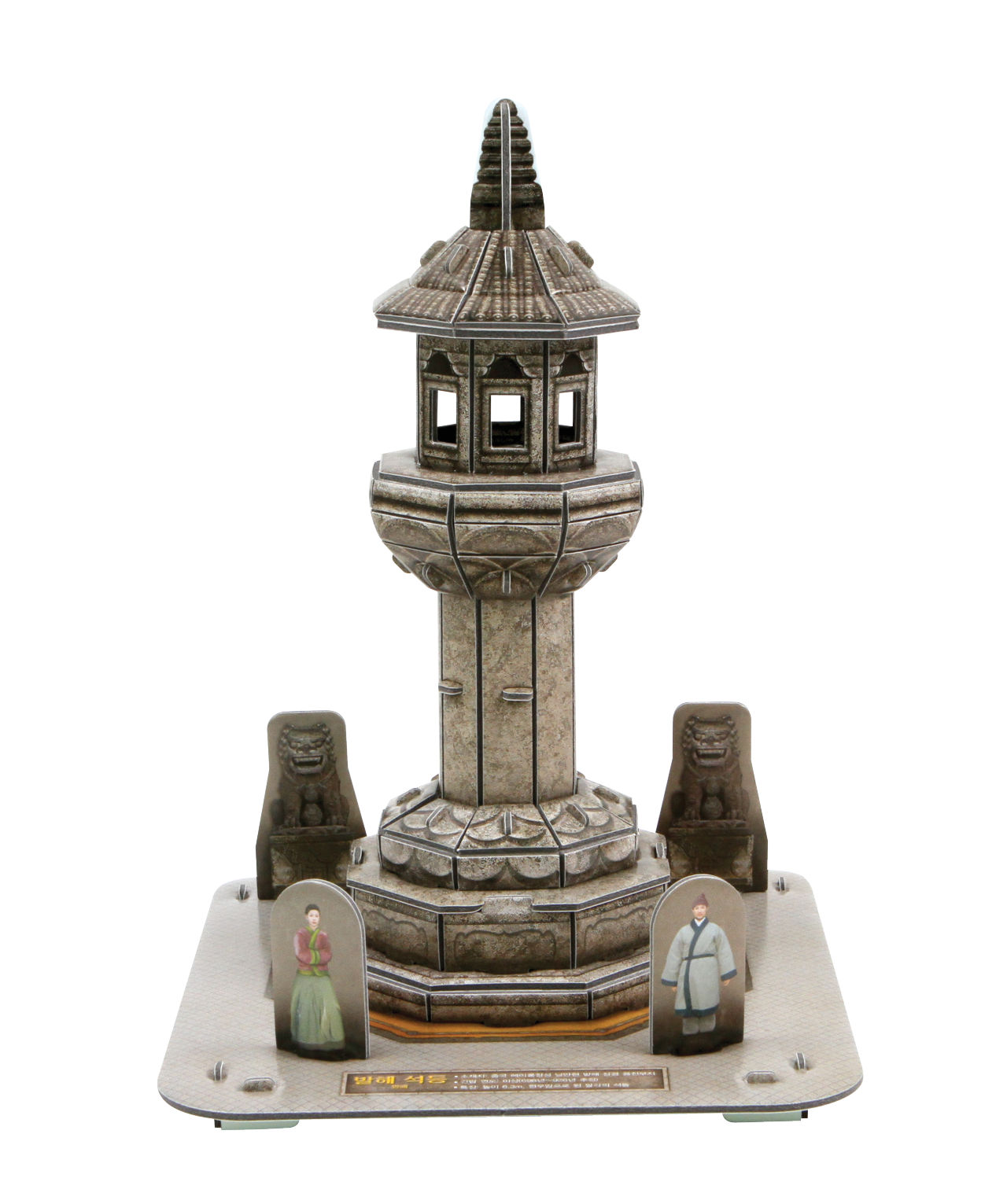
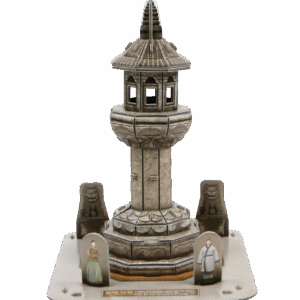
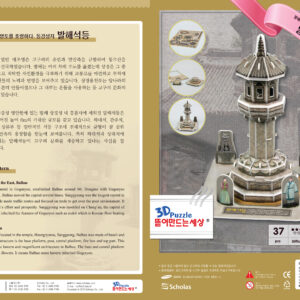
Balhae Stone Lantern
Category: K-history
Model Name: Balhae Stone Lantern Ornament
Model No.: 134x147x191
PCS: 38
Ages: 8+
Difficulty: ★★★☆☆☆☆
Assembled Size: 134x147x191
Board Size: 300×210
Product Contents: Puzzle Board, Instruction Sheet
| 33 | 8+ | ★★★☆ ☆☆☆ | 134x147x191(mm) | 300×210(mm) x 2Sheets |
| PCS | Ages | Difficulty | Assembled Size | Board Size |
Summery of key features
- No. HS20-020
- Board Size: 300×210(mm)x2Sheets
3D Puzzle
Learning Through Play
Best Hands-on Education
We believe in
Hands-On Education
Hands-on learning is the best approach to learning rather than just being taught the theory via books.
Information
Balhae Stone Lantern
1. What Is the Balhae Stone Lantern?
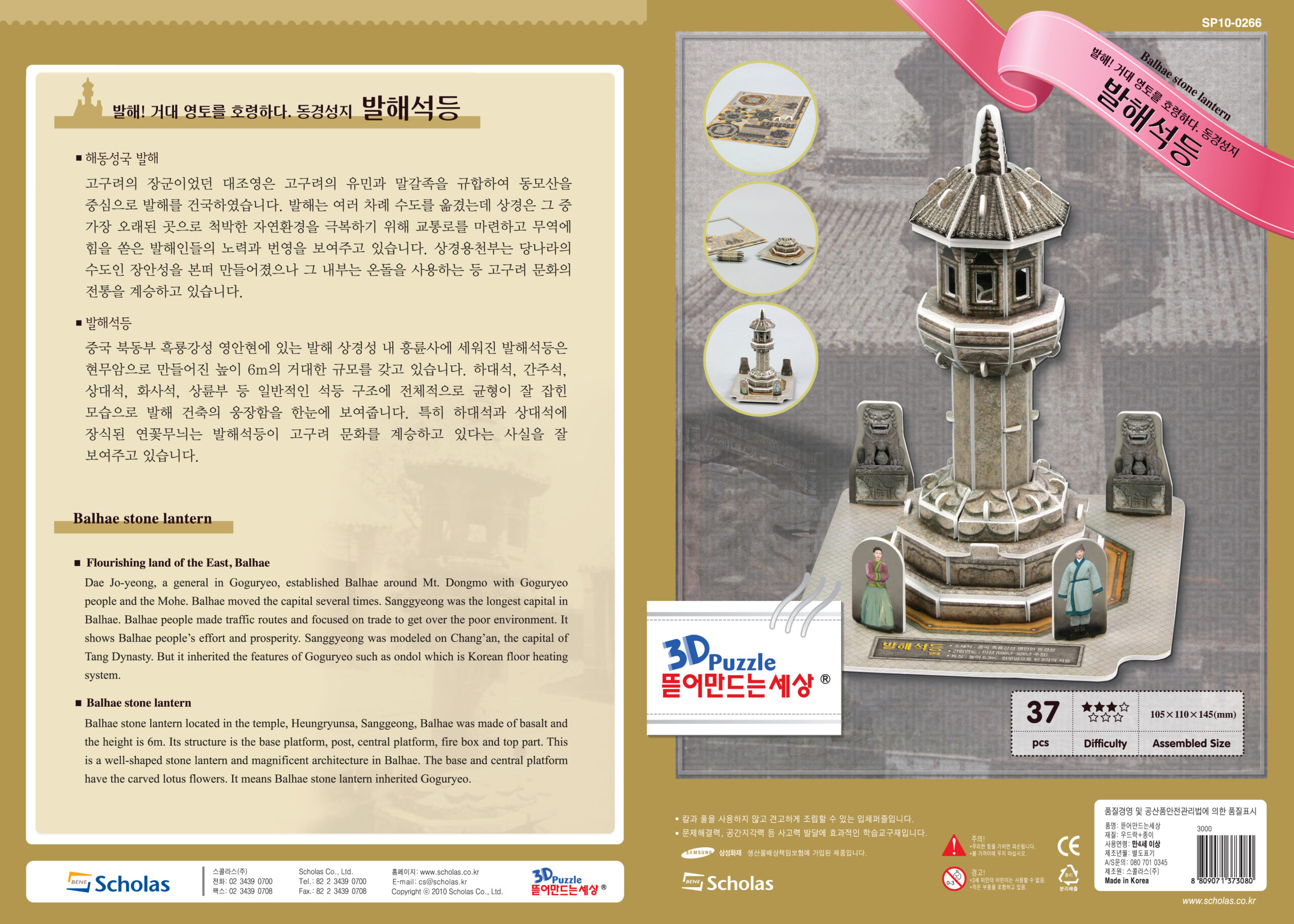
The Balhae Stone Lantern is considered one of the finest examples of Balhae’s stone art. It is located at Heungnyungsa Temple in Ning’an County, Heilongjiang Province, China.
Why were stone lanterns made? They were used to light the paths for monks walking through temple grounds at night. Since temples were often deep in the mountains, wild animals sometimes wandered in, and lighting the lanterns helped deter them. Symbolically, the lantern represents the Buddha’s wisdom and teachings—like a light that dispels the darkness of the world and human ignorance. Stone lanterns also served as protective monuments near tombs, much like folding screen stones (byeongpungseok).
2. What Are the Structure and Features of the Balhae Stone Lantern?
The Balhae Stone Lantern stands on the site of a temple in Sanggyeong, the capital of Balhae. Including the now-missing upper section, its original height is estimated to have been about 6.4 meters. It is the only surviving stone lantern from the Balhae period and is similar in size and shape to the stone lantern in front of the Hall of Enlightenment at Hwaeomsa Temple in Unified Silla (National Treasure No. 12).
Made of basalt, the lantern preserves the essential form of traditional stone lanterns. The lotus patterns carved on the top and bottom of the pillar give a strong and dynamic impression, showing that Balhae’s art inherited the style of Goguryeo.
The fire chamber, also called hwasa-seok, is octagonal, with each corner featuring intricately carved base stones, columns, and capitals. Above it is an octagonal roof, resembling a traditional pavilion.
3. What Was Balhae?
After the fall of Goguryeo, the Tang Dynasty’s control over the northern Daedong River and Liaodong regions weakened. Seizing this opportunity, in 698, Dae Joyeong—a former Goguryeo general—led Goguryeo refugees and the Malgal people to establish Balhae at the foot of Mount Dongmo in present-day Jilin Province.
Balhae gradually expanded its territory, reclaiming most of Goguryeo’s former lands. In the early 9th century, it reached its peak by advancing into the Liaodong region. The Tang Dynasty referred to Balhae as Haedong Seongguk, meaning “the flourishing kingdom in the east.”
However, in the early 10th century, the Khitan unified their tribes and expanded eastward. Internal power struggles among Balhae’s nobility further weakened the state. Eventually, Balhae fell to the Khitan invasion in 926.
Balhae inherited Goguryeo’s culture and developed its own unique civilization through active exchanges with Unified Silla, Tang China, and Japan. Although the majority of Balhae’s population was Malgal rather than Goguryeo, the kingdom referred to itself as “Goryeo” or “King of Goryeo” in diplomatic letters to Japan—to emphasize its succession from Goguryeo.
4. Why Was Balhae Known as “The Land Where Nothing Is Missing”?
Balhae’s territory was vast, but its cold climate made farming difficult. Facing frequent food shortages, Balhae chose to actively engage in trade with neighboring countries to obtain food, goods, and cultural influences.
Its specialty products included sable, tiger and leopard pelts, horses, and ginseng—all highly sought after by surrounding nations. Sanggyeong, the capital of Balhae, was a hub where domestic and international trade routes converged. It was said, “There’s nothing you can’t find here!”—a testament to its bustling marketplace filled with merchants.
5. Glossary
Byeongpungseok (병풍석): Flat stones arranged around a tomb like a folding screen.
Golden Age (전성기): A period of peak strength and prosperity.
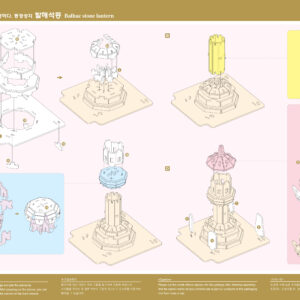
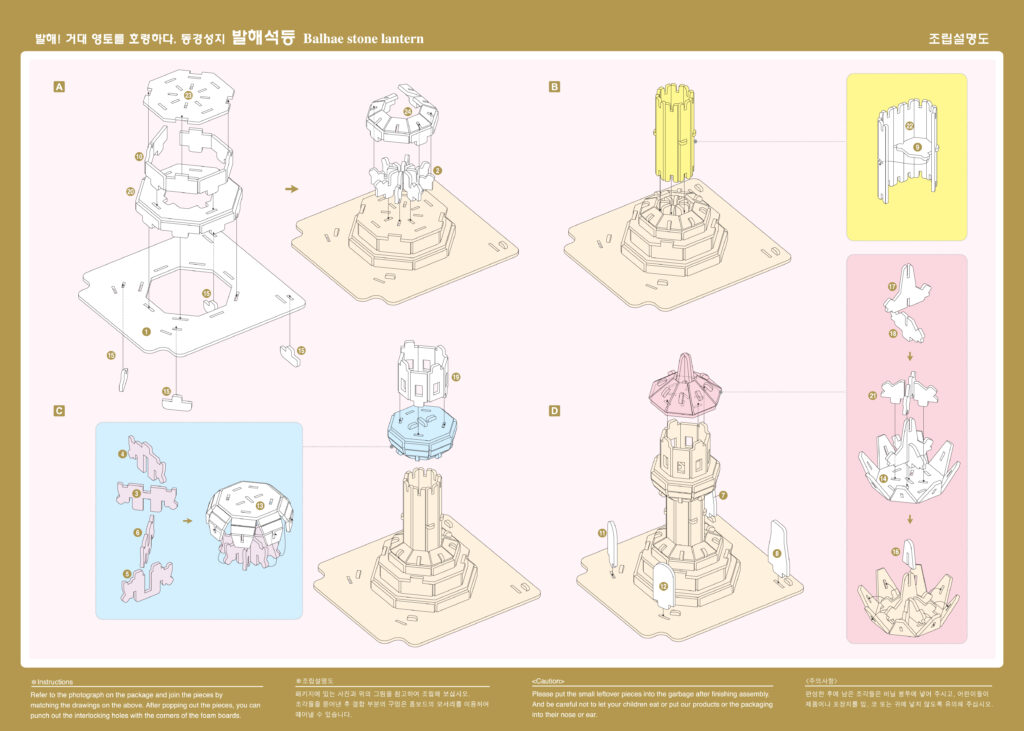
How To Make
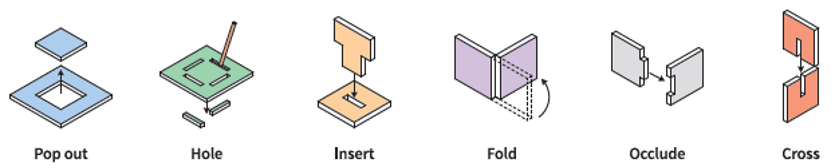
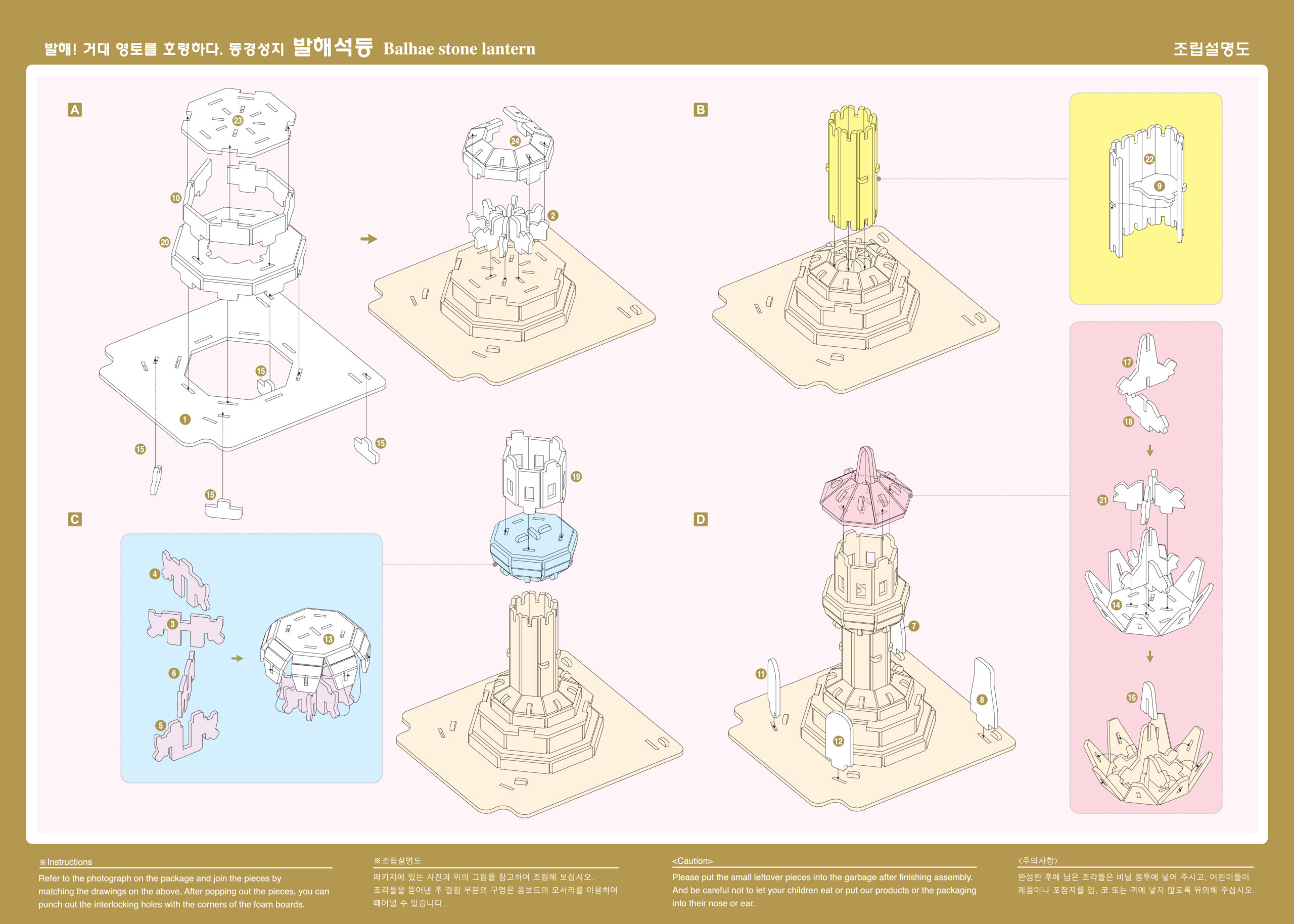
Instructions
Why do you need 3D Puzzle
3D Puzzles enhances problem-solving skills, scientific thinking, and creativity, making them highly beneficial for STEM (Science, Technology, Engineering, and Mathematics).
What Our Customers Say
Explore why enthusiasts rave about building 3D puzzle. Here are some stories from our satisfied customers!
Student Worksheet & Answer Sheet Download
Certification


Reviews
There are no reviews yet.