
Description
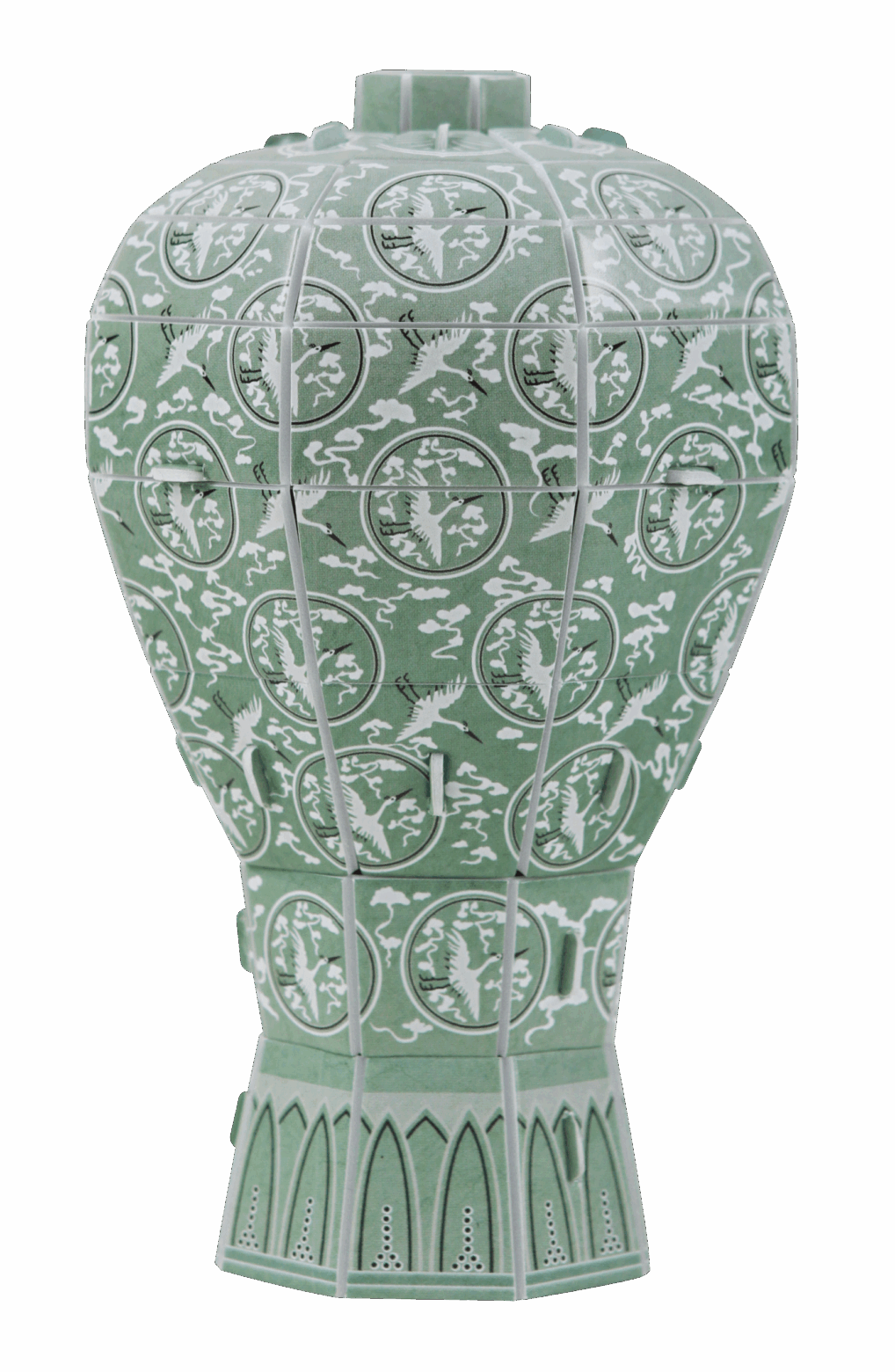
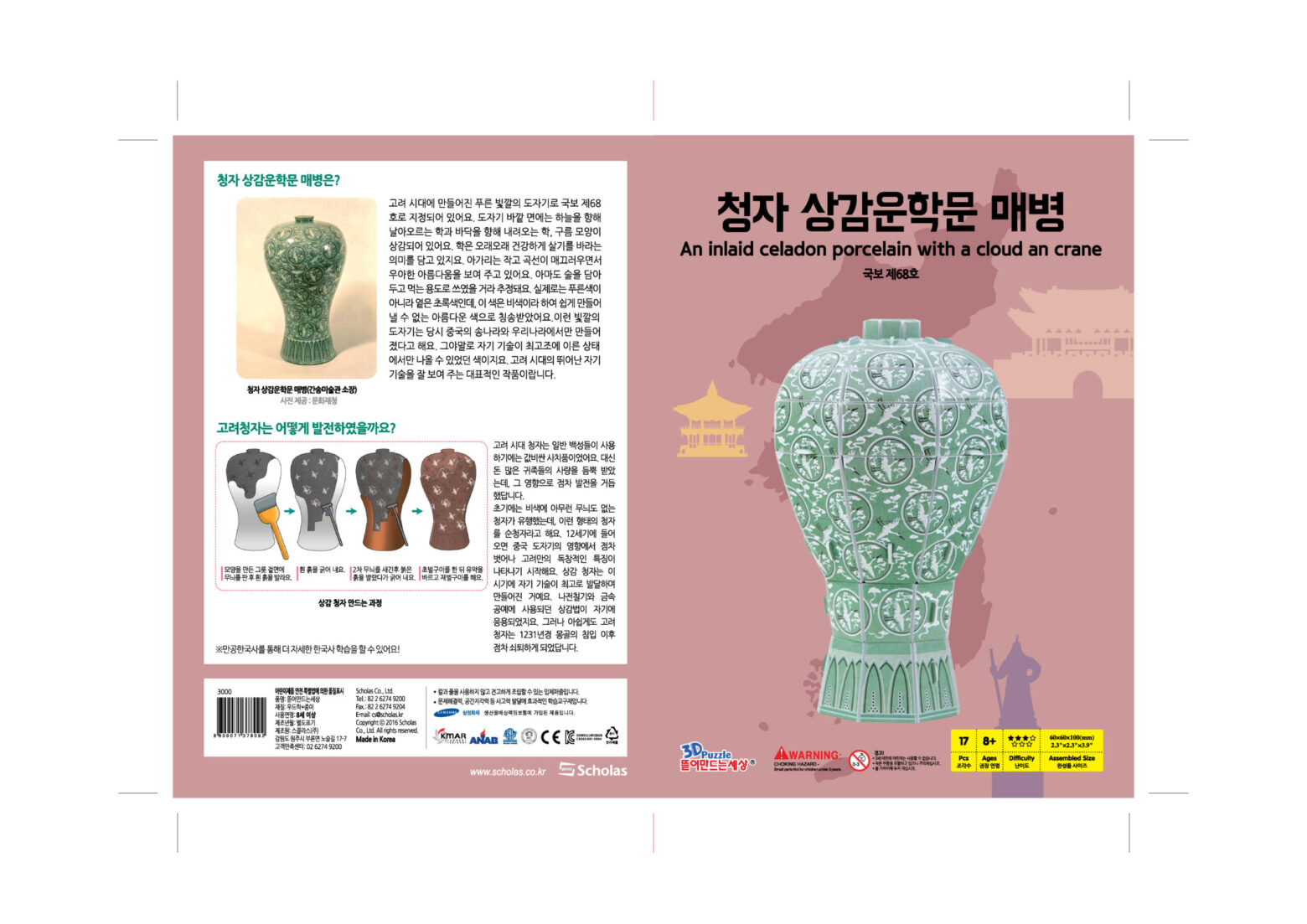
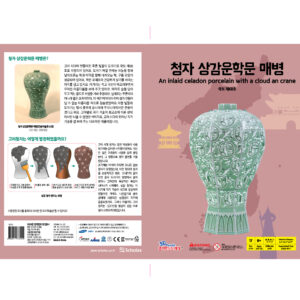
Celadon Prunus Vase with Inlaid Cloud and Crane Design
Category: K-history
Model Name: Celadon Prunus Vase with Inlaid Cloud and Crane Design
Model No.: HS20-057
PCS: 22
Ages: 8+
Difficulty: ★★★☆☆☆☆
Assembled Size: 85x85x145
Board Size: 300×210
Product Contents: Puzzle Board, Instruction Sheet
| 22 | 8+ | ★★★☆ ☆☆☆ | 85x85x145(mm) | 300×210(mm) x 2Sheets |
| PCS | Ages | Difficulty | Assembled Size | Board Size |
Summery of key features
- No. HS20-057
- Board Size: 300×210(mm)x2Sheets
3D Puzzle
Learning Through Play
Best Hands-on Education
We believe in
Hands-On Education
Hands-on learning is the best approach to learning rather than just being taught the theory via books.
Information
Celadon Prunus Vase with Inlaid Cloud and Crane Design
1. What Is the Celadon Vase with Inlaid Cloud and Crane Design?
This elegant celadon vase from the Goryeo Dynasty is designated as National Treasure No. 68. Its surface features inlaid designs of cranes flying toward the sky and descending toward the earth, along with stylized clouds. The crane symbolizes longevity and good health.
The vase has a small mouth and graceful curves, showcasing refined beauty. It is believed to have been used for storing and serving liquor.
Although often described as blue, its actual color is a pale green known as bisaek—a rare and highly praised hue that was extremely difficult to produce. This color was only achieved in the finest celadon wares of the Song Dynasty in China and Goryeo Korea, reflecting the peak of ceramic craftsmanship.
This vase is considered one of the finest examples of Goryeo celadon artistry.
2. How Did Goryeo Celadon Develop?
During the Goryeo Dynasty, celadon was a luxury item, too expensive for commoners. It was especially beloved by the aristocracy, which drove its artistic evolution.
Early celadon featured the signature bisaek glaze without any decoration—these are called pure celadon. By the 12th century, Goryeo ceramics began to develop distinct characteristics, moving away from Chinese influence.
The inlay technique—originally used in lacquerware and metalwork—was adapted for ceramics during this period, marking the height of Goryeo’s ceramic technology. Unfortunately, after the Mongol invasions around 1231, Goryeo celadon gradually declined.
Military Coup and Special Administrative Districts
3. Did the Military Coup Overthrow the Aristocratic Order?
During the 12th and 13th centuries, when this celadon vase was created, Goryeo was ruled by military officials. In the early Goryeo period, power was held by aristocratic civil officials, while military officials were marginalized.
Despite holding the same ranks, military officials were treated unfairly compared to their civil counterparts. Even top military positions were given to civil officials—General Gang Gam-chan and diplomat Seo Hui were both civil officials.
Resentment among the military grew. In 1170, King Uijong (r. 1146–1170) held a banquet at Bohyeonwon while en route to a retreat. During a wrestling match, an older military official named Yi So-eung lost to a younger one, and civil official Han Roe slapped him in humiliation.
Outraged, military leaders including Jeong Jung-bu led soldiers to Bohyeonwon, killed the civil officials, exiled King Uijong, and installed his brother as the new king. This event is known as the Military Coup of 1170, which marked the fall of the aristocracy and the rise of military rule.
4. Who Were the Artists Behind Goryeo Celadon?
Who crafted such refined and graceful works like the celadon vase with cloud and crane designs? They were artisans from So villages—special administrative districts in Goryeo where residents faced social discrimination.
Goryeo was divided into five provinces and further into counties and prefectures. In addition to these, special districts called Hyang, Bugok, and So were created. These areas were designated by the state based on natural or social conditions favorable for producing specific goods.
Residents of these districts paid regular taxes like others, but also had to contribute additional labor. People in So villages produced weapons, paper, clothing, and ceramics—often under harsh conditions.
However, if they contributed significantly to national defense or other state needs, they could be elevated to regular administrative status. For example, Daincheolso in Chungju was later promoted to Ik-an-hyeon. These discriminatory divisions were abolished during the Joseon Dynasty.
5. Glossary
Inlay Technique (상감법): A decorative method where patterns are carved into the surface of metal, ceramics, or wood, then filled with materials like gold, silver, gems, clay, or mother-of-pearl.
Glaze (유약): A coating applied to ceramics to seal the surface and prevent liquids or gases from penetrating.
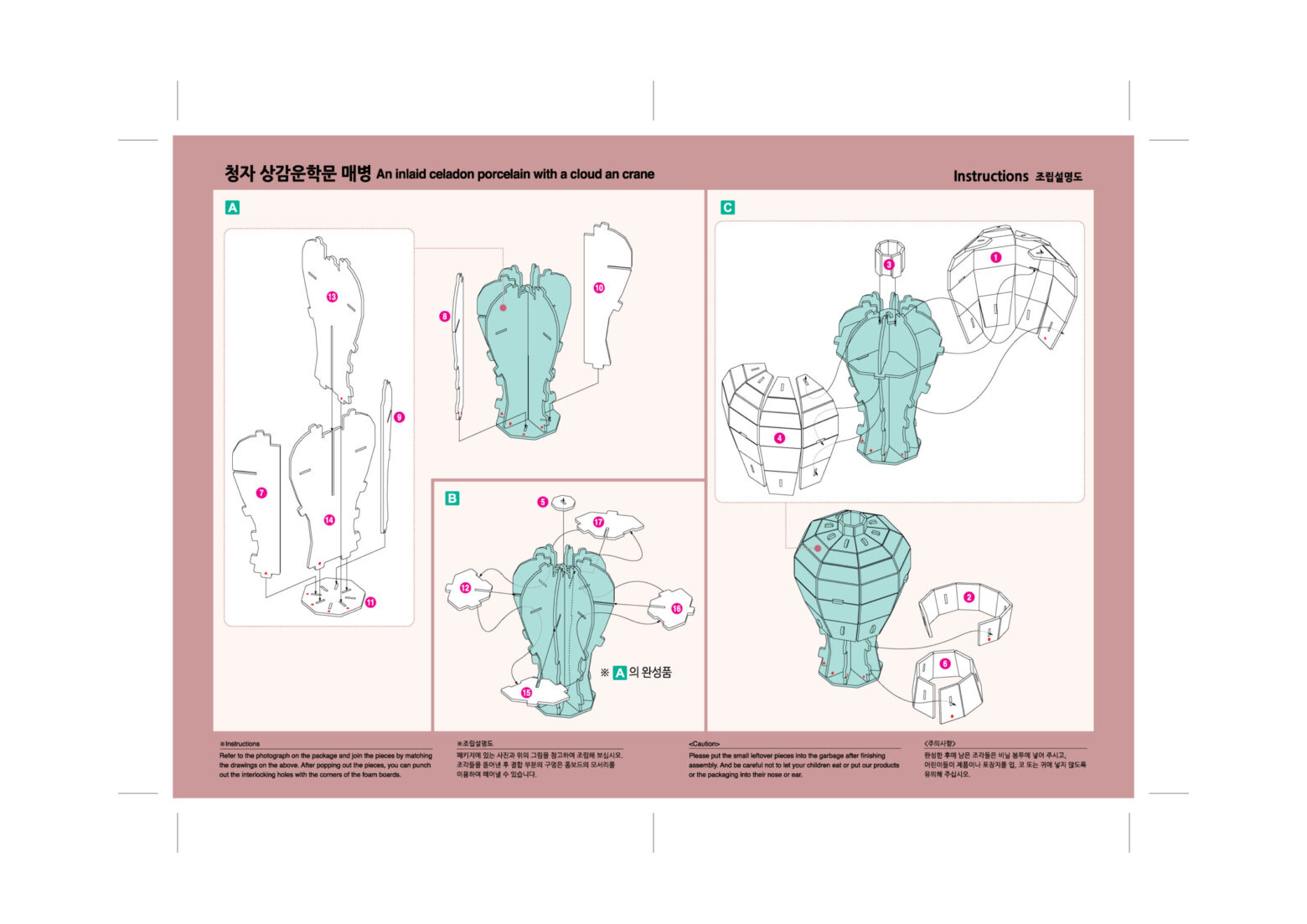
How To Make
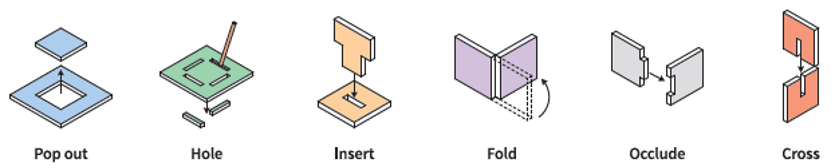
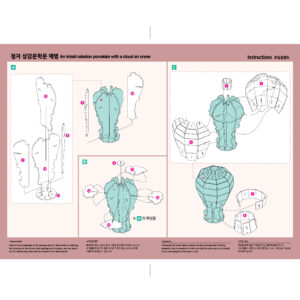
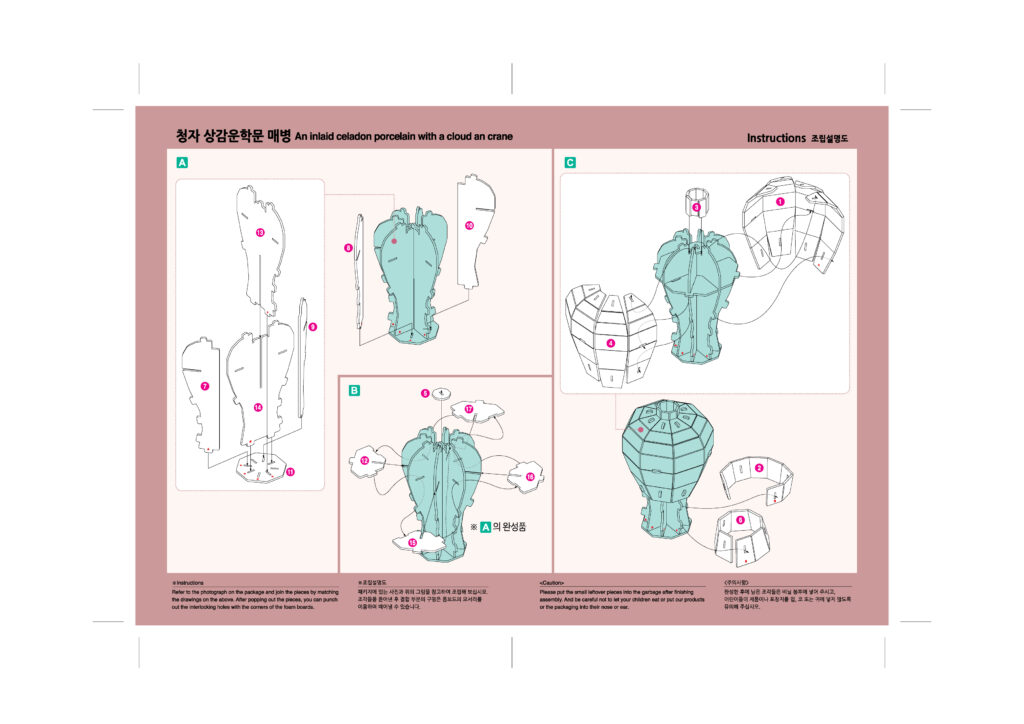
Instructions
Why do you need 3D Puzzle
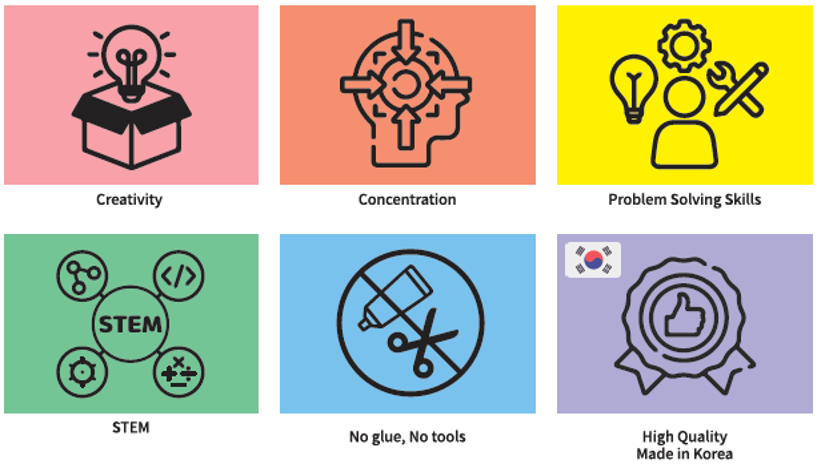
3D Puzzles enhances problem-solving skills, scientific thinking, and creativity, making them highly beneficial for STEM (Science, Technology, Engineering, and Mathematics).
What Our Customers Say
Explore why enthusiasts rave about building 3D puzzle. Here are some stories from our satisfied customers!
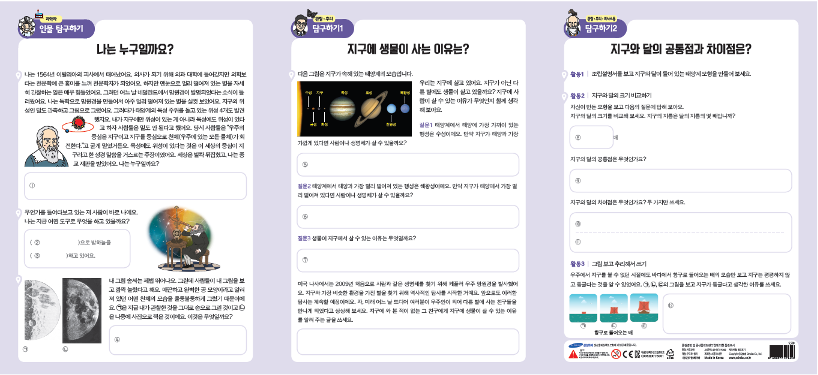
Student Worksheet & Answer Sheet Download
Certification

Reviews
There are no reviews yet.