
Description
Seokgatap and Dabotap
Category: K-history
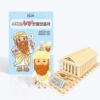
Model Name: Seokgatap and Dabotap
Model No.: HS20-018
PCS: 66
Ages: 8+
Difficulty: ★★★☆☆☆☆
Assembled Size: Max.105x110x143
Board Size: 300×210
Product Contents: Puzzle Board, Instruction Sheet
| 66 | 8+ |
| Max.105x110x143(mm) | 300×210(mm) x 2Sheets |
| PCS | Ages | Difficulty | Assembled Size | Board Size |
Summery of key features
- No. HS20-018
- Board Size: 300x210
3D Puzzle
Learning Through Play
Best Hands-on Education
We believe in
Hands-On Education
Hands-on learning is the best approach to learning rather than just being taught the theory via books.
Information
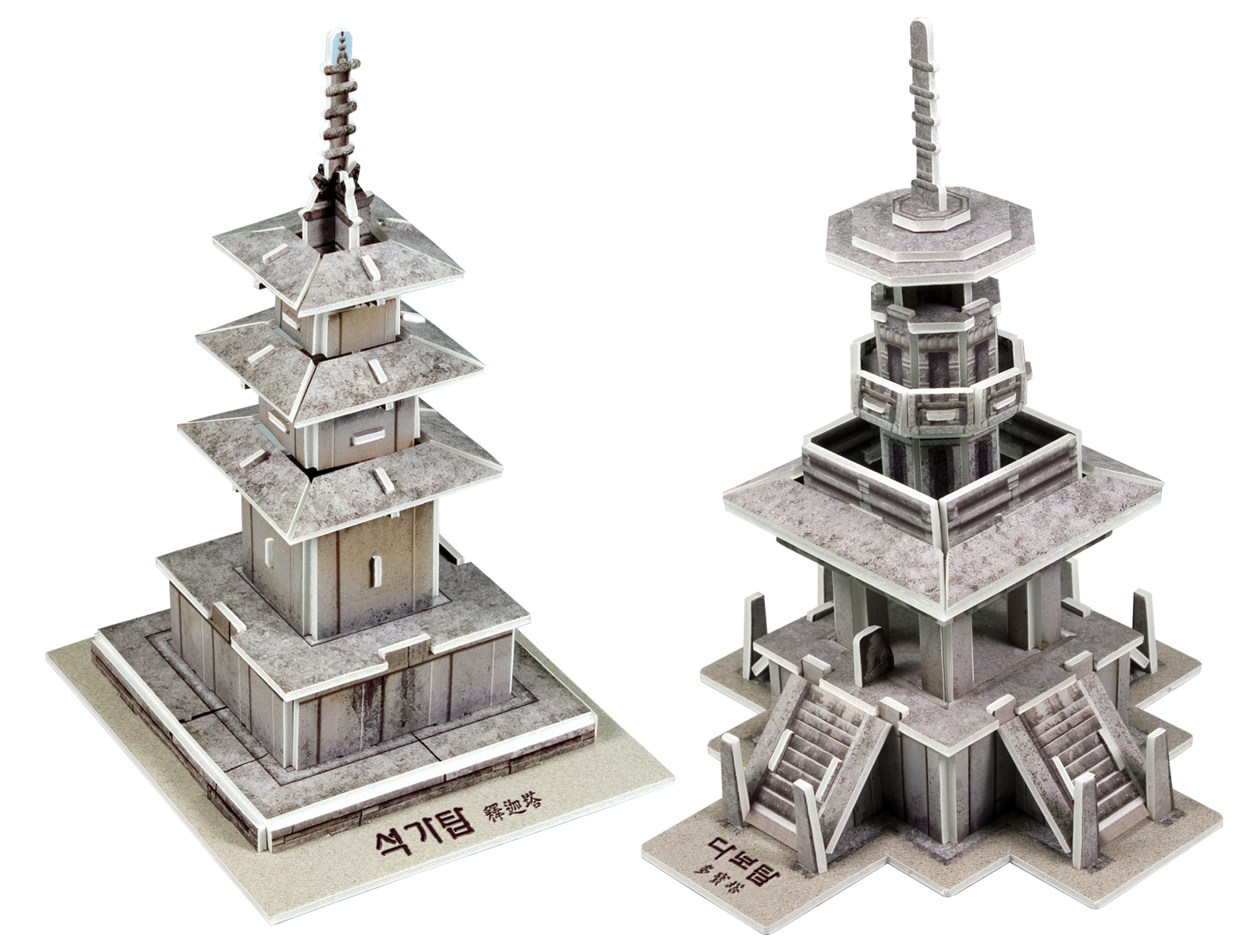
Seokgatap and Dabotap
1. What Are Seokgatap and Dabotap?
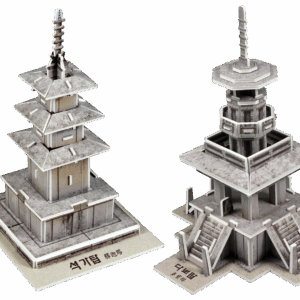
Seokgatap and Dabotap are two stone pagodas located in front of the main hall (Daeungjeon) of Bulguksa Temple in Gyeongju. In Silla, it was customary to build two identical pagodas side by side in the courtyard of a temple’s main hall. However, Seokgatap (Three-story Stone Pagoda of Bulguksa, National Treasure No. 21) and Dabotap (Dabotap of Bulguksa, National Treasure No. 20) stand next to each other but look completely different.
Why were they built in such contrasting styles? The answer lies in the Buddhist scripture Lotus Sutra (Beophwagyeong), which contains profound teachings. These pagodas were designed to visually express those teachings, allowing the people of Silla to gain spiritual insight through their form.
2. What Do Seokgatap and Dabotap Symbolize?
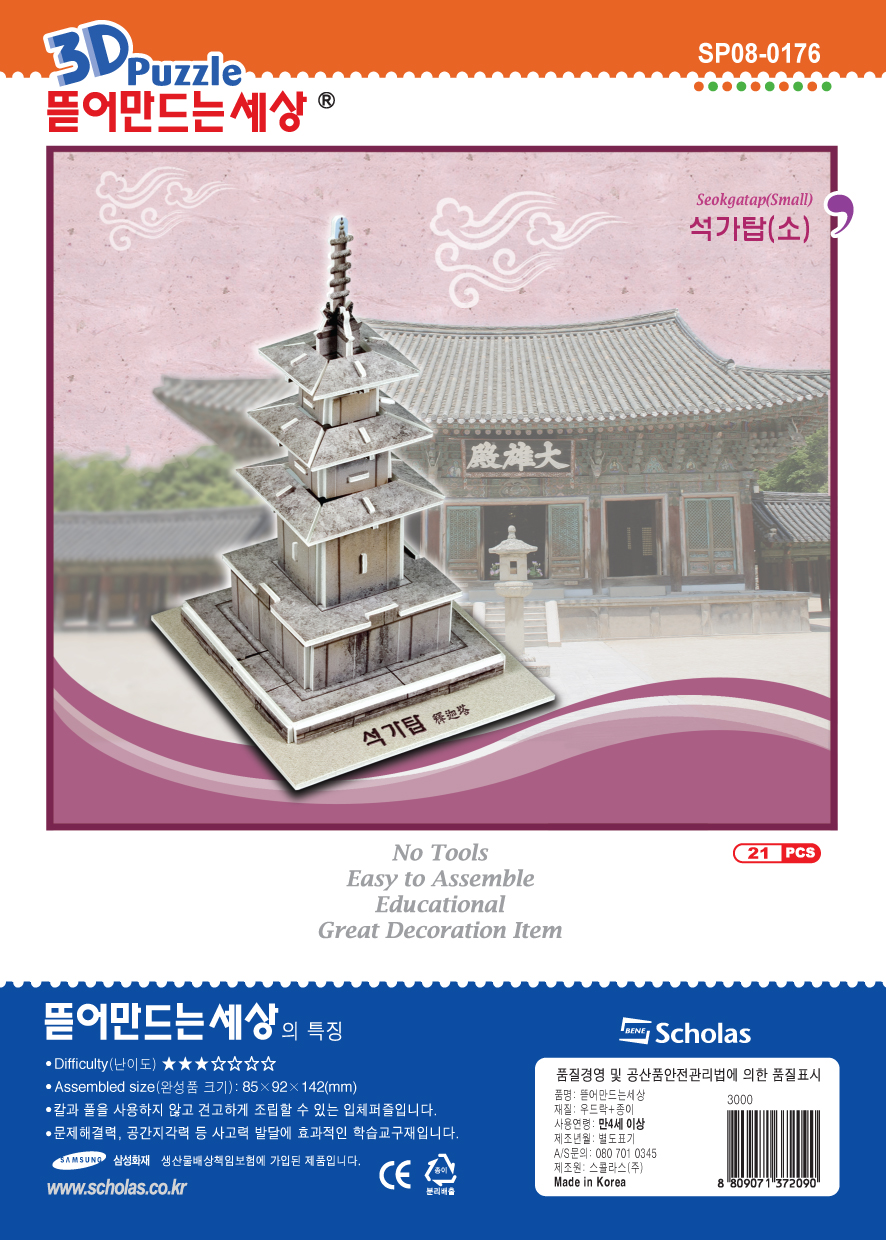
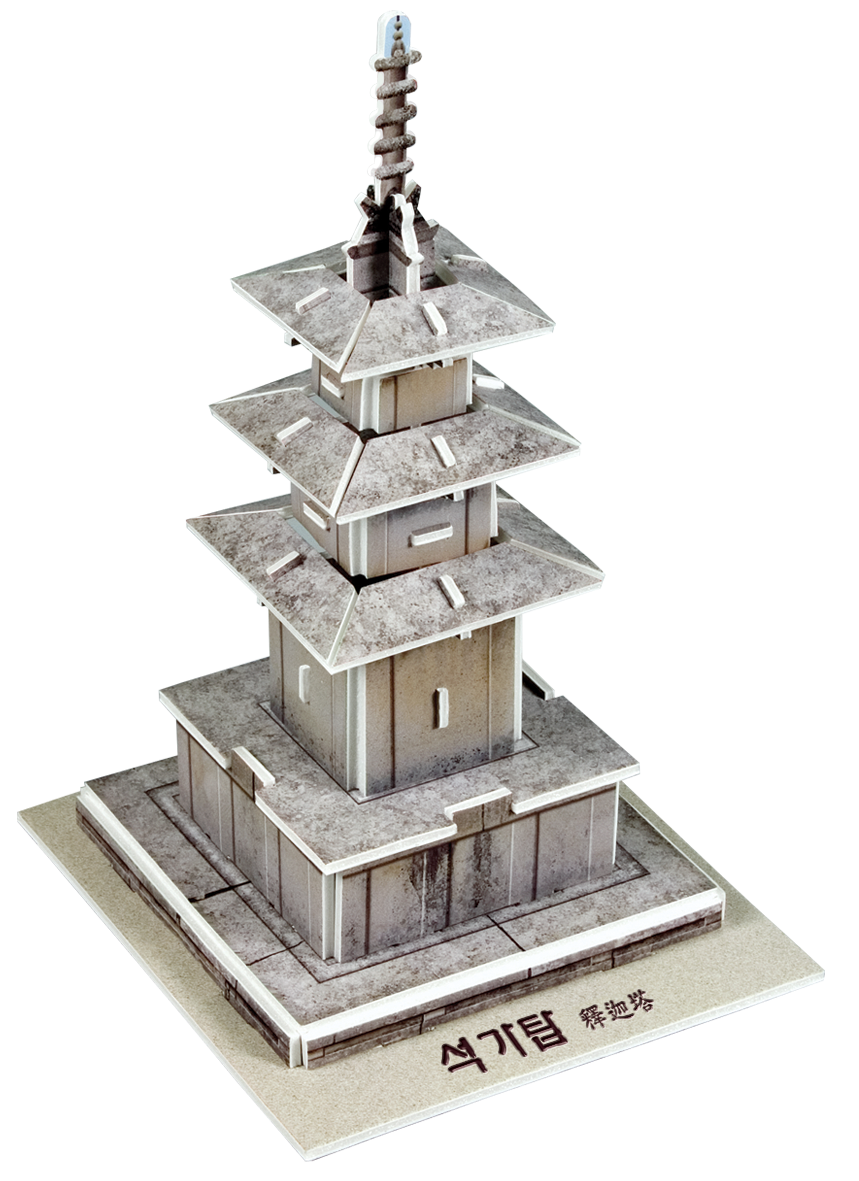
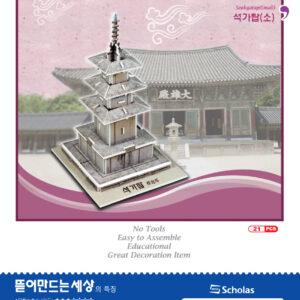
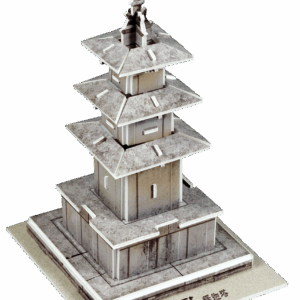
Seokgatap symbolizes Shakyamuni Buddha. It is simple and unadorned, yet its proportions are beautifully balanced, giving a sense of calm and stability. The base features eight lotus-shaped supports, representing the spread of the Buddha’s teachings throughout the world.
Dabotap represents the eternal truth and the presence of Prabhutaratna Buddha (Dabo Yeorae). Its base has four sets of ten steps facing north, south, east, and west—symbolizing the 40 stages of enlightenment granted to spiritual seekers. The layered structure above represents the virtues that arise when one practices fundamental moral principles.
Originally, four stone lions stood atop the base, but three were looted during the Japanese occupation and remain missing. Only one lion remains today.
The Legend of Asadal and Asanyeo
3. The Sad Story Behind the “Shadowless Pagoda”
Asadal, a stonemason from the ancient Baekje kingdom, was summoned by Kim Dae-seong to build a pagoda in Seorabeol (present-day Gyeongju). His wife, Asanyeo, longed for his return and eventually traveled to Seorabeol to find him.
However, she couldn’t meet him and was told by a monk, “Come back when the pagoda’s shadow appears in the pond below the temple.” She waited by the pond every day, hoping to see the shadow. One day, she saw a vision of Asadal reflected in the water and, overcome with emotion, fell into the pond and drowned.
After the pagoda was completed, Asadal learned of his wife’s tragic fate and rushed to the pond, only to find she was gone. Grief-stricken, he threw himself into the same pond.
Since then, the pond has been called Yeongji (影池), meaning “Shadow Pond,” and the pagoda he built was named Muyeongtap (無影塔), or “Shadowless Pagoda”—which is believed to be Seokgatap.
4. What Treasures Were Found Inside Seokgatap?
In 1966, during restoration work at Bulguksa Temple, it was discovered that Seokgatap’s structure had tilted. When the pagoda was dismantled for repairs, a trove of precious relics was found inside the second story.
Among them was the Mugujeonggwang Daedaranigyeong, known as the oldest surviving woodblock-printed text in the world. A total of 28 artifacts, including this scripture, were designated as National Treasure No. 126.
5. Glossary
Seolbeop (설법): The act of explaining Buddhist teachings.
Beophwagyeong (법화경): The Lotus Sutra, formally titled Saddharmapundarika Sutra, one of the most important Buddhist scriptures.
Gudoja (구도자): A seeker of truth or spiritual enlightenment.
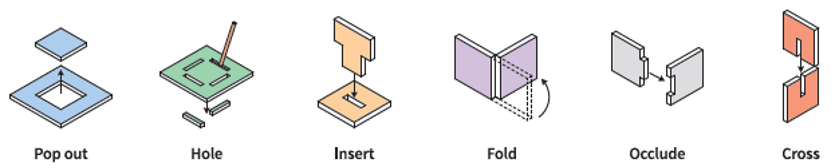
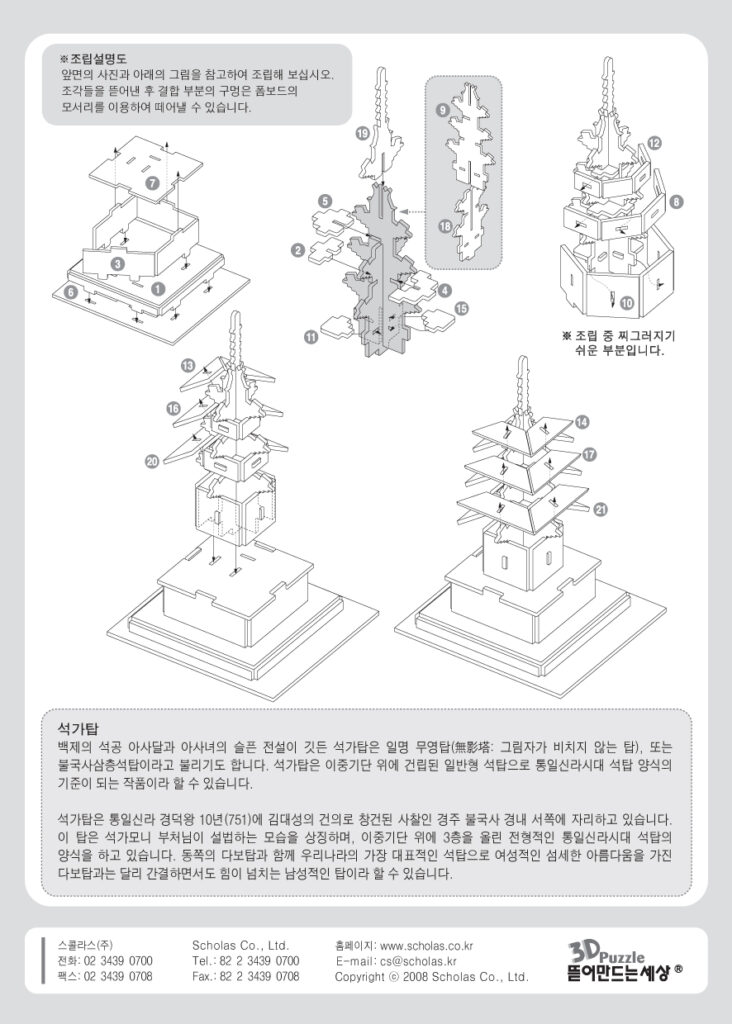
How To Make
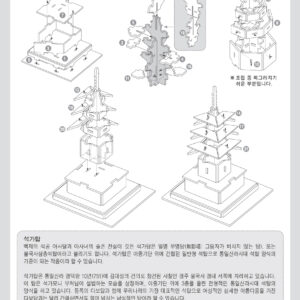
Instructions
Why do you need 3D Puzzle
3D Puzzles enhances problem-solving skills, scientific thinking, and creativity, making them highly beneficial for STEM (Science, Technology, Engineering, and Mathematics).
What Our Customers Say
Explore why enthusiasts rave about building 3D puzzle. Here are some stories from our satisfied customers!
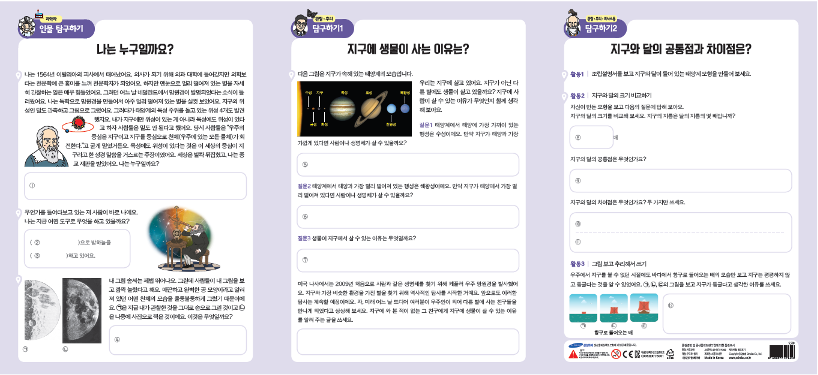
Student Worksheet & Answer Sheet Download
Certification

Reviews
There are no reviews yet.