 Click here to take the quiz!
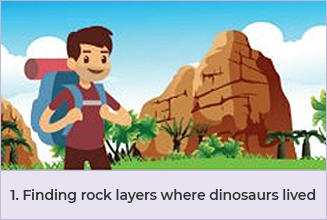
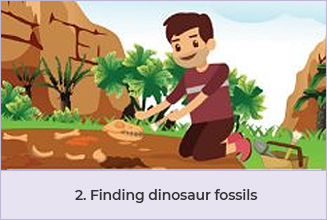
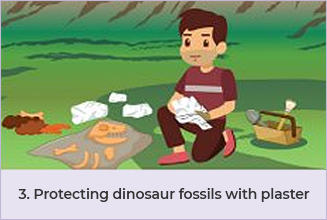
If I could travel back in time about 225 million years to the Mesozoic era, I would love to see dinosaurs roaming around alive. At that time, they dominated the Earth. The massive reptiles that ruled the Earth during the Mesozoic era, ①  , are no longer here today. However, ② like footprints, eggs, bones, and feces have been found, allowing people to learn about them. I carefully examine rocks and soil while searching for animal fossils. When I find a dinosaur fossil, I get excited because I want to uncover its secrets. Even working under the scorching sun all day during excavations, I can endure it. Would you like to see my process?
 , are no longer here today. However, ② like footprints, eggs, bones, and feces have been found, allowing people to learn about them. I carefully examine rocks and soil while searching for animal fossils. When I find a dinosaur fossil, I get excited because I want to uncover its secrets. Even working under the scorching sun all day during excavations, I can endure it. Would you like to see my process?
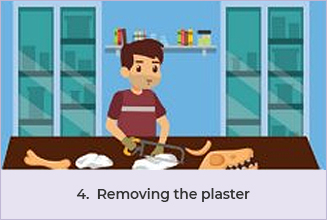
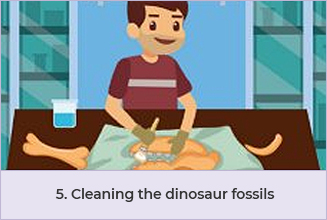
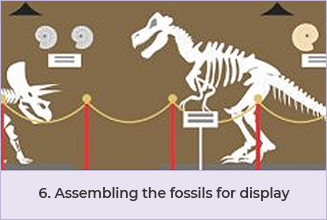
What is the profession of someone like me, who digs up fossils and studies ancient creatures like dinosaurs to learn about their appearance, the era they lived in, their environment, and events from their time? ③

People from other countries, Gideon Mantell and Richard Owen
The first person to find dinosaur fossils was the British scientist Gideon Mantell. The fossil he uncovered had a shape similar to an iguana’s teeth, but it was 20 times larger, so he thought it must be a different reptile and called it ④.
Later, as many large and new reptile fossils were discovered, Richard Owen, a scientist, gave the name “dinosaur” combining the Greek word “deinos” meaning terrible, and ⑤ meaning lizard. This term is still used today
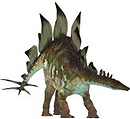
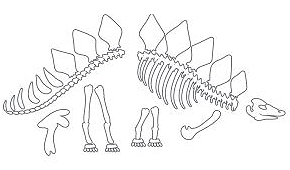
Click here to take the quiz!| 1) Stegosaurus | Characteristics |
|---|---|
 |
|
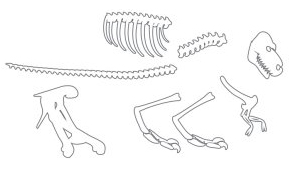
| 2) Tyrannosaurus | Characteristics |
|---|---|
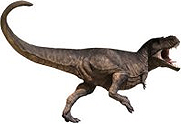 |
|

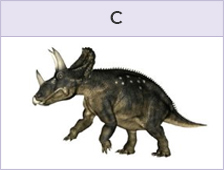
| 3) Edmontonia | Characteristics |
|---|---|
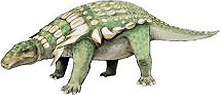 |
|
| 4) Compsognathus | Characteristics |
|---|---|
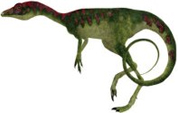 |
|
| 5) Triceratops | Characteristics |
|---|---|
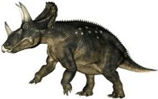 |
|
| 6) Brachiosaurus | Characteristics |
|---|---|
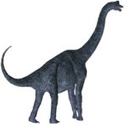 |
|
 Click here to take the quiz!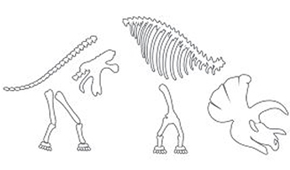
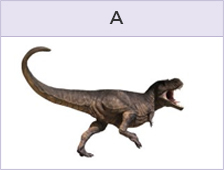
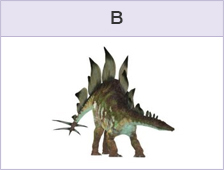
Activity 3 / Observe and reason dinosaur tracks
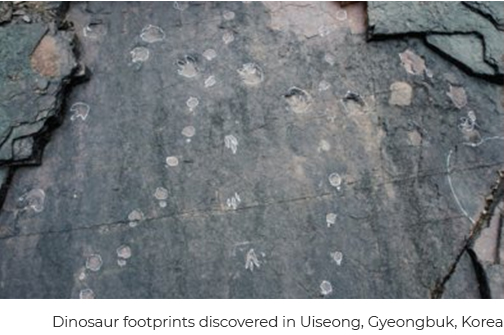
By carefully observing and drawing the dinosaur tracks, you can deduce how many different types of dinosaurs passed through this area. How many types of dinosaur tracks are there in the picture? ㉑ types
By closely examining the tracks, you can guess other characteristics, such as the dinosaur’s overall size.