
 Click here to take the quiz!
When I discovered an important butterfly, I would pursue it for hours to catch it. On one occasion, while collecting in Jirisan Mountain, I found a small butterfly I had never seen before. I chased it for over three hours, falling many times and becoming covered in blood, but eventually, I managed to catch it. I named the butterfly ‘①  Pale Butterfly’ after the place of discovery.
About five years after I began studying butterflies, I analyzed around 160,000 butterflies and published a paper titled “A Study on the Variation of the Cabbage White Butterfly” in 1936. By studying the shape, patterns, coloration, form, and length of the wings, I discovered that over 20 butterflies, previously classified as different species, were actually all part of the cabbage white butterfly species. This research led to the publication of “A Synonymic List of Butterflies of Korea” as an English monograph in 1938, following a request from the Royal Society of London.
Japanese researchers had classified Korean butterflies into 921 species. However, after a decade of studying variations, I demonstrated that their classification was inaccurate. I reclassified the species into 250 groups, demonstrating that minor differences in traits should not separate them. I traveled across the country, collecting over 750,000 butterflies and documenting their distribution.
Pale Butterfly’ after the place of discovery.
About five years after I began studying butterflies, I analyzed around 160,000 butterflies and published a paper titled “A Study on the Variation of the Cabbage White Butterfly” in 1936. By studying the shape, patterns, coloration, form, and length of the wings, I discovered that over 20 butterflies, previously classified as different species, were actually all part of the cabbage white butterfly species. This research led to the publication of “A Synonymic List of Butterflies of Korea” as an English monograph in 1938, following a request from the Royal Society of London.
Japanese researchers had classified Korean butterflies into 921 species. However, after a decade of studying variations, I demonstrated that their classification was inaccurate. I reclassified the species into 250 groups, demonstrating that minor differences in traits should not separate them. I traveled across the country, collecting over 750,000 butterflies and documenting their distribution.
 Pale Butterfly’ after the place of discovery.
About five years after I began studying butterflies, I analyzed around 160,000 butterflies and published a paper titled “A Study on the Variation of the Cabbage White Butterfly” in 1936. By studying the shape, patterns, coloration, form, and length of the wings, I discovered that over 20 butterflies, previously classified as different species, were actually all part of the cabbage white butterfly species. This research led to the publication of “A Synonymic List of Butterflies of Korea” as an English monograph in 1938, following a request from the Royal Society of London.
Japanese researchers had classified Korean butterflies into 921 species. However, after a decade of studying variations, I demonstrated that their classification was inaccurate. I reclassified the species into 250 groups, demonstrating that minor differences in traits should not separate them. I traveled across the country, collecting over 750,000 butterflies and documenting their distribution.
Pale Butterfly’ after the place of discovery.
About five years after I began studying butterflies, I analyzed around 160,000 butterflies and published a paper titled “A Study on the Variation of the Cabbage White Butterfly” in 1936. By studying the shape, patterns, coloration, form, and length of the wings, I discovered that over 20 butterflies, previously classified as different species, were actually all part of the cabbage white butterfly species. This research led to the publication of “A Synonymic List of Butterflies of Korea” as an English monograph in 1938, following a request from the Royal Society of London.
Japanese researchers had classified Korean butterflies into 921 species. However, after a decade of studying variations, I demonstrated that their classification was inaccurate. I reclassified the species into 250 groups, demonstrating that minor differences in traits should not separate them. I traveled across the country, collecting over 750,000 butterflies and documenting their distribution.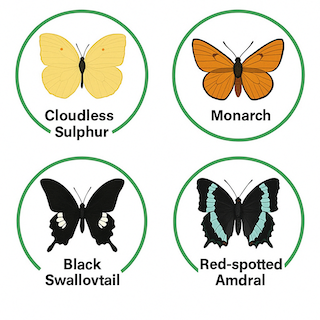
After my death, a book titled “The Distribution Maps of Butterflies in Korea” was published. I gave ② to the Korean butterflies that only had Japanese names, such as “Gaksi Met Yellow Butterfly”, “Noisy Pale Butterfly”, “Patterned Swallowtail Butterfly”, “Silver-Spotted Leopard Butterfly”, “Blue-Banded Butterfly”, and “Lightning Colored Butterfly”.
These are butterfly names I created in pure Korean. After the liberation of Korea, I continued working at the National Science Museum and stayed during the Korean War to protect over 150,000 butterfly specimens. I was known as the “Butterfly Doctor”. Who am I? ③
to the Korean butterflies that only had Japanese names, such as “Gaksi Met Yellow Butterfly”, “Noisy Pale Butterfly”, “Patterned Swallowtail Butterfly”, “Silver-Spotted Leopard Butterfly”, “Blue-Banded Butterfly”, and “Lightning Colored Butterfly”.
These are butterfly names I created in pure Korean. After the liberation of Korea, I continued working at the National Science Museum and stayed during the Korean War to protect over 150,000 butterfly specimens. I was known as the “Butterfly Doctor”. Who am I? ③ Click here to take the quiz!| Butterfly |
|---|
 Egg → Larva → Pupa → Adult insect Egg → Larva → Pupa → Adult insect |
④  |
| Grasshopper |
|---|
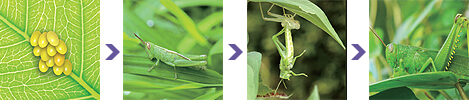 Egg → Larva → Molting → Adult insect
 |
⑤ |
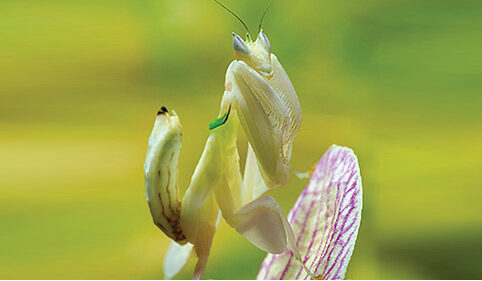
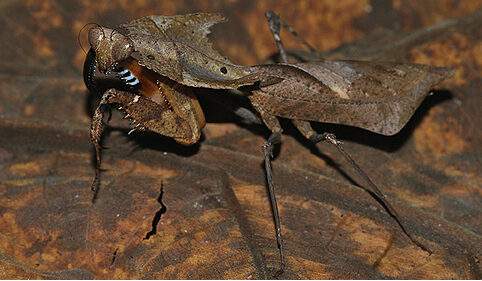
| Mantis |
|---|
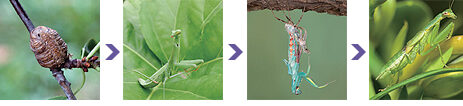 Egg → Larva → Molting → Adult insect |
| ⑥ |
| Rhinoceros beetle |
|---|
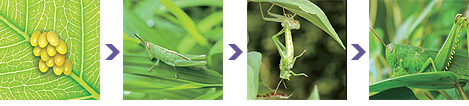 Egg → Larva → Pupa → Adult insect
 |
⑦ |
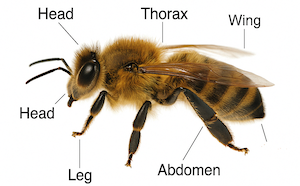
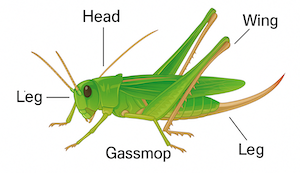
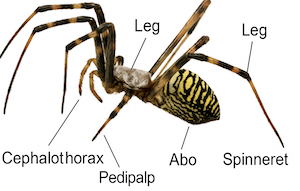
Ants
 Queen Ant /Male Ant /Worker Ant/ Soldier Ant
Click here to take the quiz!| Insect’s Proboscis | Insect’s Characteristics | Type of Food | Which Insect Is It? |
|---|---|---|---|
 |
It licks its food while eating. | ⑪ |
⑫ |
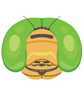 |
It has a sharp and pointed proboscis that allows it to bite into food easily. | ⑬ |
⑭ |
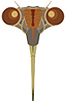 |
Its proboscis is long and pointed, which allows it to pierce and suck food. | ⑮ |
⑯ |
 |
The coiled proboscis unrolls like a straw, allowing it to suck in food while eating. | ⑰ |
⑱ |
Data Provided:Luc Viatour, https://lucnix.be
Data Provided: Bernard DUPONT from France