
 Click here to take the quiz!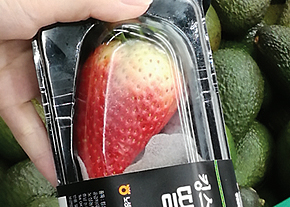
Kingsberry
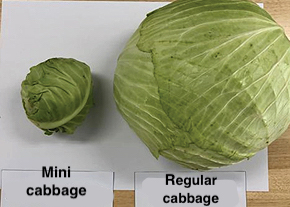
mini cabbage
Photo courtesy: Korea Agro-Fisheries & Food Trade Corporation( kati.net )
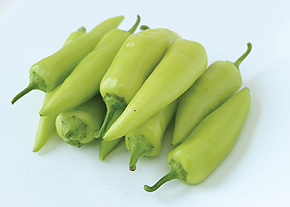
Dangjo pepper
Photo courtesy: Hyeon-Jeong Suk at flickr.com
①  ) is the process of making or improving new kinds of plants by using the genetic traits of living things. For example, if you want to make a new kind of cabbage that is both tasty and strong against pests, you can mix two cabbages, one that tastes good and one that strong against pests. The new cabbage will have both good traits — this is called breeding. Breeding takes a long time and needs to be studied again and again. Thanks to advances in genetic engineering, scientists can now use advanced bio-technology in breeding to create more kinds of plants.
Dr. Woo Jang-chun, a famous plant breeder from South Korea, showed that it is possible to mix different plants, like cabbage and Chinese cabbage, to make a new kind of plant. His research also helped improve Jeju tangerines, develop potatoes that grow well in Gangwon Province, and create cabbages that are good for making kimchi. However, most of the crops we eat today are grown from seeds developed in other countries. That means we have to pay to use those seeds.
For example, most onions sold in South Korea are from Japanese seeds, and most paprika seeds come from the Netherlands. If we develop our own seeds with different good traits, we won’t need to pay other countries.
A person who develops new seeds with the taste, texture, color, and shape that people like or seeds that are strong against diseases, is called a ② .
How about becoming a seed development researcher yourself and creating a new kind of fruit or vegetable that you like?
) is the process of making or improving new kinds of plants by using the genetic traits of living things. For example, if you want to make a new kind of cabbage that is both tasty and strong against pests, you can mix two cabbages, one that tastes good and one that strong against pests. The new cabbage will have both good traits — this is called breeding. Breeding takes a long time and needs to be studied again and again. Thanks to advances in genetic engineering, scientists can now use advanced bio-technology in breeding to create more kinds of plants.
Dr. Woo Jang-chun, a famous plant breeder from South Korea, showed that it is possible to mix different plants, like cabbage and Chinese cabbage, to make a new kind of plant. His research also helped improve Jeju tangerines, develop potatoes that grow well in Gangwon Province, and create cabbages that are good for making kimchi. However, most of the crops we eat today are grown from seeds developed in other countries. That means we have to pay to use those seeds.
For example, most onions sold in South Korea are from Japanese seeds, and most paprika seeds come from the Netherlands. If we develop our own seeds with different good traits, we won’t need to pay other countries.
A person who develops new seeds with the taste, texture, color, and shape that people like or seeds that are strong against diseases, is called a ② .
How about becoming a seed development researcher yourself and creating a new kind of fruit or vegetable that you like?
 ) is the process of making or improving new kinds of plants by using the genetic traits of living things. For example, if you want to make a new kind of cabbage that is both tasty and strong against pests, you can mix two cabbages, one that tastes good and one that strong against pests. The new cabbage will have both good traits — this is called breeding. Breeding takes a long time and needs to be studied again and again. Thanks to advances in genetic engineering, scientists can now use advanced bio-technology in breeding to create more kinds of plants.
Dr. Woo Jang-chun, a famous plant breeder from South Korea, showed that it is possible to mix different plants, like cabbage and Chinese cabbage, to make a new kind of plant. His research also helped improve Jeju tangerines, develop potatoes that grow well in Gangwon Province, and create cabbages that are good for making kimchi. However, most of the crops we eat today are grown from seeds developed in other countries. That means we have to pay to use those seeds.
For example, most onions sold in South Korea are from Japanese seeds, and most paprika seeds come from the Netherlands. If we develop our own seeds with different good traits, we won’t need to pay other countries.
A person who develops new seeds with the taste, texture, color, and shape that people like or seeds that are strong against diseases, is called a ② .
How about becoming a seed development researcher yourself and creating a new kind of fruit or vegetable that you like?
) is the process of making or improving new kinds of plants by using the genetic traits of living things. For example, if you want to make a new kind of cabbage that is both tasty and strong against pests, you can mix two cabbages, one that tastes good and one that strong against pests. The new cabbage will have both good traits — this is called breeding. Breeding takes a long time and needs to be studied again and again. Thanks to advances in genetic engineering, scientists can now use advanced bio-technology in breeding to create more kinds of plants.
Dr. Woo Jang-chun, a famous plant breeder from South Korea, showed that it is possible to mix different plants, like cabbage and Chinese cabbage, to make a new kind of plant. His research also helped improve Jeju tangerines, develop potatoes that grow well in Gangwon Province, and create cabbages that are good for making kimchi. However, most of the crops we eat today are grown from seeds developed in other countries. That means we have to pay to use those seeds.
For example, most onions sold in South Korea are from Japanese seeds, and most paprika seeds come from the Netherlands. If we develop our own seeds with different good traits, we won’t need to pay other countries.
A person who develops new seeds with the taste, texture, color, and shape that people like or seeds that are strong against diseases, is called a ② .
How about becoming a seed development researcher yourself and creating a new kind of fruit or vegetable that you like?
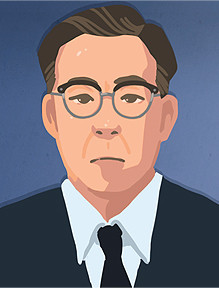
Dr. Woo Jang-chun(1898~1959)
Click here to take the quiz!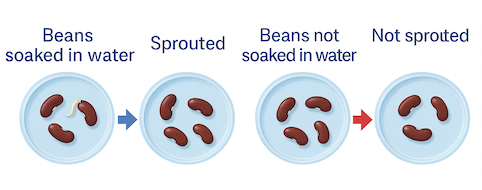
[Experiment 1] Beans soaked in water vs. beans not soaked

[Experiment 2] Beans kept at room temperature vs. in the refrigerator
Conditions for Bean Germination
Seeds need ③ to sprout, and they do not germinate in ④ temperatures.
Seeds need ③
to sprout, and they do not germinate in ④ temperatures.In 2009, the National Gaya Cultural Heritage Research Institute discovered 10 lotus seeds underground in an old pond at Seongsan Fortress in Haman. Carbon dating showed that the seeds were from the Goryeo Dynasty, about 700 years ago. When they planted the seeds, some of them sprouted and a lotus flower with a different shape and color bloomed. This special lotus was named “Ara Hongryeon.” The reason these seeds didn’t germinate for 700 years is that they were preserved in vacuum-like state inside the mud. Furthermore, the seeds’ thick, hard and coated shells prevented ⑤ from entering, which stopped the seeds from sprouting.
from entering, which stopped the seeds from sprouting.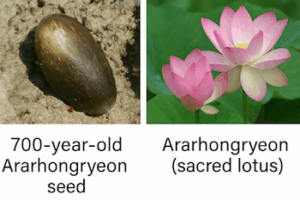
Photo : Haman County Office
The Svalbard Global Seed Vault in Norway and the Baekdu Daegan Seed Vault in South Korea store seeds from many kinds of plants to protect them from extinction caused by natural disasters or wars.
At the Svalbard Global Seed Vault, seeds from around the world are dried by removing oxygen and water, then vacuum-sealed in aluminum bags, and stored in black containers at -18°C. The Baekdu Daegan Seed Vault keeps wild plants seeds from around the world at -20°C and under 40% humidity. When the temperature is ⑥ (low, high) and the humidity is ⑦ (low, high), seeds can be stored for a long time without sprouting. Vacuum-sealed aluminum seed pouch.
At the Svalbard Global Seed Vault, seeds from around the world are dried by removing oxygen and water, then vacuum-sealed in aluminum bags, and stored in black containers at -18°C. The Baekdu Daegan Seed Vault keeps wild plants seeds from around the world at -20°C and under 40% humidity. When the temperature is ⑥
(low, high) and the humidity is ⑦ (low, high), seeds can be stored for a long time without sprouting. Vacuum-sealed aluminum seed pouch.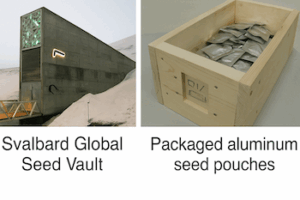
The Svalbard Global Seed Vault
Photo : Global Crop Diversity Trust at flickr.com
Click here to take the quiz!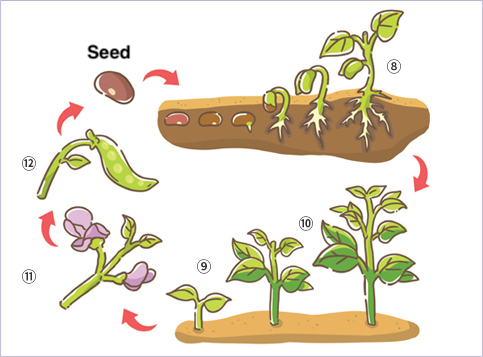
1. Seed > ⑧ come out of the seeds.>
come out of the seeds.>2. The ⑨ and ⑩ grow. >
and ⑩ grow. >3. The ⑪ ) blooms. >
) blooms. >4. It grows ⑫ .
.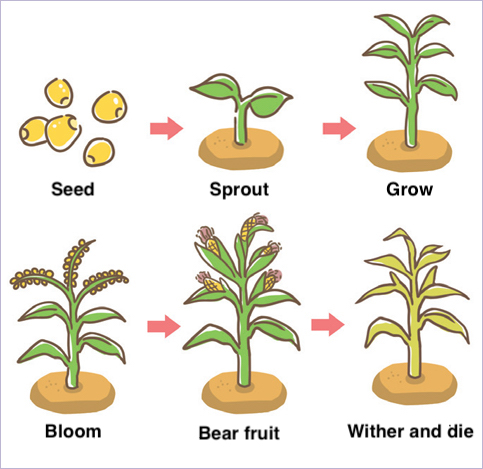
Life cycle of corn (annual)
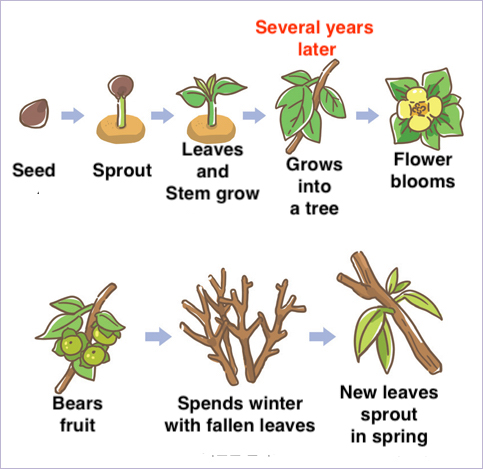
Life cycle of persimmon trees (perennial):
Observe the life cycles of corn and persimmon trees, and classify apples, rice, pumpkins, and rose of Sharon as annual and perennial plants.
Annual plants : ⑬
Perennial plants : ⑭
Perennial plants : ⑭
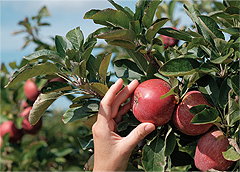
Apple
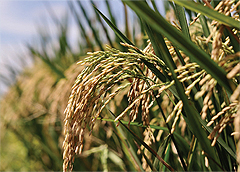
Rice
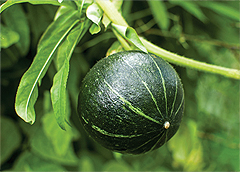
Pumpkin
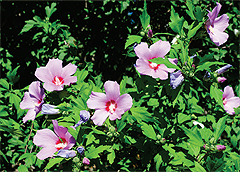
Rose of Sharon