
 Click here to take the quiz!
I started living with and studying chimpanzees in Gombe, Tanzania in 1960, and spent over 40 years working with them. I was born in 1934 in England and loved animals from a young age. One time, I waited five hours in a chicken coop to see a chicken lay an egg. My family thought I was missing and even called the police!
I always dreamed of living with animals in Africa. When I first arrived at the Gombe chimpanzee reserve to study chimpanzees, many people said I wouldn’t last long. They thought a young, unmarried woman like me wouldn’t be able to stay in the African jungle. For the first few days, I didn’t see any chimpanzees because they are very shy and careful.
But I waited patiently every day, and slowly, the chimpanzees started to come closer to me. Sometimes, we groomed each or even hold hands. Living with them helped me watch their lives very closely. I learned that chimpanzees live in groups, talk to each other, and feel emotions, just like people.
I also discovered that chimpanzees, who were once thought to be herbivores, hunt and even ①  . One day, I observed a chimpanzee using a stick to fish for termites. This showed that chimpanzees, like humans, can use ② . It changed the belief that only humans can use tools.
Unfortunately, the number of chimpanzees is going down quickly because of forest destruction and poaching. I now work to protect chimpanzees and give talks to help people care more about nature. If you recycle, don’t waste food, and love animals, you are helping chimpanzees stay on Earth with us for a long time. I am a British zoologist and environmentalist, often called ‘the mother of the chimpanzees.’ Who am I?
③
. One day, I observed a chimpanzee using a stick to fish for termites. This showed that chimpanzees, like humans, can use ② . It changed the belief that only humans can use tools.
Unfortunately, the number of chimpanzees is going down quickly because of forest destruction and poaching. I now work to protect chimpanzees and give talks to help people care more about nature. If you recycle, don’t waste food, and love animals, you are helping chimpanzees stay on Earth with us for a long time. I am a British zoologist and environmentalist, often called ‘the mother of the chimpanzees.’ Who am I?
③
 . One day, I observed a chimpanzee using a stick to fish for termites. This showed that chimpanzees, like humans, can use ② . It changed the belief that only humans can use tools.
Unfortunately, the number of chimpanzees is going down quickly because of forest destruction and poaching. I now work to protect chimpanzees and give talks to help people care more about nature. If you recycle, don’t waste food, and love animals, you are helping chimpanzees stay on Earth with us for a long time. I am a British zoologist and environmentalist, often called ‘the mother of the chimpanzees.’ Who am I?
③
. One day, I observed a chimpanzee using a stick to fish for termites. This showed that chimpanzees, like humans, can use ② . It changed the belief that only humans can use tools.
Unfortunately, the number of chimpanzees is going down quickly because of forest destruction and poaching. I now work to protect chimpanzees and give talks to help people care more about nature. If you recycle, don’t waste food, and love animals, you are helping chimpanzees stay on Earth with us for a long time. I am a British zoologist and environmentalist, often called ‘the mother of the chimpanzees.’ Who am I?
③
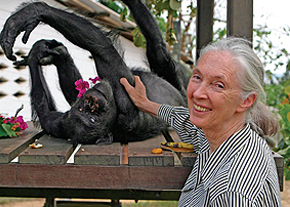
Jane Goodall and Chimpanzees
photo: Yeon-hab News
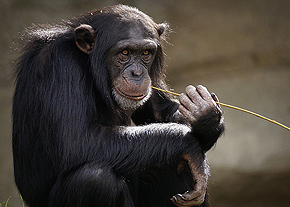
A Chimpanzees Using a Tool to Catch Termites
Click here to take the quiz!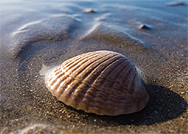
(a) Clam
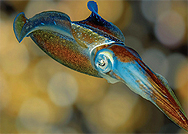
(b) Squid
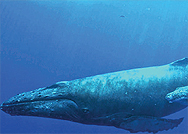
(c) Whale
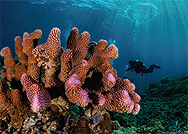
(d) Coral
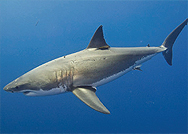
(e) Shark
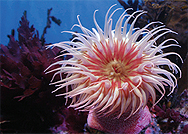
(f) Sea Anemone
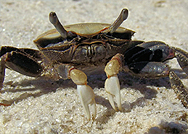
(g) Crab
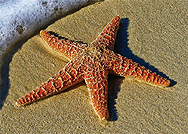
(h) Starfish
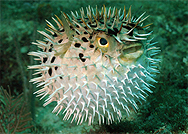
(i) Pufferfish
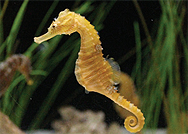
(j) Seahorse
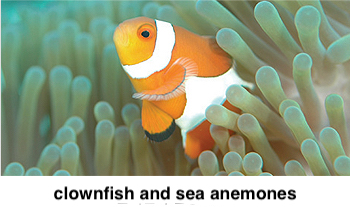
The clownfish, made famous by the animation “Finding Nemo”, lives near sea anemones. Since clownfish are small, they hide between the sea anemone’s tentacles when bigger fish try to attack. The tentacles of the sea anemone have poison, which is dangerous to most fish — but not to clownfish. That’s because the clownfish’s skin makes a sticky slime that protects them from the poison. The clownfish also eats debris around the sea anemone’s tentacles, helping to keep it clean. It even acts as bait to help the anemone catch prey. This type of helping relationship is called ⑧ .
.
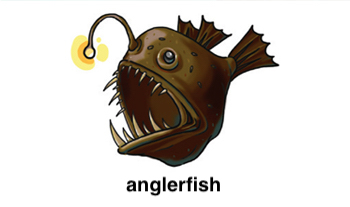
Even just 195 meters below the ocean surface, it’s completely dark because no sunlight can reach. The water is very cold, between 1–4°C. The water pressure is very high, and there is very little oxygen. Because there’s no light, plants like phytoplankton can’t grow. That means animals that eat plankton also can’t survive easily, so there’s not much food. To live in this tough environment, deep-sea animals have developed special features. For example, the anglerfish has a glowing light on its head and a big mouth with sharp, scary teeth. Why do you think the anglerfish looks like this?
 Click here to take the quiz!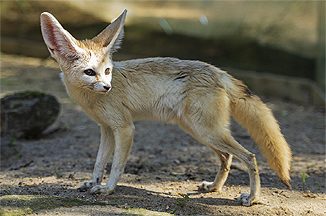
fennec fox
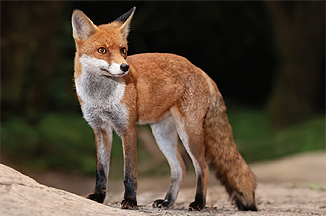
red fox
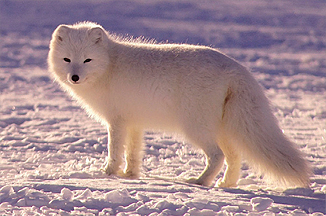
arctic fox
The desert fox lives in deserts in Africa or Asia, the red fox lives in many different regions, and the Arctic fox lives in cold Arctic areas. The color of their fur is similar to the environment they live in, making them hard for other animals to see. This is called ⑪ (camouflage, warning color).
The desert fox has ⑫ (large, small) ears to release heat because it lives in hot areas, while the Arctic fox has ⑬ (large, small) ears to keep heat in cold climates.
(camouflage, warning color).
The desert fox has ⑫ (large, small) ears to release heat because it lives in hot areas, while the Arctic fox has ⑬ (large, small) ears to keep heat in cold climates.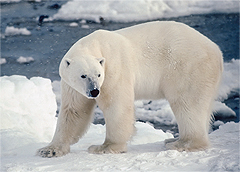
Polar Bear
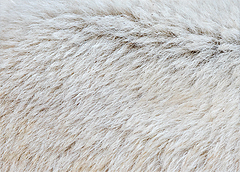
Polar Bear’s Fur and Skin
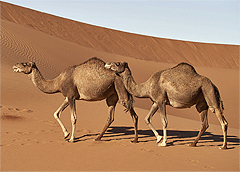
Camel
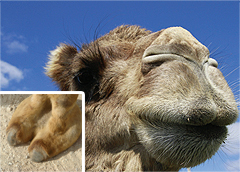
Camel’s Paws and Face
The polar bear’s fur is dense, which helps it retain heat, and it is also waterproof. Under the fur, the skin is ⑭ (black, blue), which helps absorb sunlight and maintain body temperature. In addition, a thick layer of fat under the skin helps keep the polar bear warm.
(black, blue), which helps absorb sunlight and maintain body temperature. In addition, a thick layer of fat under the skin helps keep the polar bear warm.The camel stores fat in its ⑮ (hump, fur), so it can survive for days without food. It has many ⑯ (long, short) eyelashes that help protect its eyes from the sand, and can close its nostrils to keep sand out. Moreover, its feet are ⑰ (narrow, wide), so they don’t sink into the sand.
(hump, fur), so it can survive for days without food. It has many ⑯ (long, short) eyelashes that help protect its eyes from the sand, and can close its nostrils to keep sand out. Moreover, its feet are ⑰ (narrow, wide), so they don’t sink into the sand.