
 Click here to take the quiz!
I am a famous biologist from England. I was born into a family of doctors, so my parents wanted me to become a doctor. However, since I was young, I had a greater interest in plants and animals. That’s why when I was 22, I was so happy to board the HMS Beagle for a voyage. During the 5-year journey, I had the opportunity to study a variety of birds and plants and collect numerous rocks and plants.
The place that left the deepest impression on me was the ①  Islands. This place is made up of 19 islands with different natural environments, and each island was full of unusual plants and animals, which was truly amazing and fascinating. My curiosity was piqued especially by ② . On each island, I noticed that finches had different beak shapes, and I became deeply interested in understanding why these finches, originally the same species, had developed such variations. I carefully observed the finches, drew pictures of them, and recorded my findings, determined to uncover their secrets. After returning to England, I dedicated more than 20 years to conducting experiments and research. In 1859, I published my famous book ③ , where I proposed the theory that species evolve through a process of adaptation to their < ④ > .
 Islands. This place is made up of 19 islands with different natural environments, and each island was full of unusual plants and animals, which was truly amazing and fascinating. My curiosity was piqued especially by ② . On each island, I noticed that finches had different beak shapes, and I became deeply interested in understanding why these finches, originally the same species, had developed such variations. I carefully observed the finches, drew pictures of them, and recorded my findings, determined to uncover their secrets. After returning to England, I dedicated more than 20 years to conducting experiments and research. In 1859, I published my famous book ③ , where I proposed the theory that species evolve through a process of adaptation to their < ④ > .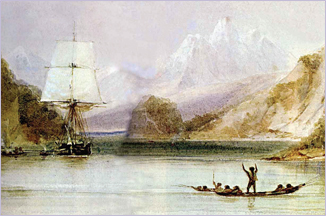
The HMS Beagle (in the background), which Darwin sailed on during his voyage
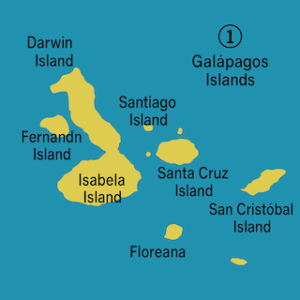
①
Islands, which Darwin observed most impressively during his voyage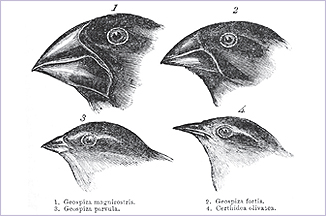
Darwin’s drawings of various finches’ beaks
 Click here to take the quiz!
| (a) Large Ground Finch | Characteristics |
|---|---|
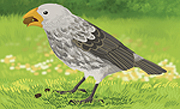 |
|
| (b) Warbler Finch | Characteristics |
|---|---|
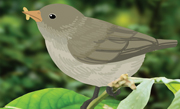 |

| (c) Vegetarian Finch | Characteristics |
|---|---|
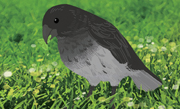 |
| (d) Large Tree Finch | Characteristics |
|---|---|
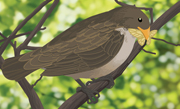 |
| (e) Woodpecker Finch | Characteristics |
|---|---|
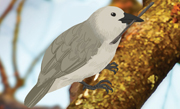 |
| (f) Cactus Finch | Characteristics |
|---|---|
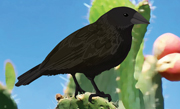 |
Click here to take the quiz!Activity 2: Infer Like a Scientist
Darwin figured out that the reason why the finches on each island have different beak shapes is because they are limited to eating the specific ( ㉒ ) available in each environment. He inferred that their beaks gradually adapted over time to suit the food they could eat. With this inference, Darwin proposed the theory that all living organisms evolve based on their environment. Try to figure out why each finch’s beak shape is advantageous for eating its specific food.
| Finches | Beak Characteristics | Food | Advantages for Eating |
|---|---|---|---|
|
Large Ground Finch: The beak is large and thick. | ㉓ |
㉔ |
|
Cactus Finch: The beak is long and pointed | ㉕ |
㉖ |
|
Warbler Finch: The beak is thin and pointed. | ㉗ |
㉘ |

(a)Giraffe
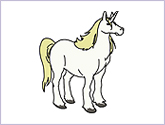
(b) Unicorn

(c)Haetae
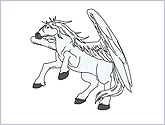
(d) Pegasus

(e)Dragon
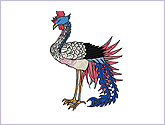
(e)Phoenix