
 Click here to take the quiz!
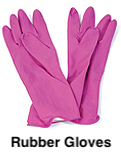
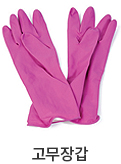
We use many things made of rubber, like rubber bands, rubber gloves, tires, erasers, and rain boots. Rubber has a property called ①  which means it stretches when you pull it and goes back to its original shape when you let go. It is also soft, easy to bend, waterproof, and does not conduct electricity, so it is great for many different uses.
Do you know how rubber is made? If you cut the trunk of a ② , which grows in tropical regions, white sap comes out, like in the picture. When this sap is dried and hardened, it becomes raw rubber. A long time ago, people in South and Central America used raw rubber to make bouncy balls. They also used it for waterproofing things like shoes, pots, and clothes by spreading the rubber on them.
Christopher Columbus, who discovered the Americas, was the first person to introduce rubber to Europe. He saw the native people of on the island Haiti playing with balls that bounced well. Amazed by the material’s elasticity, he introduced rubber to Europe.
However, natural rubber has some problems. It is easily affected by temperature changes. when it gets hot, it melts, smells bad, and becomes sticky. When it gets cold, it gets hard and cracks. So, it was mostly used for things like erasers and toys.
③ , an American, believed that rubber could become a very useful material if its weaknesses were fixed. He did many experiments by mixing rubber with other materials to make a new kind of rubber. In 1839, he accidentally dropped a mix of rubber and sulfur onto a stove. He discovered that, unlike natural rubber, this new rubber kept its elasticity even when heated. This process is called ④ .
Vulcanized rubber has better elasticity and can be used for a long time, even when the temperature changes. After Charles Goodyear died, a tire and rubber company named after him was founded in 1898, and it is still operating today. Today, not only natural and vulcanized rubber, but also synthetic rubber made in different ways is used.
which means it stretches when you pull it and goes back to its original shape when you let go. It is also soft, easy to bend, waterproof, and does not conduct electricity, so it is great for many different uses.
Do you know how rubber is made? If you cut the trunk of a ② , which grows in tropical regions, white sap comes out, like in the picture. When this sap is dried and hardened, it becomes raw rubber. A long time ago, people in South and Central America used raw rubber to make bouncy balls. They also used it for waterproofing things like shoes, pots, and clothes by spreading the rubber on them.
Christopher Columbus, who discovered the Americas, was the first person to introduce rubber to Europe. He saw the native people of on the island Haiti playing with balls that bounced well. Amazed by the material’s elasticity, he introduced rubber to Europe.
However, natural rubber has some problems. It is easily affected by temperature changes. when it gets hot, it melts, smells bad, and becomes sticky. When it gets cold, it gets hard and cracks. So, it was mostly used for things like erasers and toys.
③ , an American, believed that rubber could become a very useful material if its weaknesses were fixed. He did many experiments by mixing rubber with other materials to make a new kind of rubber. In 1839, he accidentally dropped a mix of rubber and sulfur onto a stove. He discovered that, unlike natural rubber, this new rubber kept its elasticity even when heated. This process is called ④ .
Vulcanized rubber has better elasticity and can be used for a long time, even when the temperature changes. After Charles Goodyear died, a tire and rubber company named after him was founded in 1898, and it is still operating today. Today, not only natural and vulcanized rubber, but also synthetic rubber made in different ways is used.
 which means it stretches when you pull it and goes back to its original shape when you let go. It is also soft, easy to bend, waterproof, and does not conduct electricity, so it is great for many different uses.
Do you know how rubber is made? If you cut the trunk of a ② , which grows in tropical regions, white sap comes out, like in the picture. When this sap is dried and hardened, it becomes raw rubber. A long time ago, people in South and Central America used raw rubber to make bouncy balls. They also used it for waterproofing things like shoes, pots, and clothes by spreading the rubber on them.
Christopher Columbus, who discovered the Americas, was the first person to introduce rubber to Europe. He saw the native people of on the island Haiti playing with balls that bounced well. Amazed by the material’s elasticity, he introduced rubber to Europe.
However, natural rubber has some problems. It is easily affected by temperature changes. when it gets hot, it melts, smells bad, and becomes sticky. When it gets cold, it gets hard and cracks. So, it was mostly used for things like erasers and toys.
③ , an American, believed that rubber could become a very useful material if its weaknesses were fixed. He did many experiments by mixing rubber with other materials to make a new kind of rubber. In 1839, he accidentally dropped a mix of rubber and sulfur onto a stove. He discovered that, unlike natural rubber, this new rubber kept its elasticity even when heated. This process is called ④ .
Vulcanized rubber has better elasticity and can be used for a long time, even when the temperature changes. After Charles Goodyear died, a tire and rubber company named after him was founded in 1898, and it is still operating today. Today, not only natural and vulcanized rubber, but also synthetic rubber made in different ways is used.
which means it stretches when you pull it and goes back to its original shape when you let go. It is also soft, easy to bend, waterproof, and does not conduct electricity, so it is great for many different uses.
Do you know how rubber is made? If you cut the trunk of a ② , which grows in tropical regions, white sap comes out, like in the picture. When this sap is dried and hardened, it becomes raw rubber. A long time ago, people in South and Central America used raw rubber to make bouncy balls. They also used it for waterproofing things like shoes, pots, and clothes by spreading the rubber on them.
Christopher Columbus, who discovered the Americas, was the first person to introduce rubber to Europe. He saw the native people of on the island Haiti playing with balls that bounced well. Amazed by the material’s elasticity, he introduced rubber to Europe.
However, natural rubber has some problems. It is easily affected by temperature changes. when it gets hot, it melts, smells bad, and becomes sticky. When it gets cold, it gets hard and cracks. So, it was mostly used for things like erasers and toys.
③ , an American, believed that rubber could become a very useful material if its weaknesses were fixed. He did many experiments by mixing rubber with other materials to make a new kind of rubber. In 1839, he accidentally dropped a mix of rubber and sulfur onto a stove. He discovered that, unlike natural rubber, this new rubber kept its elasticity even when heated. This process is called ④ .
Vulcanized rubber has better elasticity and can be used for a long time, even when the temperature changes. After Charles Goodyear died, a tire and rubber company named after him was founded in 1898, and it is still operating today. Today, not only natural and vulcanized rubber, but also synthetic rubber made in different ways is used. 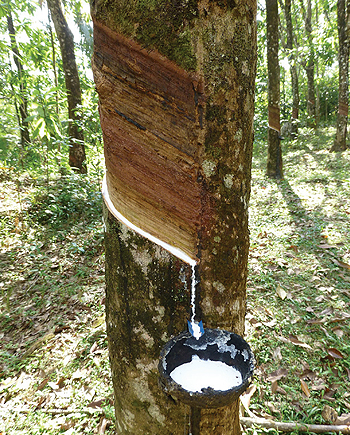
Rubber tree that produces white sap
Photo provided : Ji-Elle at wikipedia
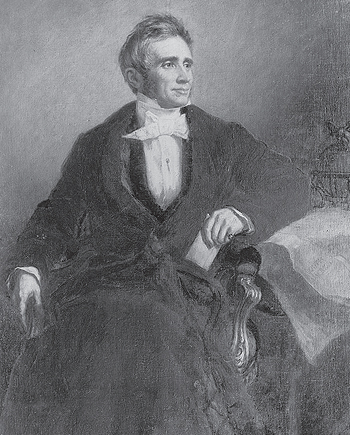
Charles Goodyear (1800~1860)
Painted : Healy, George Peter Alexander
Click here to take the quiz!
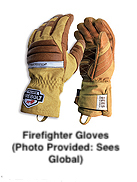
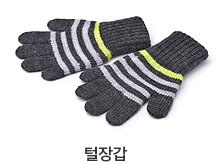
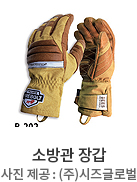
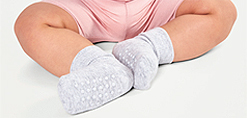
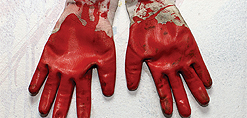
- Materials: ⓐ Rubber ⓑ Metal ⓒ Leather
- Properties: (a)Hard and break-resistant. (b)Tough and soft . (c)Elastic and non-slippery.
- Materials: ⓐ Rubber ⓑ Metal ⓒ Leather
- Properties:
- (a)Hard and break-resistant. (b)Tough and soft . (c)Elastic and non-slippery.
- .
- Materials: ⓐ Rubber ⓑ Metal ⓒ Leather
- Properties:(a)Hard and break-resistant. (b)Tough and soft . (c)Elastic and non-slippery.
 Click here to take the quiz!
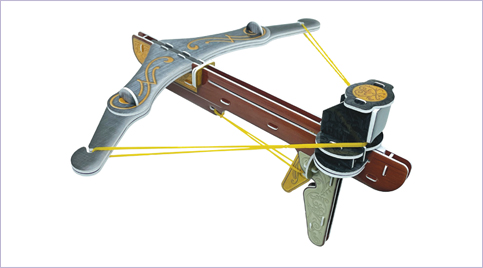
Activity 2: Observe the rubber band crossbow
(1) Observe how the rubber band’s shape and length change when launching the ball. After the ball is launched, the rubber band returns to its original shape and length. This is due to ⑰ , the property of rubber that allows it to return to its original shape after being stretched.
(2)Observe how the ball flies after being launched from the rubber band crossbow. The launched ball moves in a ⑱ path as it flies.
path as it flies.
(1)Pull the launcher back with your hand. When the launcher moves, the rubber band stretches. If the rubber band’s stretches ⑲ ( a lot, a little) the ball will fly farther
a lot, a little) the ball will fly farther
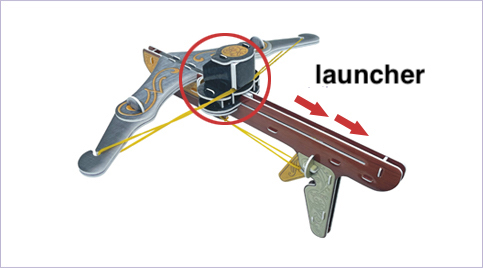
Use your hand to pull the launcher.
Watch how far the ball goes when the rubber band is stretched a little and a lot.
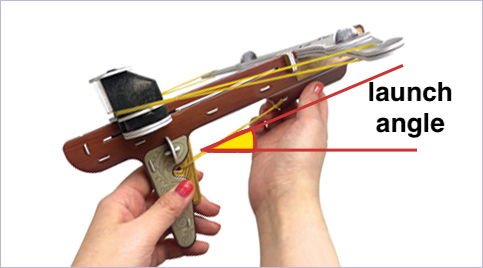
(2) When the launch angle of the crossbow is ⑳ ( 45°, 80° ) the ball will fly farther.
(3) When you pull back the same distance, using a ㉑ ( long , short) rubber band makes the ball fly farther.
(4) When you pull back the same distance, using a ㉒ ( thin, thick) rubber band makes the ball fly farther.
(5) When you pull with ㉓ ( one, several) layered together, the ball flies farther.
45°, 80° ) the ball will fly farther.
(3) When you pull back the same distance, using a ㉑ ( long , short) rubber band makes the ball fly farther.
(4) When you pull back the same distance, using a ㉒ ( thin, thick) rubber band makes the ball fly farther.
(5) When you pull with ㉓ ( one, several) layered together, the ball flies farther.