
 Click here to take the quiz!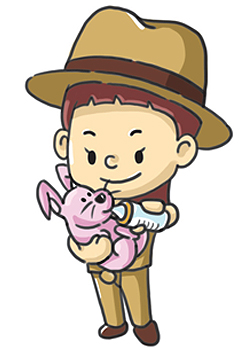
We have jobs that many animal lovers dream of. We take care of animals like baby tigers and dolphins every day. Usually, one person takes care of one kind of animal. In the morning, we check if the animals were sick during the night, feed them, and clean their enclosures. We also train the animals and try to make their homes feel like their natural environment. Wild animals like lions and tigers still have some wild instincts, so we must be very careful when taking care of them. We take care of baby animals from morning until night, just like their real mothers would. Because of this, they often think we are their real mothers and cry when they don’t see us.
Many children want to be ①  like us, don’t they? To become an animal keeper, you need to truly love and understand animals. Because animals can’t speak, you have to pay close attention to see if they are in pain or feeling lonely. If you spend a lot of time with animals and care about them, you’ll start to understand what their sounds and movements mean.
Animal keepers must always research and learn about animals. Zoos often have rare species, so there are many things we don’t know yet. By reading books and research materials, you can build expert knowledge. It’s also important to spend time with animals and gain experience. Sometimes we need to read foreign resources, so learning another language can be very helpful.
Today, zoos are especially working hard to protect wild animals that are in danger of ② . They train animals to keep their wild instincts and work with other zoos to help them breed so they won’t disappear forever.
Today, zoos are especially working hard to protect wild animals that are in danger of ( ② ). They train animals to keep their wild instincts and work with other zoos to help them breed so they won’t disappear forever.
It’s really sad when some visitors throw food or objects at the animals or shout at them. Animals are very sensitive, and those actions can hurt or scare them. I’m sure you wouldn’t do something like that at the zoo, right? If you want to be an animal keeper like us, try joining a zoo’s animal keeper training program!
like us, don’t they? To become an animal keeper, you need to truly love and understand animals. Because animals can’t speak, you have to pay close attention to see if they are in pain or feeling lonely. If you spend a lot of time with animals and care about them, you’ll start to understand what their sounds and movements mean.
Animal keepers must always research and learn about animals. Zoos often have rare species, so there are many things we don’t know yet. By reading books and research materials, you can build expert knowledge. It’s also important to spend time with animals and gain experience. Sometimes we need to read foreign resources, so learning another language can be very helpful.
Today, zoos are especially working hard to protect wild animals that are in danger of ② . They train animals to keep their wild instincts and work with other zoos to help them breed so they won’t disappear forever.
Today, zoos are especially working hard to protect wild animals that are in danger of ( ② ). They train animals to keep their wild instincts and work with other zoos to help them breed so they won’t disappear forever.
It’s really sad when some visitors throw food or objects at the animals or shout at them. Animals are very sensitive, and those actions can hurt or scare them. I’m sure you wouldn’t do something like that at the zoo, right? If you want to be an animal keeper like us, try joining a zoo’s animal keeper training program!
 like us, don’t they? To become an animal keeper, you need to truly love and understand animals. Because animals can’t speak, you have to pay close attention to see if they are in pain or feeling lonely. If you spend a lot of time with animals and care about them, you’ll start to understand what their sounds and movements mean.
Animal keepers must always research and learn about animals. Zoos often have rare species, so there are many things we don’t know yet. By reading books and research materials, you can build expert knowledge. It’s also important to spend time with animals and gain experience. Sometimes we need to read foreign resources, so learning another language can be very helpful.
Today, zoos are especially working hard to protect wild animals that are in danger of ② . They train animals to keep their wild instincts and work with other zoos to help them breed so they won’t disappear forever.
Today, zoos are especially working hard to protect wild animals that are in danger of ( ② ). They train animals to keep their wild instincts and work with other zoos to help them breed so they won’t disappear forever.
It’s really sad when some visitors throw food or objects at the animals or shout at them. Animals are very sensitive, and those actions can hurt or scare them. I’m sure you wouldn’t do something like that at the zoo, right? If you want to be an animal keeper like us, try joining a zoo’s animal keeper training program!
like us, don’t they? To become an animal keeper, you need to truly love and understand animals. Because animals can’t speak, you have to pay close attention to see if they are in pain or feeling lonely. If you spend a lot of time with animals and care about them, you’ll start to understand what their sounds and movements mean.
Animal keepers must always research and learn about animals. Zoos often have rare species, so there are many things we don’t know yet. By reading books and research materials, you can build expert knowledge. It’s also important to spend time with animals and gain experience. Sometimes we need to read foreign resources, so learning another language can be very helpful.
Today, zoos are especially working hard to protect wild animals that are in danger of ② . They train animals to keep their wild instincts and work with other zoos to help them breed so they won’t disappear forever.
Today, zoos are especially working hard to protect wild animals that are in danger of ( ② ). They train animals to keep their wild instincts and work with other zoos to help them breed so they won’t disappear forever.
It’s really sad when some visitors throw food or objects at the animals or shout at them. Animals are very sensitive, and those actions can hurt or scare them. I’m sure you wouldn’t do something like that at the zoo, right? If you want to be an animal keeper like us, try joining a zoo’s animal keeper training program!
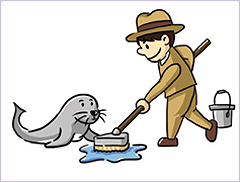
Clean enclosures

Prepare food
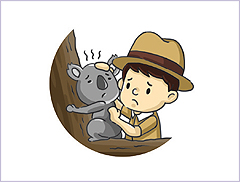
Help sick animals
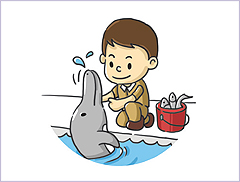
Train animals.
Click here to take the quiz!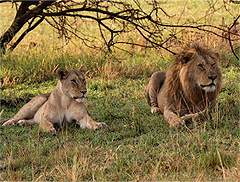
(a) Lion
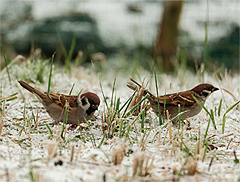
(b) Sparrow
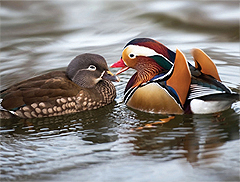
(c) Mandarin duck
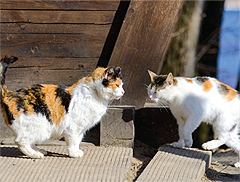
(d) Cat
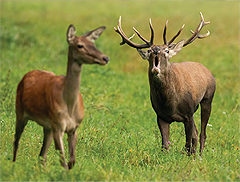
(e) Deer,
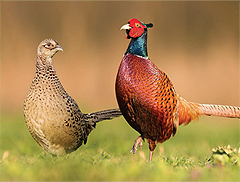
(f) Pheasant
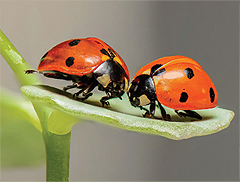
(g) Ladybug
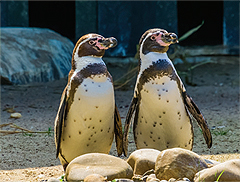
(h) Penguin
- The animal whose male and female are hard to tell apart by appearance are ③ .
- The ④ lion has a mane and is bigger than the ⑤ .
- The ⑥ pheasants and mandarin ducks have bright and colorful feathers, while ⑦ have duller colors.
- The ⑧ deer has antlers and is larger than the ⑨ .
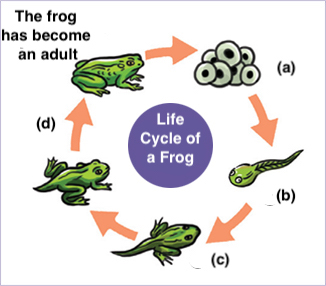
- (a) The female frog lays ⑩ in the water. → (b) The eggs hatch into ⑪ with tails. → (c) The tadpoles start growing ⑫ . → (d) ⑬ appear, and the tail gets ⑭ .
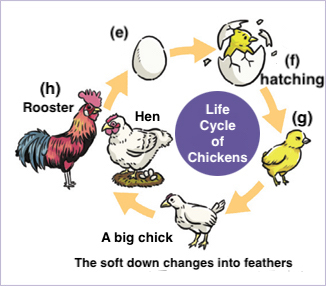
- (e) ⑮ are covered in a hard shell. . → (f) ⑯ : After about 21 days of being kept warm by the mother hen, the chick breaks the shell with its beak and comes out. → (g) The ⑰ is covered in soft, fluffy feathers. → (h) When fully grown, the ⑱ chicken can lay eggs.
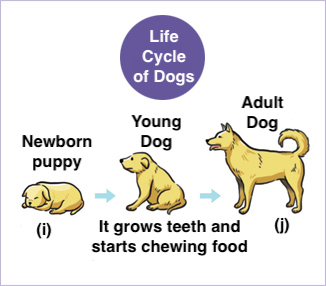
- (i) The puppy cannot open its eyes or walk yet. It grows by drinking ⑲ from its mother. → (j) After mating, the female dog can give birth to ⑳ .
Click here to take the quiz!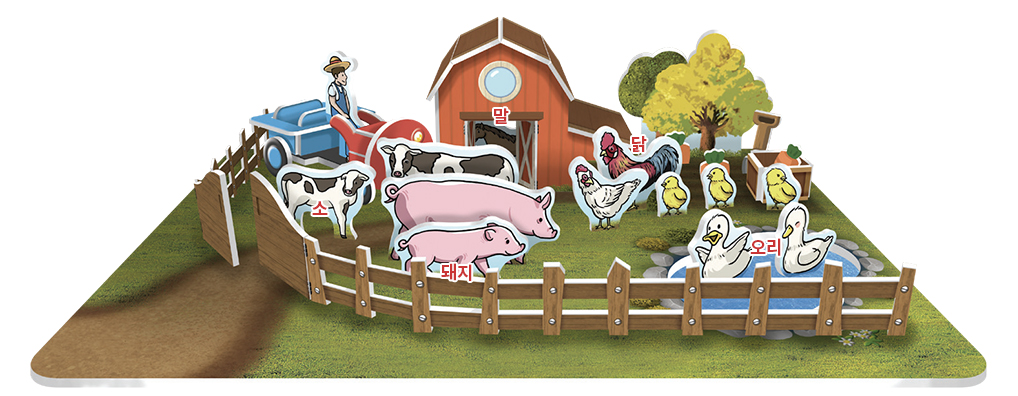
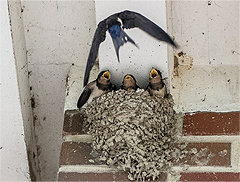
Swallow
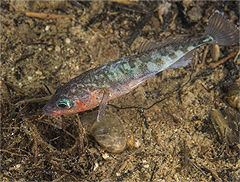
Stickleback
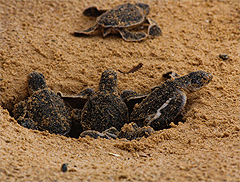
Sea Turtle (hatchlings)
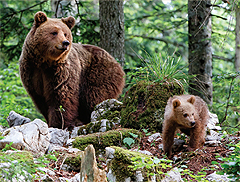
Bear
The roles of males and females are different depending on the animal. For example, swallows build nests under roofs in the spring. The female lays the eggs, and both the male and female take care of the eggs and chicks. In stickleback fish, the female lays eggs, but the male protects the eggs until the babies hatch.
In sea turtles, the female lays eggs in the sand after mating, but neither parent takes care of the eggs. The babies hatch and go to the sea on their own. In bears, the female gives birth and takes care of the cubs by herself.
How do male and female animals care for their young on the animal farm?
For animals like horses, cows, pigs, chickens, and ducks, it is mainly the ㉓ who takes care of the babies.
 who takes care of the babies.