
 Click here to take the quiz!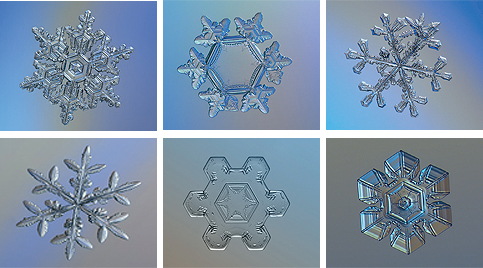
Have you ever looked closely at snowflakes when it’s snowing in winter? If you observe carefully, you’ll see that no two snowflakes are exactly the same. Wilson Bentley (1865–1931), who wrote a book called “Snowflakes”, took photos of 6,000 snow crystals and included 3,000 of them in his book.
Snowflakes may look different, but if you look closely, most of them have a ①  shape. This hexagon shape forms because, when liquid water turns into solid ice, the water molecules arrange themselves in a hexagon pattern.
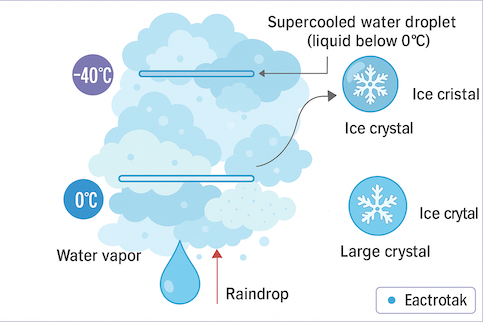
Snow usually forms in cold and wet clouds. Inside these clouds, which are colder than 0°C, there are tiny water droplets that haven’t frozen yet (called supercooled droplets), small pieces of ice, and water vapor. Water vapor sticks to the ice crystals, and the snowflake starts to grow. When ice crystals bump into other ice or droplets, they become bigger and heavier and then fall to the ground.
The shape of a snowflake depends on the ② and ③
in the cloud. Usually, when the temperature is between -10°C and -20°C and the humidity is high, snowflakes form beautiful, complex shapes with many branches.
.So, are artificial snowflakes made at ski resorts as beautiful as natural ones? Artificial snow usually has simpler crystal shapes than natural snow. To make artificial snow with a ④ , the air temperature must be between -2°C and -3°C, and the humidity should be less than 60%. The snowmaker sprays fine water droplets into the air at high pressure, and they freeze right away. Because artificial snow does not form through repeated collisions of ice crystals like natural snow, its crystals are simpler in shape.
shape. This hexagon shape forms because, when liquid water turns into solid ice, the water molecules arrange themselves in a hexagon pattern.
Snow usually forms in cold and wet clouds. Inside these clouds, which are colder than 0°C, there are tiny water droplets that haven’t frozen yet (called supercooled droplets), small pieces of ice, and water vapor. Water vapor sticks to the ice crystals, and the snowflake starts to grow. When ice crystals bump into other ice or droplets, they become bigger and heavier and then fall to the ground.
The shape of a snowflake depends on the ② and ③
in the cloud. Usually, when the temperature is between -10°C and -20°C and the humidity is high, snowflakes form beautiful, complex shapes with many branches.
.So, are artificial snowflakes made at ski resorts as beautiful as natural ones? Artificial snow usually has simpler crystal shapes than natural snow. To make artificial snow with a ④ , the air temperature must be between -2°C and -3°C, and the humidity should be less than 60%. The snowmaker sprays fine water droplets into the air at high pressure, and they freeze right away. Because artificial snow does not form through repeated collisions of ice crystals like natural snow, its crystals are simpler in shape.
 shape. This hexagon shape forms because, when liquid water turns into solid ice, the water molecules arrange themselves in a hexagon pattern.
Snow usually forms in cold and wet clouds. Inside these clouds, which are colder than 0°C, there are tiny water droplets that haven’t frozen yet (called supercooled droplets), small pieces of ice, and water vapor. Water vapor sticks to the ice crystals, and the snowflake starts to grow. When ice crystals bump into other ice or droplets, they become bigger and heavier and then fall to the ground.
The shape of a snowflake depends on the ② and ③
in the cloud. Usually, when the temperature is between -10°C and -20°C and the humidity is high, snowflakes form beautiful, complex shapes with many branches.
.So, are artificial snowflakes made at ski resorts as beautiful as natural ones? Artificial snow usually has simpler crystal shapes than natural snow. To make artificial snow with a ④ , the air temperature must be between -2°C and -3°C, and the humidity should be less than 60%. The snowmaker sprays fine water droplets into the air at high pressure, and they freeze right away. Because artificial snow does not form through repeated collisions of ice crystals like natural snow, its crystals are simpler in shape.
shape. This hexagon shape forms because, when liquid water turns into solid ice, the water molecules arrange themselves in a hexagon pattern.
Snow usually forms in cold and wet clouds. Inside these clouds, which are colder than 0°C, there are tiny water droplets that haven’t frozen yet (called supercooled droplets), small pieces of ice, and water vapor. Water vapor sticks to the ice crystals, and the snowflake starts to grow. When ice crystals bump into other ice or droplets, they become bigger and heavier and then fall to the ground.
The shape of a snowflake depends on the ② and ③
in the cloud. Usually, when the temperature is between -10°C and -20°C and the humidity is high, snowflakes form beautiful, complex shapes with many branches.
.So, are artificial snowflakes made at ski resorts as beautiful as natural ones? Artificial snow usually has simpler crystal shapes than natural snow. To make artificial snow with a ④ , the air temperature must be between -2°C and -3°C, and the humidity should be less than 60%. The snowmaker sprays fine water droplets into the air at high pressure, and they freeze right away. Because artificial snow does not form through repeated collisions of ice crystals like natural snow, its crystals are simpler in shape.
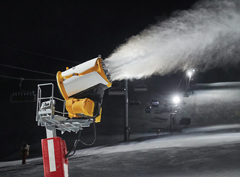
Making artificial snow with a snowmaker
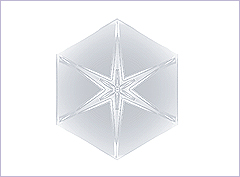
Artificial snow crystal
Click here to take the quiz!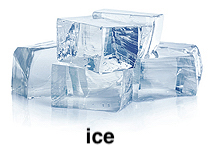
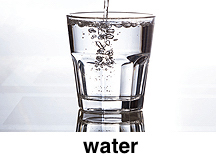
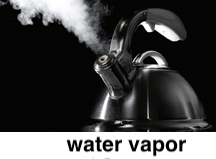
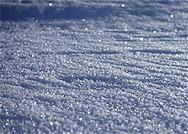
Snow
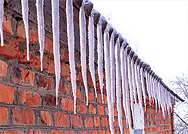
Icicles
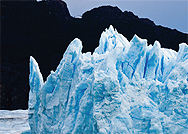
Glaciers
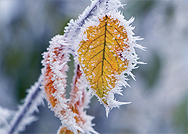
Frost

Fog on Glasses
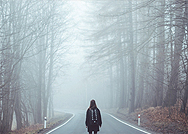
Mist
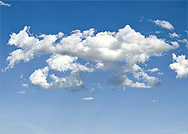
Clouds
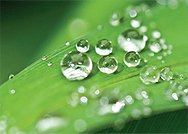
Dew
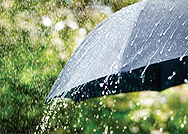
Rain
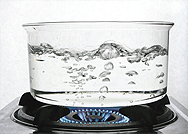
Bubbles in Boiling Water
Observing Water’s Change of State
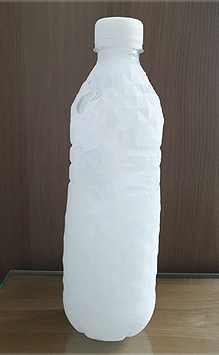
When you freeze water in a plastic bottle, its shape changes, as shown in the picture. Explain why a water jar left outside in the cold winter breaks, based on the change in the state of water.3. The water jar breaks because it cannot withstand the expanding force caused by the change in the state of water.
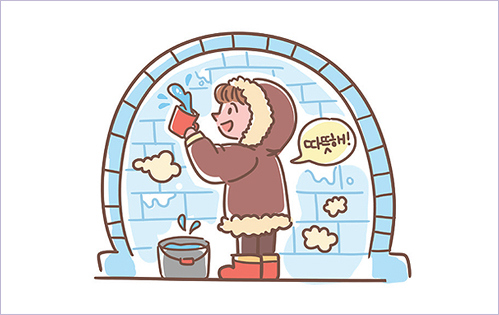
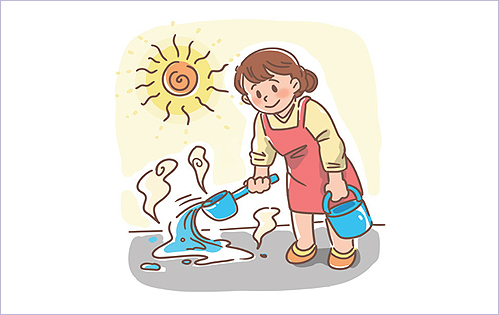 (B) In Korea, people spray water in the yard on hot summer days to cool down the temperature.