
 Click here to take the quiz!
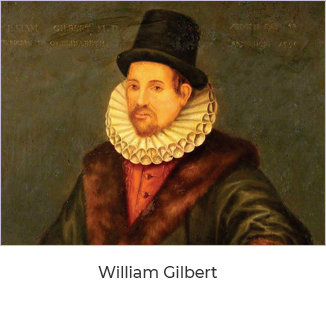
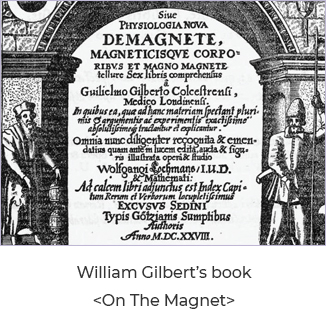
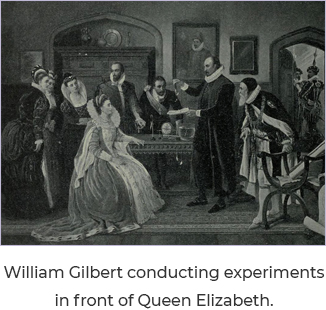
I was born in England in 1544. I served as the personal physician to Queen Elizabeth I and King James VI. Although I was a doctor, I was also a scientist who took an interest in various fields, such as physics, chemistry, and astronomy. But my favorite subject was magnetism. I wrote a book titled “On the Magnet, Magnetick Bodies Also, and on the Great Magnet the Earth a New Physiology, Demonstrated by Many Arguments and Experiments.”, which is often referred to as “On The agnet.”
During the period in which I lived, researchers typically followed the methods of the Greek philosopher Aristotle, which I found unscientific. I rejected this approach and believed that only experiments could reveal the true nature of natural phenomena. I conducted experiments on magnets and carefully documented the results in my book.
Galileo Galilei, after reading my book, became intrigued by magnetism and conducted experiments based on the methods I described. He referred to me as “the first scientist”.
One of my most groundbreaking discoveries was that the Earth is a massive ①  .
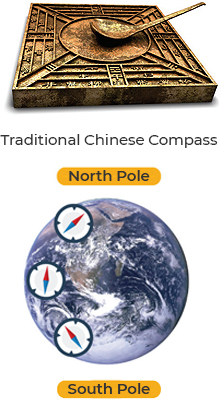
I discovered that the North Pole of the Earth behaves like the S pole, and the South Pole behaves like the N pole and that the North pole of a compass is attracted by the Earth’s North Pole, which behaves like the ② pole, and always points to the ③ . Just to avoid any misunderstanding, I must mention that there is no huge bar magnet inside
the Earth.
In 585 BC, Thales, the Greek philosopher,
observed that rubbing amber (fossilized tree
resin) with wool caused it to attract dust,
revealing static electricity. From the Greek
word ‘elektra’ for amber, I coined the term
‘electricity’ to highlight that static electricity
and magnetism are different forces. I am often referred to as the father of magnetism.
Who am I ? ④
.
I discovered that the North Pole of the Earth behaves like the S pole, and the South Pole behaves like the N pole and that the North pole of a compass is attracted by the Earth’s North Pole, which behaves like the ② pole, and always points to the ③ . Just to avoid any misunderstanding, I must mention that there is no huge bar magnet inside
the Earth.
In 585 BC, Thales, the Greek philosopher,
observed that rubbing amber (fossilized tree
resin) with wool caused it to attract dust,
revealing static electricity. From the Greek
word ‘elektra’ for amber, I coined the term
‘electricity’ to highlight that static electricity
and magnetism are different forces. I am often referred to as the father of magnetism.
Who am I ? ④
 .
I discovered that the North Pole of the Earth behaves like the S pole, and the South Pole behaves like the N pole and that the North pole of a compass is attracted by the Earth’s North Pole, which behaves like the ② pole, and always points to the ③ . Just to avoid any misunderstanding, I must mention that there is no huge bar magnet inside
the Earth.
In 585 BC, Thales, the Greek philosopher,
observed that rubbing amber (fossilized tree
resin) with wool caused it to attract dust,
revealing static electricity. From the Greek
word ‘elektra’ for amber, I coined the term
‘electricity’ to highlight that static electricity
and magnetism are different forces. I am often referred to as the father of magnetism.
Who am I ? ④
.
I discovered that the North Pole of the Earth behaves like the S pole, and the South Pole behaves like the N pole and that the North pole of a compass is attracted by the Earth’s North Pole, which behaves like the ② pole, and always points to the ③ . Just to avoid any misunderstanding, I must mention that there is no huge bar magnet inside
the Earth.
In 585 BC, Thales, the Greek philosopher,
observed that rubbing amber (fossilized tree
resin) with wool caused it to attract dust,
revealing static electricity. From the Greek
word ‘elektra’ for amber, I coined the term
‘electricity’ to highlight that static electricity
and magnetism are different forces. I am often referred to as the father of magnetism.
Who am I ? ④
 Click here to take the quiz!
When two magnets are brought closer, they ⑤ each other.
each other.
As two magnets come closer, they ⑥ each other.
each other.As two magnets come closer, they ⑦ each other.
each other.
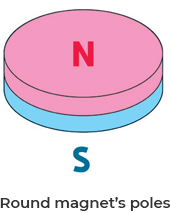
When opposite poles such as the N pole and S pole are brought near, an ⑧ force acts, pulling them together. But when like poles—either two N poles or two S poles—are brought close, a ⑨ force occurs.
force acts, pulling them together. But when like poles—either two N poles or two S poles—are brought close, a ⑨ force occurs.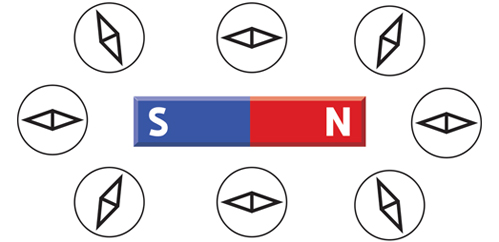
In
ancient times, sailors are said to have used a compass to find their
direction in the middle of the ocean. The first compass was created in
China, and the Chinese compass consisted of a square plate with a Compass ladle-shaped magnet placed on it, with the handle of the ladle pointing
south. Later, smaller compasses were created that could be carried
around, playing a vital role in the Age of Discovery. The modern North Pole compass always points north. Based on the experiments with magnets
and compasses, can we figure out why this happens?
The Earth is a giant magnet. The North Pole of the Earth acts like a ⑫ pole, while the South Pole behaves like the ⑬ pole. Because opposite poles attract, the N pole of the compass always points to the Earth’s north.
 pole, while the South Pole behaves like the ⑬ pole. Because opposite poles attract, the N pole of the compass always points to the Earth’s north.
 Click here to take the quiz!
| Objects | Use of magnets |
|---|---|
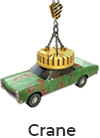 |
⑭ |
| Objects | Use of magnets |
|---|---|
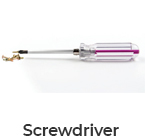 |
⑮ |
| Objects | Use of magnets |
|---|---|
 |
⑯ |
| Objects | Use of magnets |
|---|---|
 |
⑰ |
| Magnet car’s direction of movement | Force acting between the magnets |
|---|---|
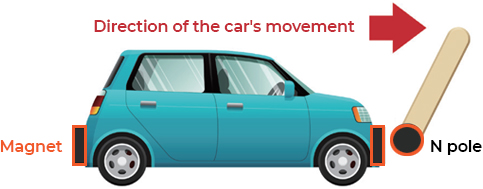 |
The magnet in the car and the magnet in the rod ⑱  each other. Consequently, the sides of the rod’s magnet and the car’s magnet that face each other are ⑲ poles. each other. Consequently, the sides of the rod’s magnet and the car’s magnet that face each other are ⑲ poles. |
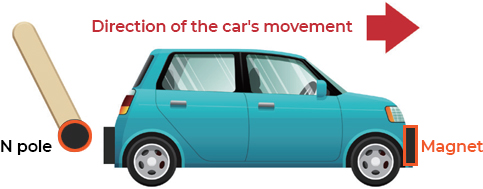 |
The car’s magnet and the rod’s magnet ⑳ each other.
Therefore, the facing sides of the rod’s magnet and the car’s magnet are ㉑ poles. |