
 Click here to take the quiz!
When we look at pictures of Earth taken from space, we can see a thin blue layer around it. This layer is called the atmosphere. Earth has air that reaches up to about 1,000 kilometers high. The air is made up about 78% nitrogen, 21% oxygen, and 1% other gases like argon, carbon dioxide, and water vapor.
In the past, people didn’t know that air is made up of different gases. As science developed, scientists began to discover many kinds of gases. Which gas is essential for us to live? The second most common gas in the air is ①  . We need oxygen to breathe. When we exhale, we breathe out ② .
 . We need oxygen to breathe. When we exhale, we breathe out ② .
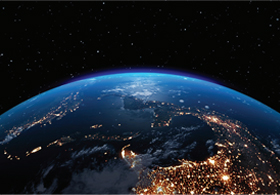
The layer of air (atmosphere) that surrounds the Earth
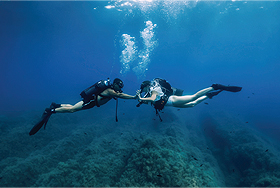
Oxygen – the gas we need to breathe
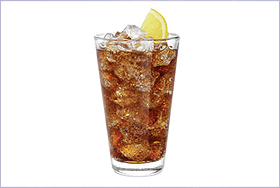
Carbon dioxide – the gas found in fizzy drinks
Nitrogen – the gas used to fill snack bags
Plants use carbon dioxide and water to make oxygen and glucose using sunlight. Carbon dioxide is also the gas that comes out when you open a soda bottle or when wood, oil, or coal is burned. ③ is a gas that makes the Earth warmer. To stop the Earth from getting too hot, we need to reduce the amount of carbon dioxide in the air. Saving electricity and making less trash are good ways to help. Taking public transportation instead of driving and protecting forests also help reduce carbon dioxide.
The gas inside snack bags is ④ . This gas helps keep the snacks from getting crushed. Oxygen is not used because it can change the taste of the snacks. Nitrogen, the most common gas in the air, doesn’t react with the snacks and is cheap, so it’s a good choice for snack packaging.
A balloon filled with air sinks to the ground, but balloons at amusement parks or ad balloons float high in the sky. That’s because they are filled with ⑤ , a gas that is lighter than air. When someone breathes in helium, their voice sounds high-pitched, like a duck. There are many other kinds of gases around us. Can you find out what they are?
is a gas that makes the Earth warmer. To stop the Earth from getting too hot, we need to reduce the amount of carbon dioxide in the air. Saving electricity and making less trash are good ways to help. Taking public transportation instead of driving and protecting forests also help reduce carbon dioxide.
The gas inside snack bags is ④ . This gas helps keep the snacks from getting crushed. Oxygen is not used because it can change the taste of the snacks. Nitrogen, the most common gas in the air, doesn’t react with the snacks and is cheap, so it’s a good choice for snack packaging.
A balloon filled with air sinks to the ground, but balloons at amusement parks or ad balloons float high in the sky. That’s because they are filled with ⑤ , a gas that is lighter than air. When someone breathes in helium, their voice sounds high-pitched, like a duck. There are many other kinds of gases around us. Can you find out what they are?

A balloon floating in the air
Click here to take the quiz!Observing the Properties of
. Since the balloon changes shape, we can see that air changes it’s ⑦ and ⑧ depending on the container. Even though air is invisible, things like blowing wind or air bubbles in water show that air can ⑨ . A substance with these properties is called ⑩ . ➊ Which of the examples (A) to (E) shows that gas takes up space? ⑪
➋ Which of the examples (A) to (E) uses the property of gas movement? ⑫
➋ Which of the examples (A) to (E) uses the property of gas movement? ⑫ 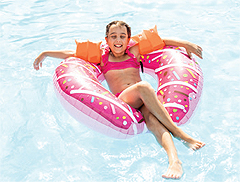
(A) Water tube
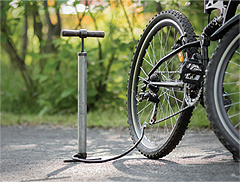
(B) Tire filled with air
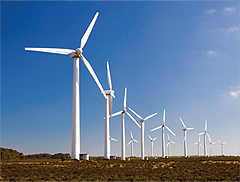
(C) Wind power station

(D) Fanning
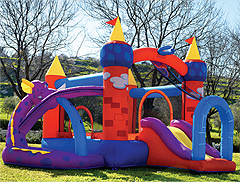
(E) Air bounce
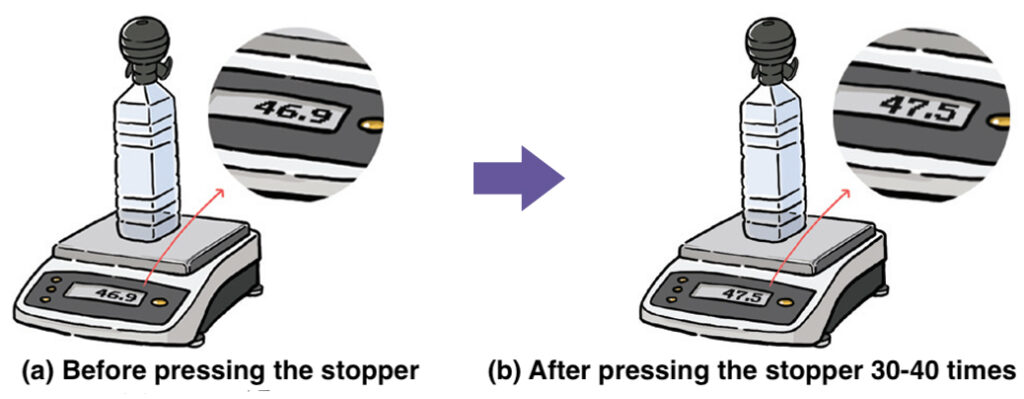
Thinking Like a Scientist: Does gas have weight?
Attach an air stopper to the mouth of a PET bottle. The weight of the bottle with the stopper (as in picture (a)) is 46.9g. Then, pump air into the bottle by pressing the stopper about 30–40 times (as in picture (b)). After pumping in the air, the weight becomes 47.5g. weight of the bottle is 47.5g. →The weight increases by 0.6g after adding air. So, we can understand that air (⑬ has, does not have) weight.
 Click here to take the quiz!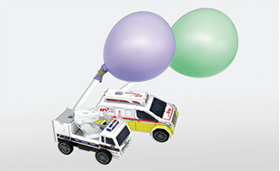

➊ Where will the toy go if you blow up a balloon, hold the opening, and then let it go?
→ The toy will move in the ⑱ (same/opposite ) direction from where the air comes out.
(same/opposite ) direction from where the air comes out.➋ Compare how far the toy moves with a little air and with a lot of air in the balloon. Which one goes further?
→ The toy moves farther when the balloon has ⑲ (more / less ) air. Balloon toy with little air / Balloon toy with a lot of air.
(more / less ) air. Balloon toy with little air / Balloon toy with a lot of air.➌ The space shuttle is a spacecraft designed to travel back and forth between Earth and space. It flies by pushing out gas that is made when fuel burns. If the space shuttle is flying in the direction shown in the picture, which way should the gas go?
→ The space shuttle moves in the ⑳ (same / opposite) direction from the gas, so the gas must be expelled in direction . ㉑ (a/b).
(same / opposite) direction from the gas, so the gas must be expelled in direction . ㉑ (a/b).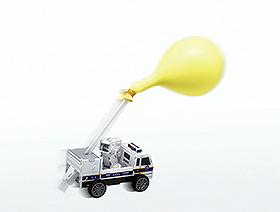
Balloon toy with little air
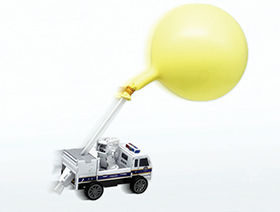
Balloon toy with a lot of air
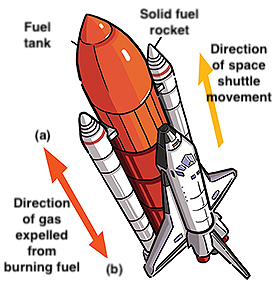
Space shuttle