
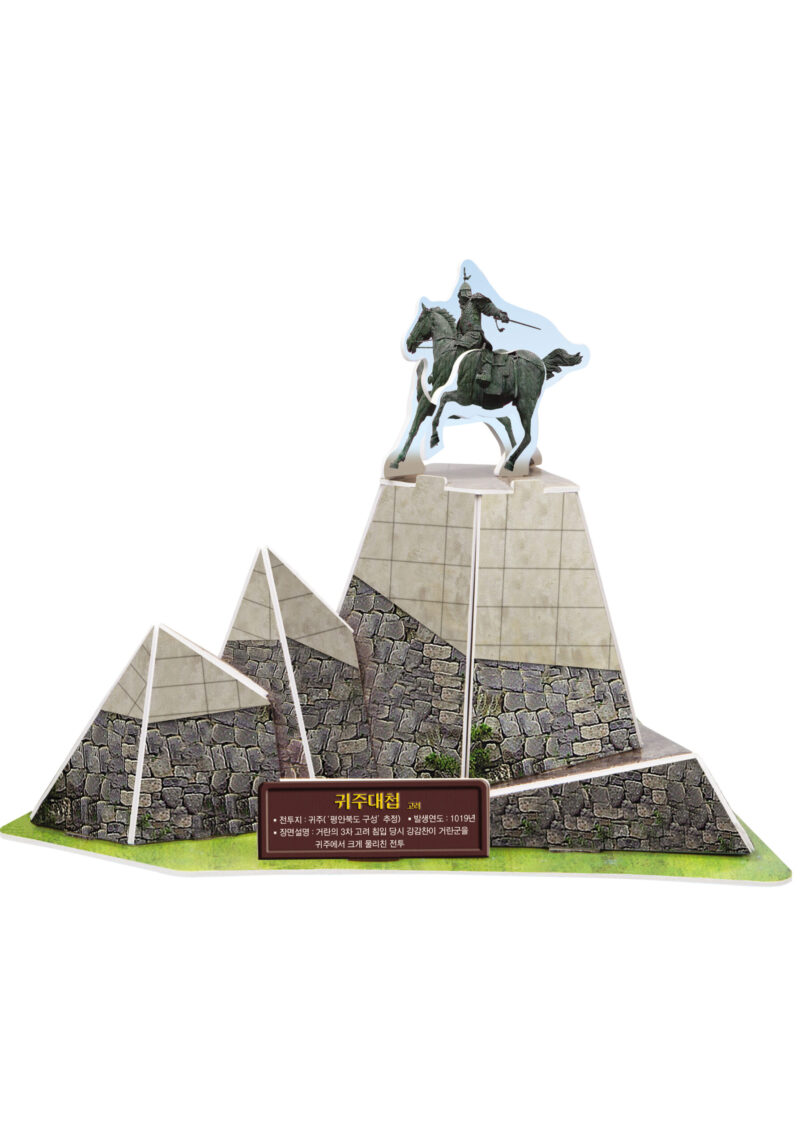
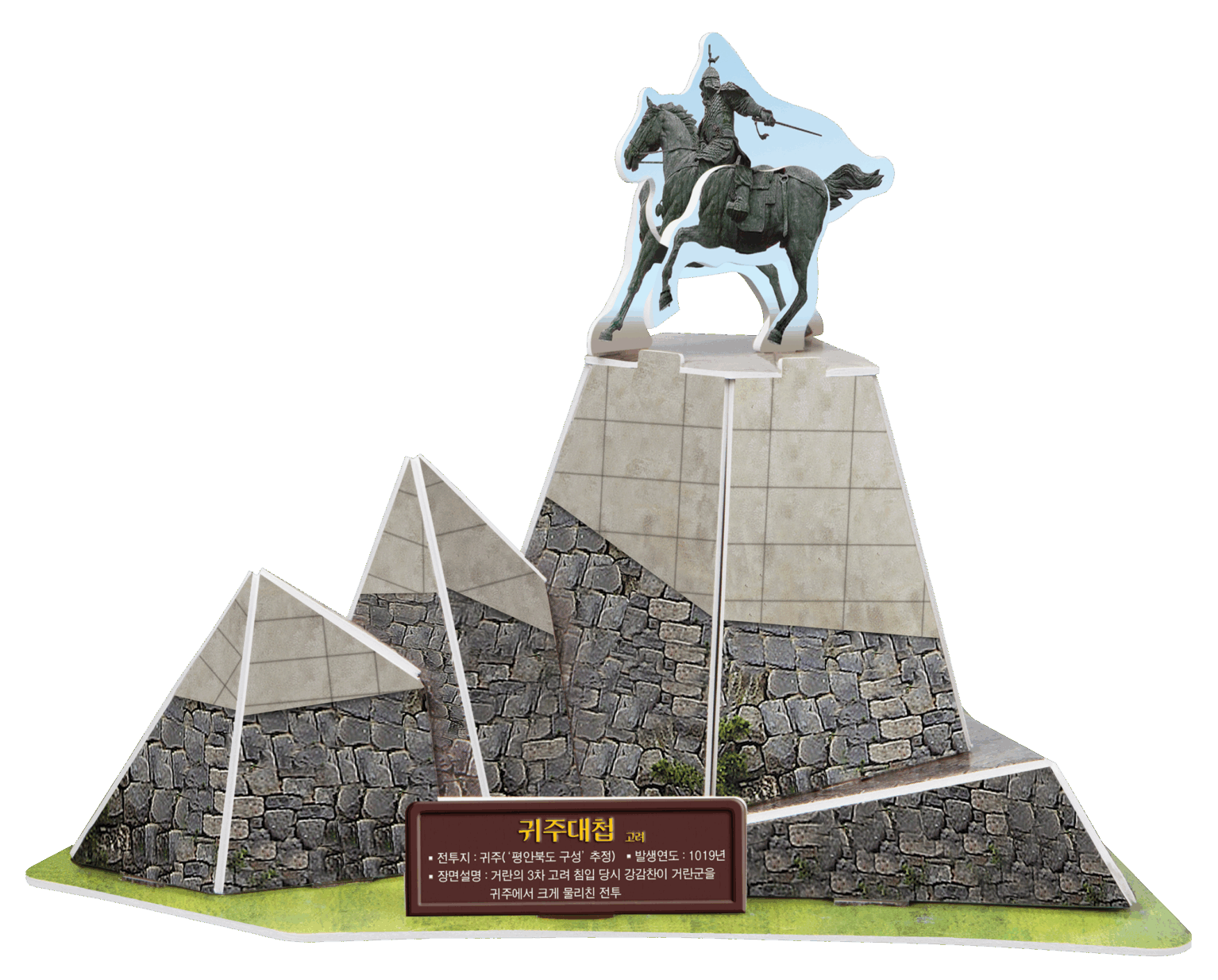
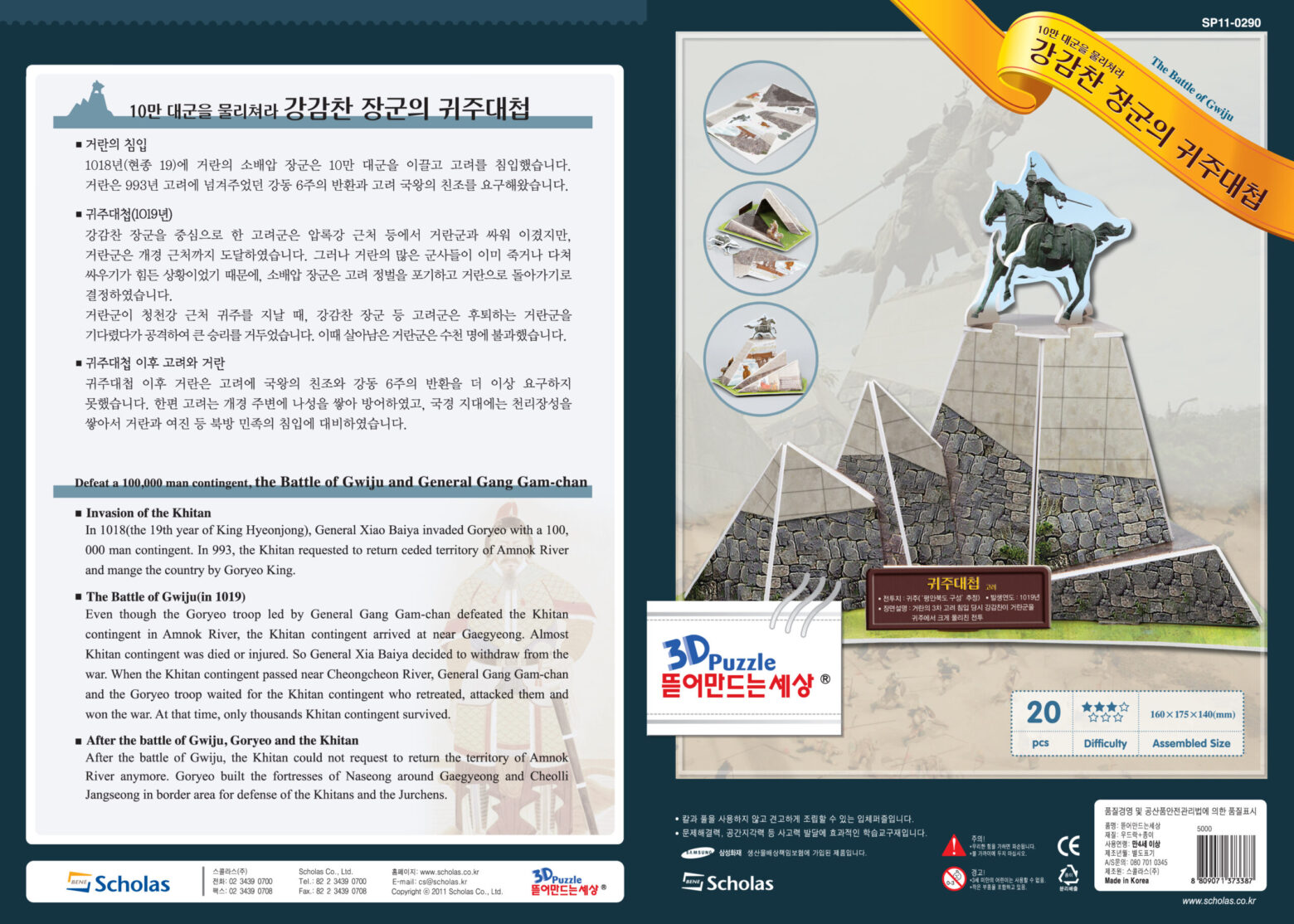
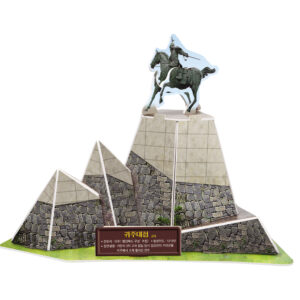
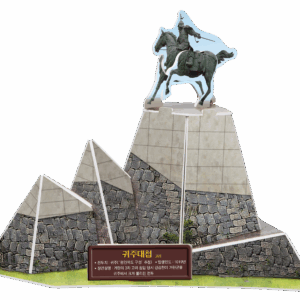
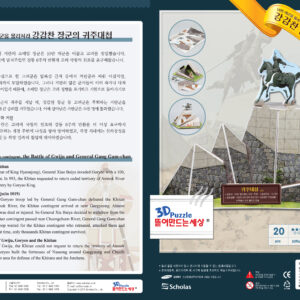


Description
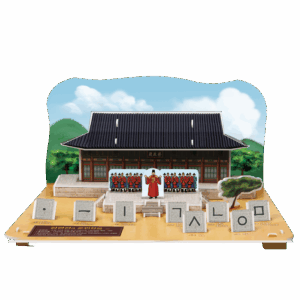
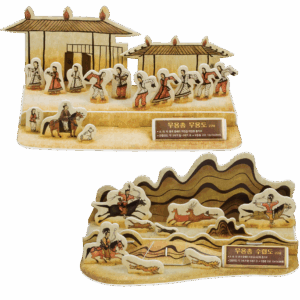
Battle of Gwiju
Category: K-history
Model Name: Battle of Gwiju
Model No.: HS20-021
PCS: 20
Ages: 8+
Difficulty: ★★★☆☆☆☆
Assembled Size: 161x175x140
Board Size: 300×210
Product Contents: Puzzle Board, Instruction Sheet
| 20 | 8+ | ★★★☆ ☆☆☆ | 161x175x140(mm) | 300×210(mm) x 2Sheets |
| PCS | Ages | Difficulty | Assembled Size | Board Size |
Summary of key features
- No. HS20-021
- Board Size: 300x210x2Sheets
3D Puzzle
Learning Through Play
Best Hands-on Education
We believe in
Hands-On Education
Hands-on learning is the best approach to learning rather than just being taught the theory via books.
Information
Battle of Gwiju
1. What Was the Battle of Gwiju?
The Battle of Gwiju refers to a decisive military engagement between Goryeo and the Khitan forces, led by General Gang Gam-chan, in Gwiju (present-day Kusong, North Pyongan Province). Goryeo had long suffered invasions from northern tribes, and the Khitan were the first to clash with Goryeo.
The Khitan invaded Goryeo three times, but the third invasion marked Goryeo’s greatest victory. When Khitan General Xiao Paiya led an army of 100,000 troops into Goryeo, the kingdom had already anticipated the attack and prepared thoroughly.
General Gang Gam-chan predicted the Khitan would pass through Heunghwajin and blocked the river in advance. As expected, when the Khitan crossed the river, Goryeo forces released the water, drowning many enemy soldiers—this is known as the Battle of Heunghwajin.
After suffering heavy losses, the Khitan changed tactics and attempted to attack the capital, Gaegyeong. However, Goryeo forces had already fortified their defenses under Gang Gam-chan’s command. When the Khitan began to retreat, Gang Gam-chan launched a surprise counterattack, ambushing them from hidden positions.
He struck again east of Gwiju, crushing the retreating Khitan army. This final victory is known as the Battle of Gwiju. Of the original 100,000 Khitan troops, only a few thousand survived and returned home.
2. How Did Goryeo Repel the First Khitan Invasion?
The first Khitan invasion occurred in the 12th year of King Seongjong’s reign (993). The Khitan sought to weaken Goryeo, which had friendly ties with the Song Dynasty, before launching an attack on Song.
They claimed that Goryeo’s northern territory belonged to them and demanded its return. Goryeo diplomat Seo Hui met with Khitan General Xiao Sunning and negotiated a diplomatic resolution.
Seo Hui promised to sever ties with Song and establish relations with the Khitan. He also asserted that Goryeo was the rightful successor to Goguryeo, and successfully secured the territory east of the Yalu River—known as the Six Gangsong Prefectures.
3. Was General Gang Gam-chan Really That Brilliant?
General Gang Gam-chan was born in the 3rd year of King Jeongjong’s reign (948) in Geumju, an area centered around present-day Gwanaksan in Seoul. Legend says a bright star fell in Geumju at the time of his birth, and the area came to be called Nakseongdae, meaning “the place where a star fell.”
From a young age, Gang Gam-chan was known for his love of learning and exceptional strategic thinking. He passed the civil service exam in the 2nd year of King Seongjong’s reign (983) and rose to high office.
Though he was a scholar, he possessed the instincts of a military commander. During the third Khitan invasion, his tactical brilliance led Goryeo to victory.
After the Khitan retreated, Gang Gam-chan focused on strengthening national defense. He built the Cheolli Jangseong (Thousand-Li Wall) along the northern border and the Naseong Wall around the capital.
4. Why Did King Taejo of Goryeo Hate the Khitan So Much?
Taejo Wang Geon, the founder of Goryeo, harbored deep hostility toward the Khitan. Why? Because the Khitan had destroyed Balhae—a kingdom founded by Goguryeo refugees.
Goryeo considered itself the rightful successor to Goguryeo, and viewed Balhae as a kindred state. The fall of Balhae at the hands of the Khitan was seen as a grave injustice.
Taejo rejected diplomatic overtures from the Khitan, exiling their envoys to remote islands. He even tied a camel—sent as a gift—under Manbu Bridge and left it to starve. He left behind a will instructing his descendants to never befriend the Khitan.
5. Glossary
Cheolli Jangseong (천리장성): A long defensive wall built in the early 11th century along Goryeo’s northern border to protect against Jurchen invasions.
Naseong (나성): A double-layered fortress wall, with an inner wall surrounding the palace and an outer wall enclosing the city.
Yuhun (유훈): Teachings or instructions left behind by someone after death.
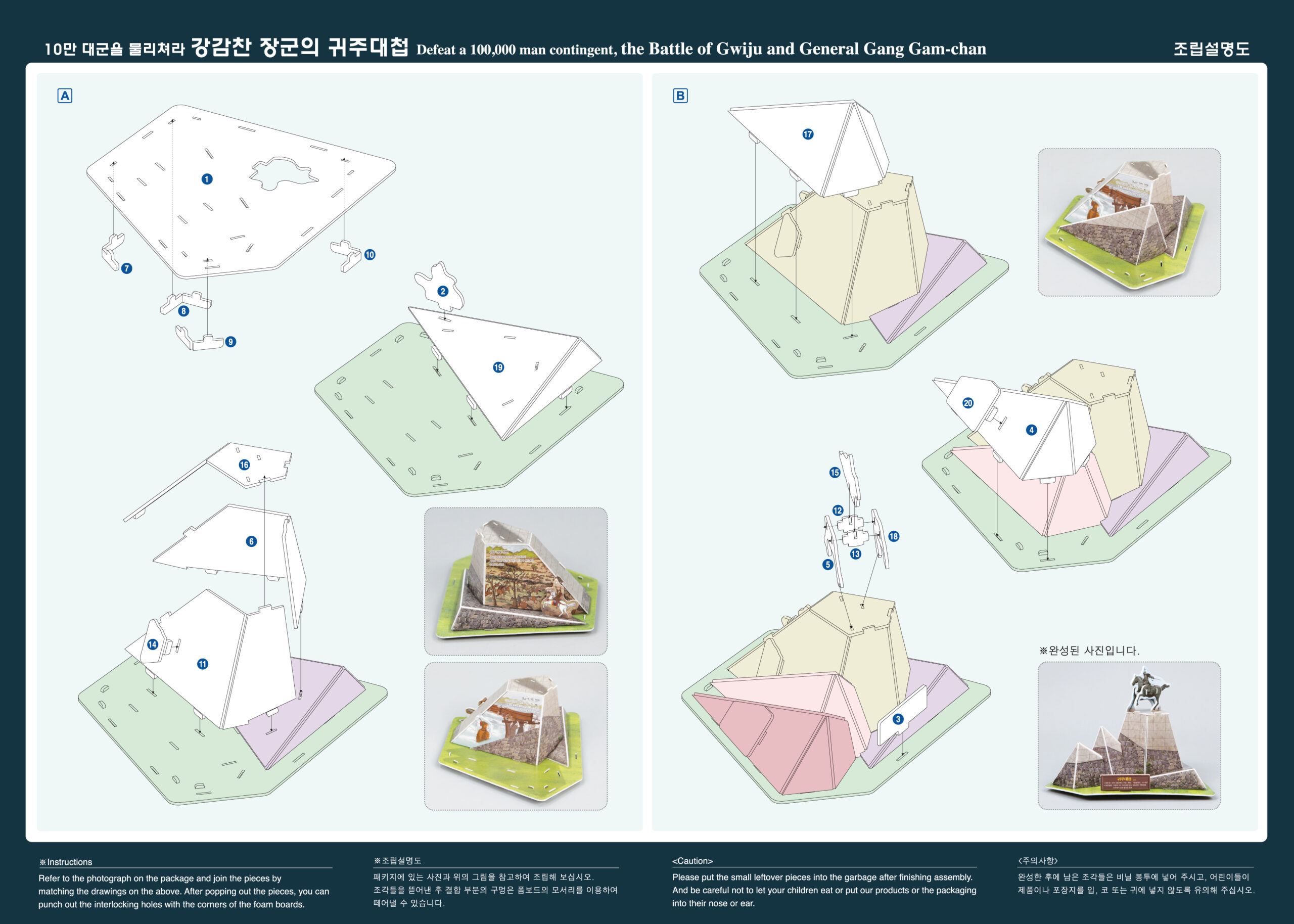
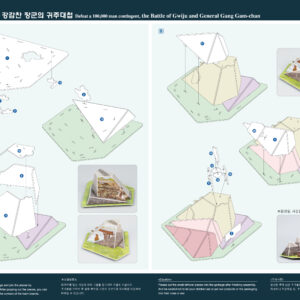
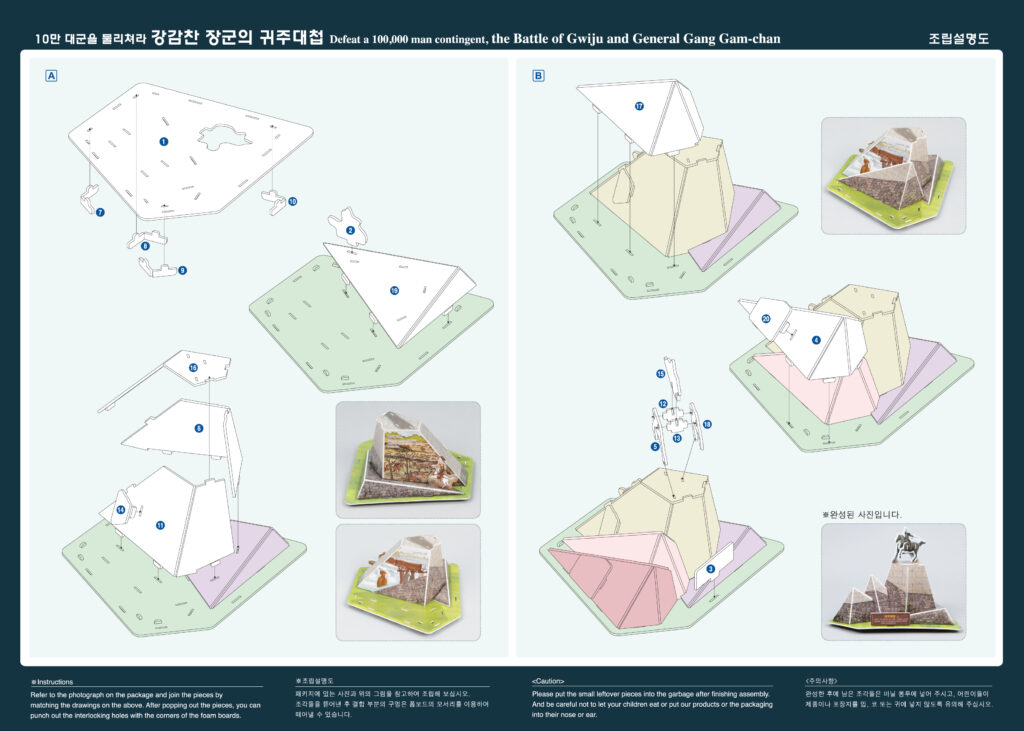
How To Make
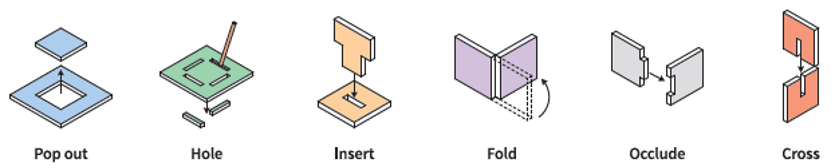
Instructions
Why do you need 3D Puzzle

3D Puzzles enhance problem-solving skills, scientific thinking, and creativity, making them highly beneficial for STEM (Science, Technology, Engineering, and Mathematics).
What Our Customers Say
Explore why enthusiasts rave about building 3D puzzles. Here are some stories from our satisfied customers!
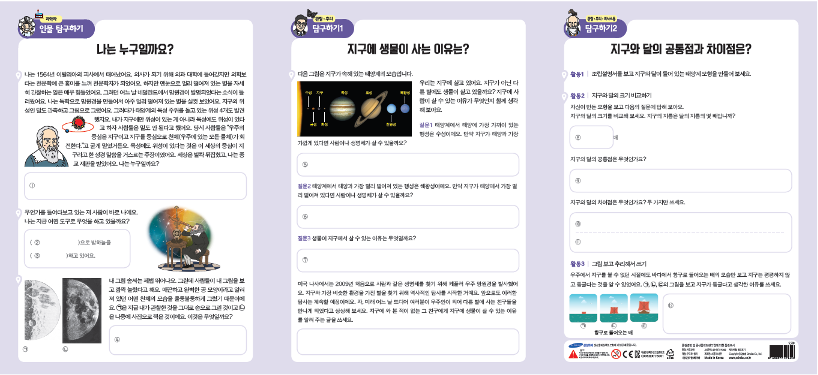
Student Worksheet & Answer Sheet Download
Certification

Reviews
There are no reviews yet.