
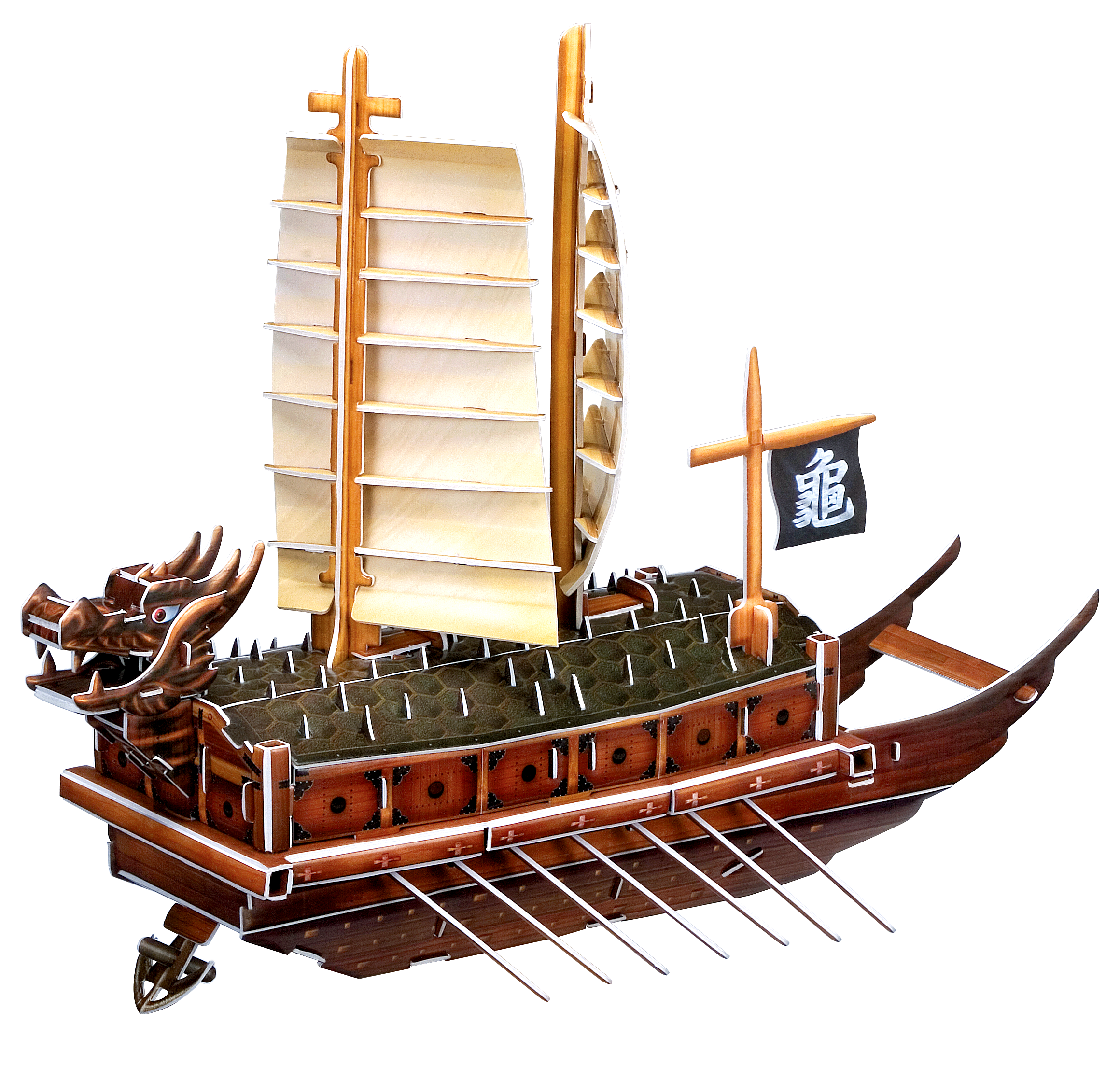
Description
Singijeon
Category: K-history
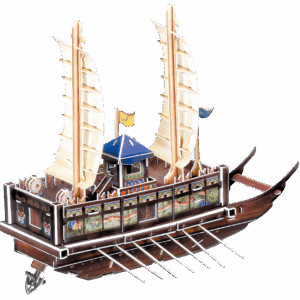
Model Name: Geobukseon (Turtle Ship)
Model No.: HS20-037-02
PCS:
Ages: 8+
Difficulty: ★★★☆☆☆☆
Assembled Size:
Board Size:
Product Contents: Puzzle Board, Instruction Sheet
| 33 | 8+ | ★★★☆ ☆☆☆ | 111x125x67(mm) | 150×210(mm) x 2Sheets |
| PCS | Ages | Difficulty | Assembled Size | Board Size |
Summery of key features
- No. HS20-037-02
- Board Size: 150×210(mm)x2Sheets
3D Puzzle
Learning Through Play
Best Hands-on Education
We believe in
Hands-On Education
Hands-on learning is the best approach to learning rather than just being taught the theory via books.
Information
Geobukseon (Turtle Ship)
1.What Is the Geobukseon (Turtle Ship)?
The Geobukseon, or Turtle Ship, was a combat vessel designed by improving the functionality of the Panokseon, Joseon’s primary warship. Before the outbreak of the Imjin War, Admiral Yi Sun-sin observed that Japanese ships were faster and more maneuverable. To counter this, he worked to develop a faster and more powerful ship equipped with gunpowder-based weapons. The result was the Turtle Ship—a formidable warship with enhanced speed and firepower, based on earlier models from King Taejong’s era.
At the beginning of the Imjin War, Joseon’s forces were overwhelmed by Japanese troops armed with matchlock guns. However, Admiral Yi’s naval victories began to turn the tide of the war. One of the key reasons for these victories was the effectiveness of the Turtle Ship.
2. What Were the Features of the Turtle Ship?
The Panokseon had several weaknesses: it was slow, and its open deck left soldiers vulnerable to enemy arrows and bullets. The Turtle Ship addressed these issues by covering the sides with shields and the deck with wooden planks to protect the crew.
Additionally, iron spikes were installed on the deck to prevent Japanese soldiers from boarding. These innovations significantly reduced casualties among Joseon’s forces.
The Turtle Ship wasn’t just strong in defense—it was also highly effective in offense. Cannons were mounted on all sides, allowing it to attack in every direction. It could move freely regardless of orientation and was fast enough to execute direct charges against enemy ships.
3. How Did the Imjin War Unfold?
In the 25th year of King Seonjo’s reign (1592), Toyotomi Hideyoshi led an invasion of Joseon with an army of 200,000. The Japanese forces quickly captured Busanjin and Dongnae Fortress, and within 20 days, they reached and occupied Hanseong (modern-day Seoul). Joseon faced severe difficulties in the early stages of the war.
However, Admiral Yi Sun-sin’s navy began defeating Japanese forces in successive naval battles, and volunteer militias (Uibyeong) rose up across the country to fight back. With reinforcements from Ming China, the tide turned in favor of Joseon. Japan proposed a truce, but negotiations failed, and they launched a second invasion (the Jeongyu War).
During this phase, Admiral Yi’s forces dealt a crushing blow to the Japanese navy at the Battle of Myeongnyang. After Toyotomi Hideyoshi’s death, the Japanese were forced to retreat, and the war finally ended after seven years.
4. What Were Admiral Yi Sun-sin’s Achievements?
When the Imjin War began, Admiral Yi Sun-sin was the naval commander of the Jeolla Province. He led successful battles at Okpo, Sacheonpo, Dangpo, and Hansando. In the Battle of Hansando, he didn’t lose a single ship, and fewer than 20 of his men were killed or injured. In contrast, the Japanese lost over 70 ships and more than 10,000 soldiers—a decisive victory.
Despite his repeated successes, Admiral Yi was falsely accused of cooperating with the enemy and was removed from his post. Without his leadership, Joseon’s navy suffered multiple defeats. In desperation, the government reinstated him and gave him command once again.
Admiral Yi went on to defeat the Japanese at the Battle of Myeongnyang. In his final battle at Noryang Strait, he was struck by an enemy arrow and died in action.
5. Glossary
Matchlock Gun (Jochong): A firearm introduced to Japan from Europe in the 16th century. It fired bullets by igniting gunpowder through a mounted mechanism.
Uibyeong (Righteous Army): Civilian militias formed voluntarily to resist invading forces.
Sugun Jeoldosa: The naval commander-in-chief responsible for overseeing regional naval forces during the Joseon Dynasty.
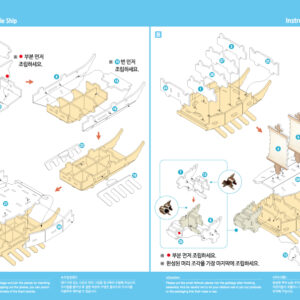
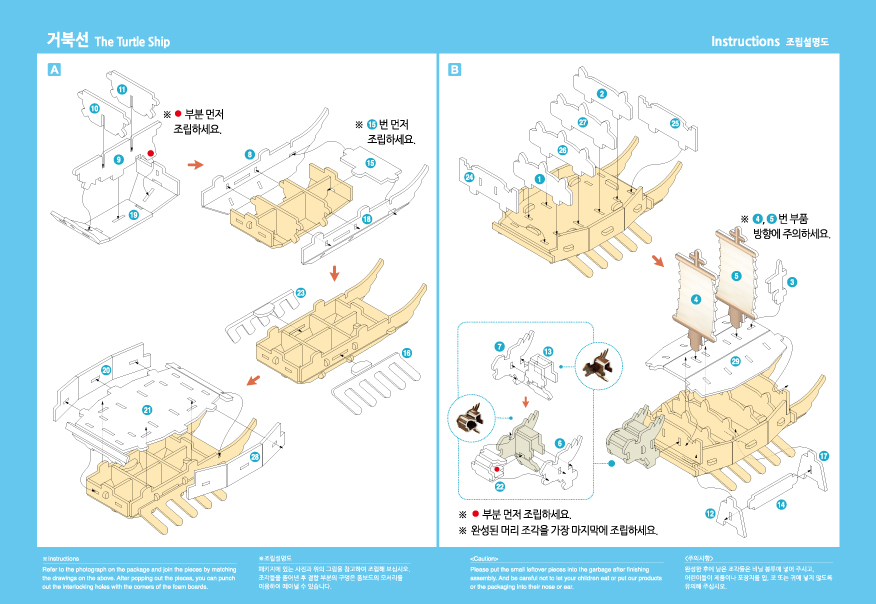
How To Make
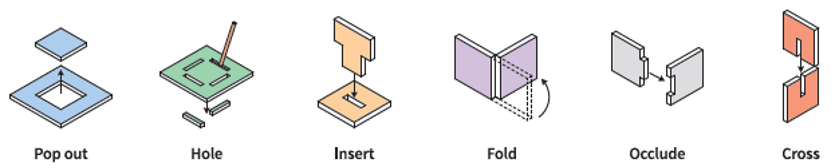
Instructions
Why do you need 3D Puzzle
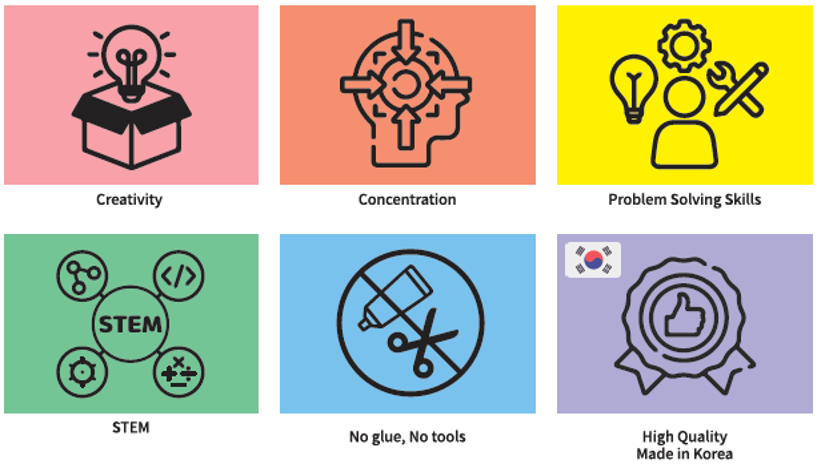
3D Puzzles enhances problem-solving skills, scientific thinking, and creativity, making them highly beneficial for STEM (Science, Technology, Engineering, and Mathematics).
What Our Customers Say
Explore why enthusiasts rave about building 3D puzzle. Here are some stories from our satisfied customers!
Student Worksheet & Answer Sheet Download
Certification


Reviews
There are no reviews yet.