
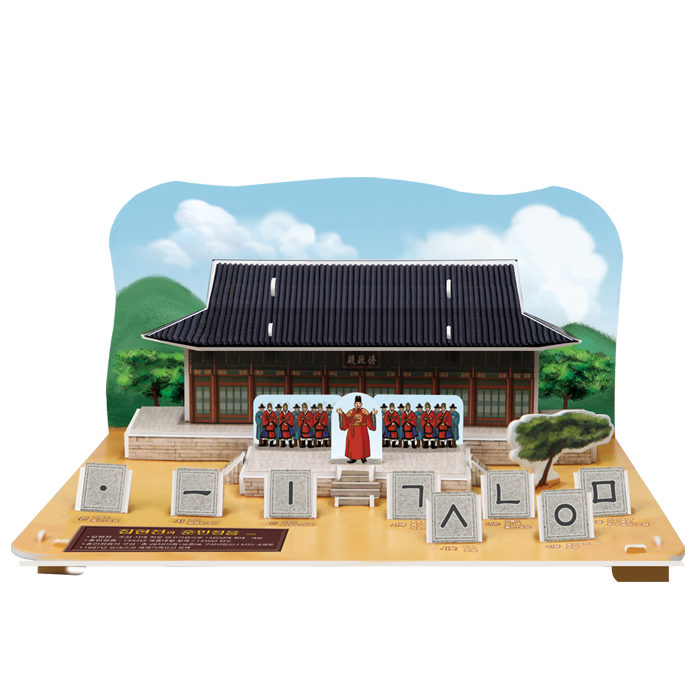

Description
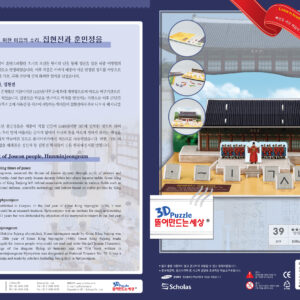
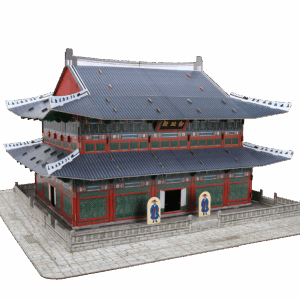
Hunminjeongeum
Category: K-history
Model Name: Hunminjeongeum
Model No.: HS20-033
PCS: 39
Ages: 8+
Difficulty: ★★★☆☆☆☆
Assembled Size: 250x170x90
Board Size: 300×210
Product Contents: Puzzle Board, Instruction Sheet
| 39 | 8+ | ★★★☆ ☆☆☆ | 111x125x67(mm) | 150×210(mm) x 2Sheets |
| PCS | Ages | Difficulty | Assembled Size | Board Size |
Summery of key features
- No. HS20-033
- Board Size: 300x210(mm)x2Sheets
3D Puzzle
Learning Through Play
Best Hands-on Education
We believe in
Hands-On Education
Hands-on learning is the best approach to learning rather than just being taught the theory via books.
Information
Hunminjeongeum
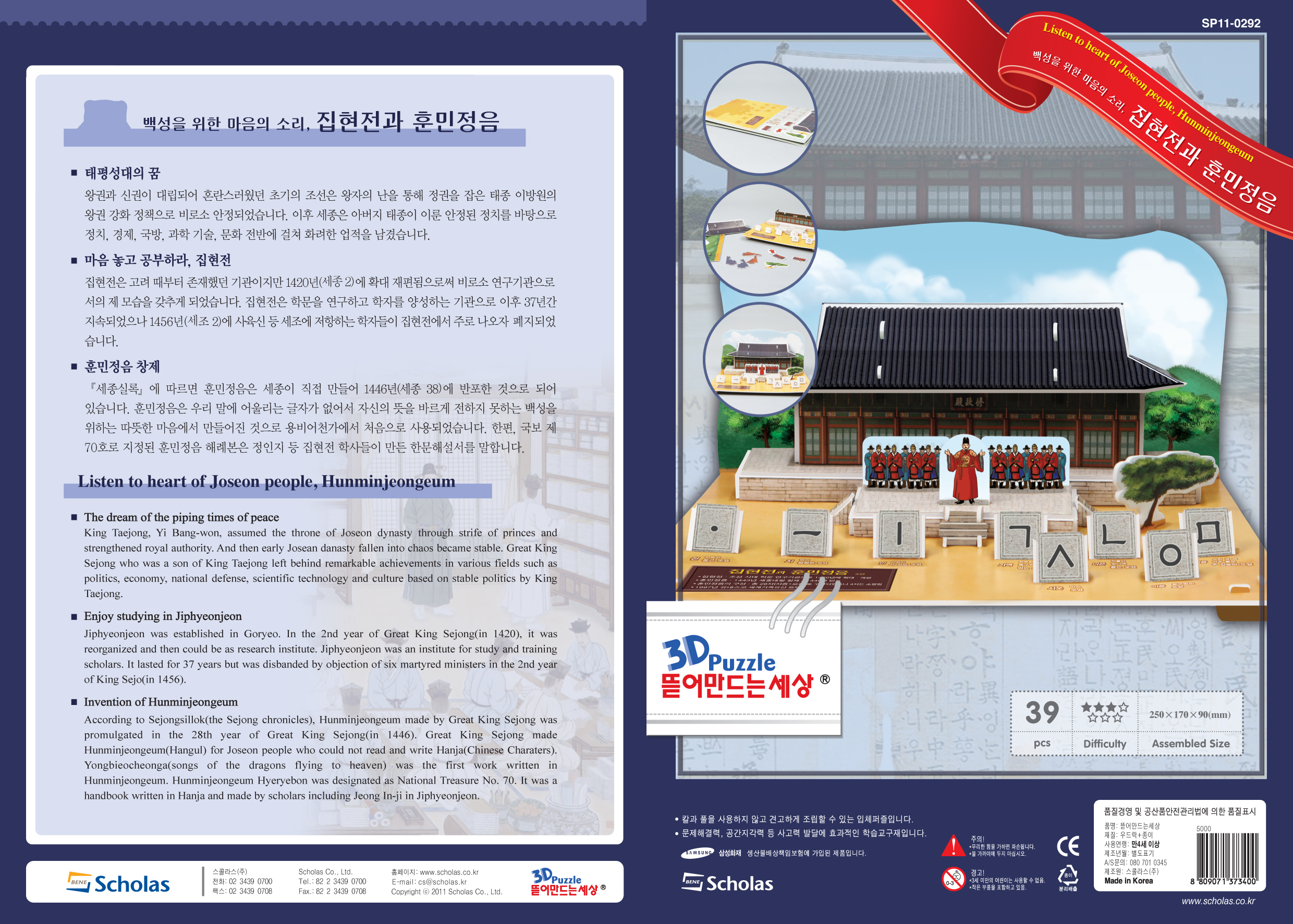
1. What Is Hunminjeongeum?
The Korean alphabet we use today—“ga, na, da, ra, ma, ba…”—is called Hunminjeongeum. It was created during the Joseon Dynasty by King Sejong, who instructed scholars of the Hall of Worthies (Jiphyeonjeon) to develop a writing system. The name Hunminjeongeum means “Correct Sounds for the Instruction of the People.”
Originally, Hunminjeongeum consisted of 17 consonants and 11 vowels, totaling 28 characters. Today, 24 of those characters are still in use.
2. Why Did King Sejong Create Hunminjeongeum?
Before Hunminjeongeum, the Korean people had no writing system of their own. They used Chinese characters (Hanja) or a hybrid system called Idu, which borrowed Chinese sounds and meanings to represent Korean speech. This made it extremely difficult to express Korean thoughts and language accurately in writing.
Chinese characters were especially hard to learn, so only the aristocracy used them. Commoners, who couldn’t read or write, had no way to express themselves or protest injustices.
King Sejong believed that the people needed a new writing system that could easily represent their thoughts and speech. After years of research with scholars from the Hall of Worthies, he completed the creation of Hunminjeongeum in the 25th year of his reign (1443). After testing its practicality, he officially promulgated it in 1446.
Hunminjeongeum reflects King Sejong’s deep love and concern for his people.
3. What Was the Hall of Worthies (Jiphyeonjeon)?
The Hall of Worthies, which developed Hunminjeongeum, was originally a scholarly institution established during the Goryeo Dynasty. It continued to exist after the founding of Joseon.
After ascending the throne, King Sejong expanded the Hall and appointed more scholars, encouraging them to focus solely on academic research.
The scholars’ main duties included discussing scholarly topics with the king, educating the crown prince, drafting diplomatic documents, and publishing historical and instructional texts. They also served as examiners for the civil service examinations.
4. How Was Hunminjeongeum Used?
Today, all Koreans use Hangul, but when Hunminjeongeum was first introduced, few people adopted it. Aristocrats rejected it as beneath them, and farmers were too busy to learn it.
To promote its use, the government took several steps. Officials were required to use Hunminjeongeum, and lower-level civil service exams were administered in the new script. Government documents and manuals on agriculture, technology, military strategy, and ethics—originally written in Chinese—were translated into Hunminjeongeum.
One notable example is the Samgang Haengsil-do, a book published during King Sejong’s reign to promote Confucian virtues like loyalty, filial piety, and chastity. It featured stories of exemplary figures from Korea and China, accompanied by illustrations to aid understanding.
Thanks to these efforts, commoners and women gradually began to use Hangul, leading to a significant cultural advancement for the Korean people.
5. Glossary
Idu (이두): A writing system that used Chinese characters to represent Korean sounds and meanings.
Promulgation (반포): The act of officially spreading and announcing something to the public.
Civil Service Exam (과거 시험): A government-administered test used to select officials during the Joseon Dynasty.
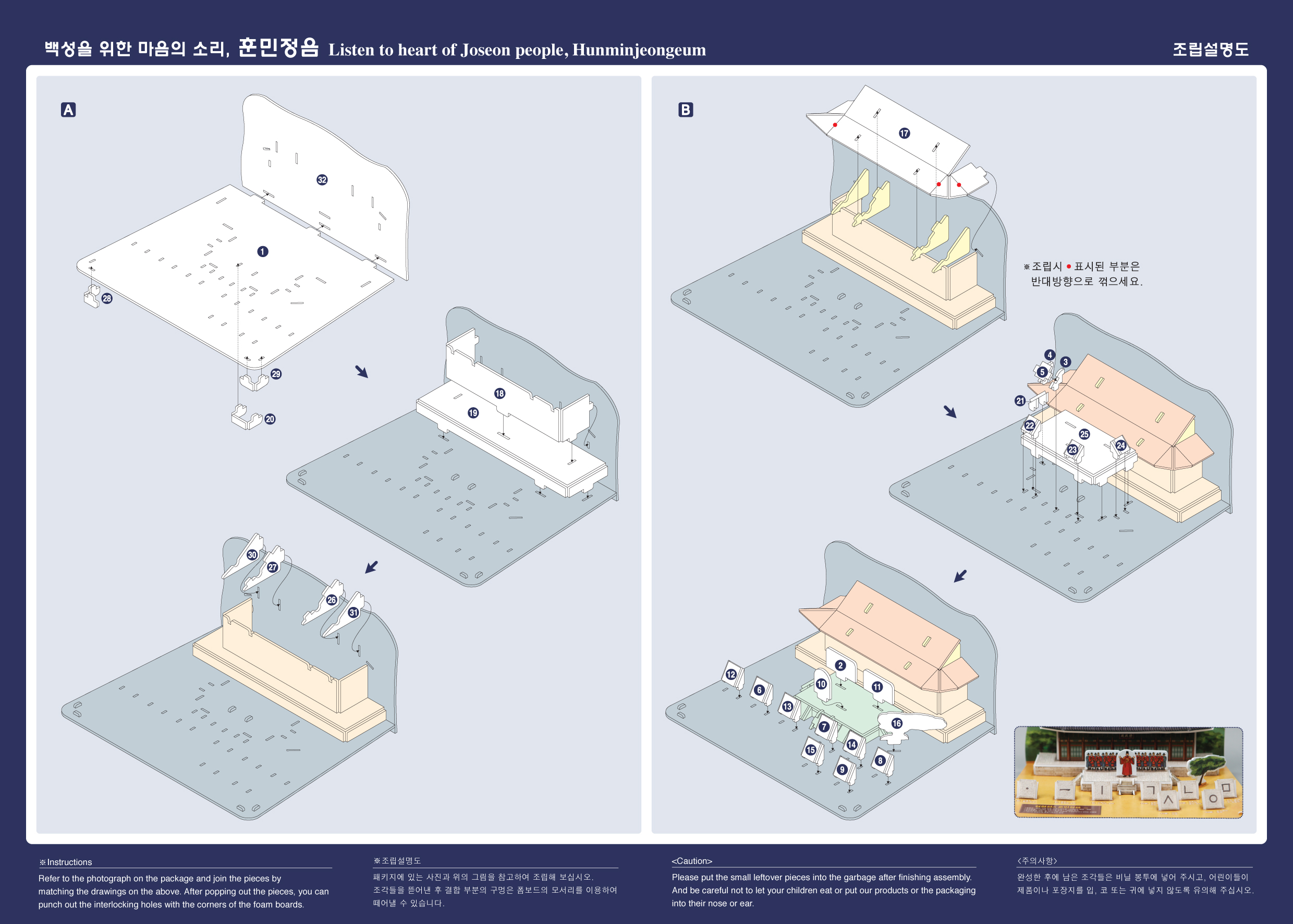
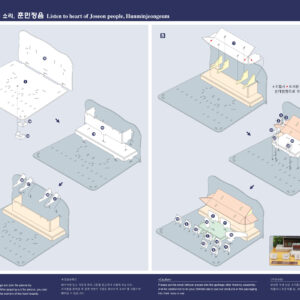
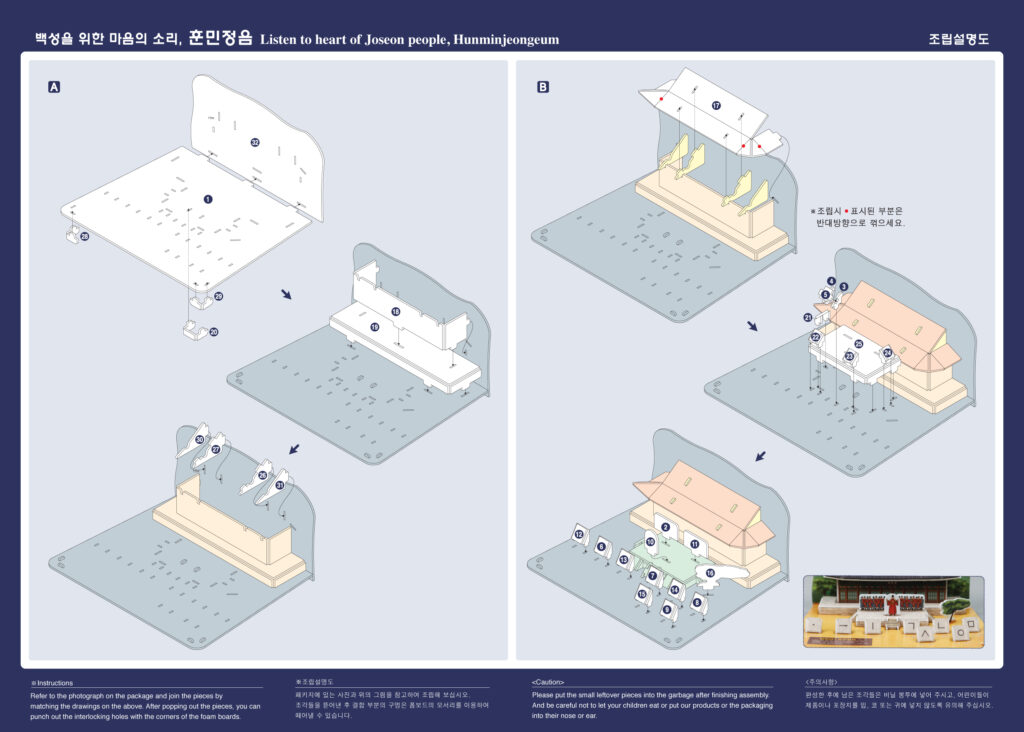
How To Make
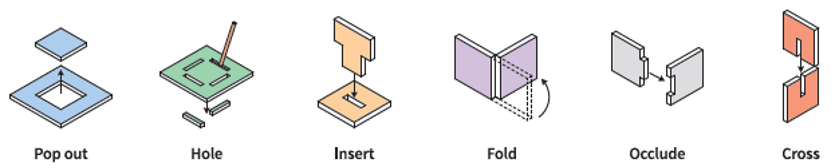
Instructions
Why do you need 3D Puzzle
3D Puzzles enhances problem-solving skills, scientific thinking, and creativity, making them highly beneficial for STEM (Science, Technology, Engineering, and Mathematics).
What Our Customers Say
Explore why enthusiasts rave about building 3D puzzle. Here are some stories from our satisfied customers!
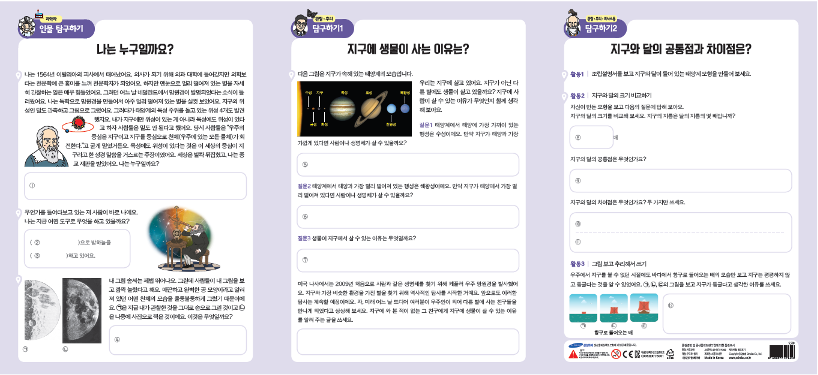
Student Worksheet & Answer Sheet Download
Certification



Reviews
There are no reviews yet.